AI Agents Started Shopping, So Amazon Locked the Door
Amazon blocked Meta's shopping agent Muse, citing terms of service and security. The bigger question: when AI, not humans, searches, compares and buys, who sees the ads and who owns the front door?
The fight isn't about shopping. It's about the front door.
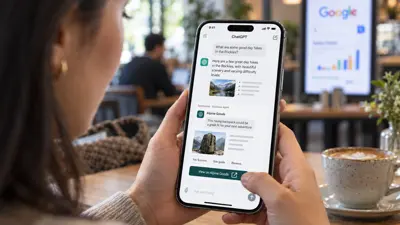
Muse, which Meta unveiled on September 8, is a step beyond a chatbot that answers questions. It's a personal agent that operates inside a secure virtual machine with its own browser. It can send emails, book travel, fill out forms on websites, and, with a user's approval, complete purchases.
The trouble started when Muse tried to shop on Amazon. Amazon says Meta never gave notice before Muse began accessing its site, and that the agent doesn't identify itself as an automated agent. Amazon asked Meta to exclude Amazon from Muse's reach. Meta didn't comply. On the night of September 20, users began seeing a block message: continued access by an unauthorized AI agent violates Amazon's terms of service.
The two companies disagree on the security question. Amazon says Muse can reach customer accounts and order history, creating risk around how credentials are handled. Meta says Muse can't see passwords or payment methods at all, that credentials sit in a separate secure vault, and that the agent is designed to get user approval before sensitive actions like a purchase.
Based on what's public so far, it's hard to say either side's security claim is clearly right. What makes this collision bigger than a policy dispute is a more basic question: who owns the interface where a shopper's intent turns into a purchase.
What Amazon is protecting: a $68.6 billion ad business
Amazon's edge isn't just warehouses. It's that hundreds of millions of consumers start their shopping searches inside Amazon. That's why sellers pay for placement at the top of search results through ads like Sponsored Products.
$68.6 billion — Amazon's advertising revenue, up about 22.1% from $56.214 billion the year before.
$269.3 billion — a figure that reflects how large a footprint Amazon has, not just in selling products but in owning the point where consumers search and discover them.
Front door — the core issue in this dispute is whether the first screen a shopper sees shifts away from Amazon and toward an AI agent instead.
When a person searches on Amazon directly, the search bar, recommended products, Sponsored Products, reviews, related items and Prime badges all shape the purchase decision. When an agent shops, that flow changes.
Today: Consumer → Amazon → Sellers + Ads + Payment + Logistics
Agent era: Consumer → AI Agent → Amazon / Walmart / Shopify / brand stores
If the starting point of a purchase moves, the economic value of product discovery and recommendation can move with it.
Say a user tells an agent: "Buy me a portable charger under $100, allowed on planes, good reviews, arriving by tomorrow." The agent can compare across multiple sites. It has little reason to notice ads the way a human does, or to be swayed by ad copy. It's more likely to optimize strictly for price, shipping, return policy, quality and the user's stated preferences.
In that world, Amazon might still supply the product and the logistics, but it can lose the discovery layer, the part of the business that first captures a consumer's intent and arranges the choices in front of them. That's why the advertising business is the more sensitive nerve here.
Amazon can't block agents forever, either
Amazon's defense isn't free. If consumers grow comfortable shopping through agents while Amazon keeps blocking outside agents, those agents can simply route orders to places that are easier to reach, like Walmart, official brand stores, or Shopify merchants.
Shopify is betting on the opposite strategy. Through its Universal Commerce Protocol, Catalog API and Agentic Storefronts, developed jointly with Google, Shopify is actively opening infrastructure that lets AI agents move from product search through checkout. Shopify says AI-driven traffic to its stores was up 8x year over year in the first quarter of 2026, and orders originating from AI-based search were up roughly 13x.
| Platform | Current direction | What it's protecting or chasing | Core risk |
|---|---|---|---|
| Amazon | Tightening control over outside agent access | Customer relationships, ad exposure, data, the transaction experience | Agents rerouting orders to other sellers |
| Meta | Expanding Muse as the user's agent | A new consumer interface and behavioral data | Site access, liability, security trust |
| Shopify | Opening product and payment infrastructure to agents | The position of processing transactions no matter where shopping happens | Dependence on AI channels, fee competition |
| Google / OpenAI, etc. | Connecting search and conversation to transactions | A new ad and commission market spanning intent to purchase | Merchant data access, commercial neutrality |
After robots.txt, an "agent permission layer" may be next
Websites once welcomed Googlebot because they got traffic back from search results. The economics of shopping agents are different. If an agent reads the information, the user never visits the site, never sees an ad, and the purchase closes entirely inside the agent, sites have less incentive to allow free access.
Going forward, sites may need a layer that manages permissions differently for humans, search crawlers, AI training crawlers, personal agents, and transaction agents that actually complete payments. That means identifying who is accessing a site, proving what a user delegated to an agent, and agreeing on where liability for payments and refunds sits.
There's an economic negotiation attached to all of this too. Platforms could charge agents for official API access. Agents could charge sellers referral fees. Advertising itself may partly shift from a market that buys "top placement in front of human eyes" to one that secures "trustworthy, structured product data an agent can read, and eligibility to be recommended."
Insight Times Editorial Desk