AI Stocks Come in Three Kinds. Pricing Them the Same Way Is the Mistake
Nvidia, Meta and Tesla all get called AI growth stocks. They sell entirely different things: proven cash, a productivity boost hidden inside an old business, and a bet on a market that does not exist yet.
The line between the three groups is not "does it do AI"
One of the costliest mistakes in AI investing is treating Nvidia, Microsoft, Meta, Vertiv and Tesla as a single category called AI growth.
The best way to sort AI stocks is not by how much a company talks about AI.
It is simpler than that.
Where is AI turning into money right now.
Does it already show up in revenue and profit.
Does it make an existing business more efficient.
Or is the company being valued on the chance it creates an enormous market later.
Ask that question and you can see that very different assets are sitting under the same label.
The first group already earns money from AI.
The second group uses AI to strengthen the business it already had.
The third group is still valued mostly on future option value.
These three should not share a P/E ratio or an expected return.
The reason is that the kind of uncertainty the market has to price is different in each case.
Group one: AI demand already lands on the income statement
This is the easiest group to understand.
Nvidia.
Broadcom.
Arista.
Vertiv.
Microsoft.
Amazon.
Alphabet.
For these companies AI is moving current results directly.
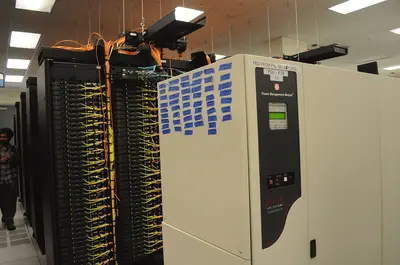
Nvidia posted 96.2 billion dollars in revenue in the second quarter of fiscal 2027, with data center revenue of 89 billion dollars, up 106 percent and 117 percent year on year. GAAP gross margin was 75 percent.
Microsoft reported Microsoft Cloud revenue of 59.3 billion dollars in the fourth quarter of fiscal 2026, up 27 percent, and paid seats for Microsoft 365 Copilot passed 30 million.
Amazon reported AWS revenue of 42.2 billion dollars in the second quarter of 2026, up 37 percent, with AWS operating income of 16.6 billion dollars.
Alphabet reported Google Cloud revenue of 24.8 billion dollars in the second quarter of 2026, up 82 percent, with cloud backlog of 513.9 billion dollars.
Vertiv came in at 3.274 billion dollars in revenue for the second quarter of 2026, with adjusted operating profit up 51 percent.
What these companies share is not a story about AI making money one day.
They are making it already.
That does not make group one the safe group
Verified results mean lower business uncertainty. They do not mean lower price risk.
Nvidia is showing strong demand and a high gross margin today.
If that expectation is already priced into the stock, future returns can still be poor.
Broadcom's AI chip revenue is growing fast, but customer concentration is high.
Arista and Vertiv benefit from bottlenecks in AI infrastructure, which also makes them sensitive to customer capex cycles and new supply.
Microsoft, Amazon and Alphabet are generating real AI revenue while carrying hundreds of billions of dollars in capex and the depreciation that follows.
So the question in group one is not whether AI can be commercialised.
That stage is largely behind us.
The more important question is this one.
How long do today's growth rates and margins last.
In group one, margin durability matters more than the P/E
For companies already earning money from AI, margin can matter more than headline revenue growth.
Does Nvidia hold a 75 percent gross margin.
Does Microsoft Cloud gross margin stabilise again after the increase in AI infrastructure costs.
Does AWS defend a high operating margin while AI capex expands.
Does Vertiv's adjusted operating margin survive the supply build-out.
These numbers show something the demand story cannot: how much of the economic value a company actually keeps.
An industry can grow while competition and customer bargaining power shrink any single firm's share of it.
Which is why the heart of group one is pricing power, not total addressable market.
Group two: AI makes the existing business stronger
The second group is more interesting, because you cannot pull the AI revenue out and look at it on its own.
Meta is the clearest case.
Meta is not primarily selling an AI API.
AI goes into Instagram recommendations.
Into ad targeting.
Into content recommendations.
Into ad creation tools.
Meta's revenue in the second quarter of 2026 was 60.8 billion dollars, up 28 percent.
Ad impressions rose 14 percent.
Average ad price rose 12 percent.
None of that can be attributed to AI with certainty.
But Meta's management says AI is accelerating the core business, and the advertising metrics are moving hard.
The effect is not a new AI revenue line. It is hidden inside the productivity of an existing ad business.
Alphabet and Microsoft sit in both groups at once
The categories are not mutually exclusive.
Alphabet is the example.
It sells AI revenue directly through Google Cloud.
At the same time it uses AI to strengthen recommendations, advertising and user experience across Search and YouTube.
Google Search and other revenue rose 17 percent year on year in the second quarter of 2026.
So Alphabet is monetising AI as new cloud revenue while defending the economics of its existing search business.
Microsoft is similar.
Azure AI and Copilot generate revenue directly.
They also lift Microsoft 365 ARPU and push the company deeper into corporate workflows that already exist.
A company can be both a seller of AI and a business being upgraded by AI.
When that happens, an investor has to separate pure AI revenue from the AI uplift to the legacy business.
The real moat in group two is a distribution cost near zero
Platform companies like Meta, Alphabet and Microsoft hold a structural advantage when they ship AI.
The users are already there.
The advertisers are already there.
The enterprise customers are already there.
The billing relationship already exists.
The data and the workflows already exist.
That makes the customer acquisition cost of a new AI feature relatively low.
When Meta improves a recommendation model, it applies to billions of users at once.
When Google changes the Search interface, it deploys instantly across enormous traffic.
When Microsoft improves Copilot, it extends to companies already paying for Microsoft 365.
This is why, in the AI era, an existing distribution network can be a bigger moat than a better model.
But group two is harder to measure
The weakness of group two is that you cannot isolate the AI effect in the numbers.
Meta's ad prices rose 12 percent.
How many of those percentage points came from AI.
Google Search revenue rose 17 percent.
How much did AI Overviews and Gemini contribute.
Microsoft 365 ARPU went up.
What is the clean incremental effect of Copilot.
Public filings will not separate that cleanly.
So in this group, rather than taking management's AI narrative at face value, you watch a spread of indirect indicators.
Time spent.
Ad ROI.
ARPU.
Paid conversion.
Retention.
Cloud usage.
Free cash flow.
The question is whether the economics of the existing business improve structurally after AI goes in.
Group three: companies priced on future option value
The third group is the most interesting and the most dangerous.
Tesla.
Physical AI companies.
Robot platforms.
Some edge AI companies.
For these firms, a new future market accounts for more of the valuation than current results do.
Take Tesla. The automotive and energy revenue already exists.
FSD subscriptions have grown to 1.48 million.
But the potential value of Robotaxi and Optimus is far larger.
The problem is that this value has not been verified through mass deployment and unit economics.
Tesla has started Cybercab production and is expanding unsupervised operation, but as of early September 2026 the number of Cybercabs registered in Texas was in the dozens.
Optimus is having its first-generation production line installed, and the early output is planned for data collection and feature development.
The technology has started to move.
The enormous cash flow is still in the future tense.
Why a P/E is the wrong tool for group three
A company carrying large option value looks absurdly expensive if you only look at current earnings.
Put the future TAM in as a certainty and it looks absurdly cheap.
Neither reading works with a single traditional multiple.
The variables that matter more are probability of success and time.
The chance Robotaxi works.
The chance Optimus reaches large-scale commercialisation.
Whether that success arrives in three years or ten.
How much additional capex goes in along the way.
What the final unit economics look like.
Those have to be probability weighted.
Model the future option at a 100 percent success scenario and you are not doing investment analysis. You are doing optimism.
The further down the chain, the bigger the TAM and the longer the list of assumptions
Line the AI value chain up by probability and you get roughly this order.
AI compute.
Networking and memory.
Power and cooling.
AI cloud and agent monetisation.
Edge AI.
Physical AI.
The front of the list has visible demand and visible results.
The back of the list may have a larger potential TAM.
It also carries more uncertainty.
Estimating how many Nvidia GPUs sell this year is comparatively easy.
Estimating how many humanoids sell in 2030 is much harder.
That gap should translate directly into position sizing.
The asset with the biggest apparent upside is not automatically the one that deserves the biggest weight.
If anything, the more uncertain the asset, the more a small position can still contribute meaningfully to the upside of the whole portfolio.
Mixing high-probability assets with option assets
An AI portfolio gets clearer when you stop treating it as a stock-picking problem and start treating it as a question of assigned roles.
The first layer is assets with verified current cash flow.
Compute.
Cloud.
Networking.
Power and cooling.
This group can serve as the core.
The second layer is platforms where AI strengthens the existing business.
Advertising.
Search.
Workplace software.
This group carries existing cash generation and AI upside at the same time.
The third layer is the option assets.
Robotaxi.
Humanoids.
New markets in edge AI.
High upside if they land, a real chance of failure or delay if they do not.
Equal weighting across the three makes no sense. Different roles deserve different risk budgets.
The order of probability is not the order of returns
Here is the single most important caveat.
The sector with the highest probability of success is not necessarily the best stock.
The probability that Nvidia's AI demand holds up may be very high. If the share price has more than priced that in, the expected return can still be low.
The probability that Physical AI succeeds may be low. If the market is pricing an even lower probability than that, the expected return on the stock can be high.
Two things have to be separated.
The probability the industry succeeds.
The probability already embedded in the current price.
Investing is buying the gap between them.
Finding a good industry and finding a good price are different problems.
So the last question is not "is this an AI company"
When you build an AI portfolio, the question that survives to the end is not about corporate identity.
Who is paying.
Why do they keep paying.
Is that payment comfortably larger than the investment required.
Those three.
Group one has confirmed that customers pay. Now watch margin durability.
Group two has to demonstrate how much AI actually lifts the productivity of the existing business.
Group three has to be judged on the probability and the timeline for turning technology into deployment and cash flow.
The three groups need three different methods of valuation.
But they all end up in the same place.
Is the economic value AI creates comfortably larger than the cost of building and deploying it.
That is the final test every AI stock has to pass.
Sources
- NVIDIA FY2027 Q2 Results
- Microsoft FY2026 Q4 Earnings
- Microsoft FY2026 Q4 Metrics
- Meta Q2 2026 Results
- Alphabet Q2 2026 Form 10-Q
- Amazon Q2 2026 Results
- Vertiv Q2 2026 Results
- Tesla Q2 2026 Update
Insight Times Editorial Desk