The Real AI Rally Question Isn't a Bubble, It's Whether Profits Catch Up to Capex
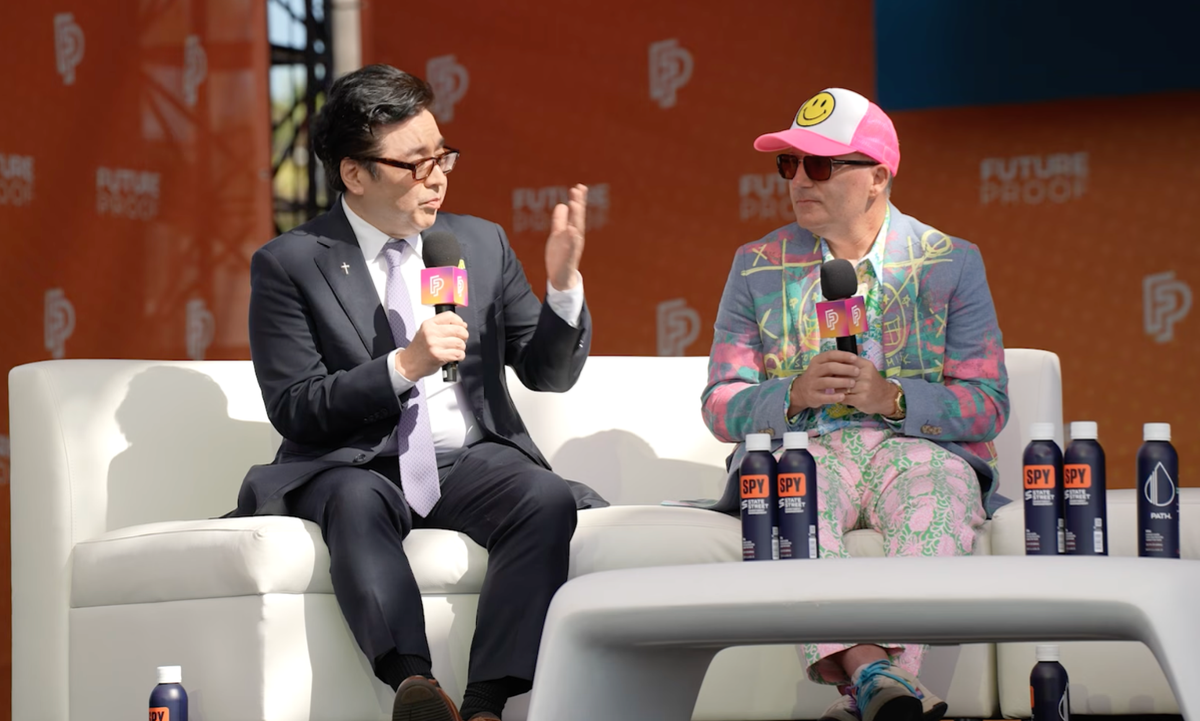
Rather than taking the latest bullish calls from Tom Lee and Dan Ives at face value, we separated what's confirmed by data from what's still forecast. The conclusion is simple: what matters now isn't the size of the AI buildout, but how fast it monetizes.

Why stocks aren't cracking even with rates at 5%
The most interesting part of the latest bullish commentary isn't the optimism itself, it's the market's resilience. The 10-year Treasury yield has climbed back near 5%, and the Fed raised rates by 25 basis points in September, yet the S&P 500 sits only about 2% below its 2026 high. In past cycles, a 5% long-term yield would have hammered growth-stock valuations.
This time, corporate earnings are acting as a buffer. By mid-September, the S&P 500's forward 12-month P/E had compressed to roughly 19 to 20 times. That compression didn't come from a stock selloff. It came from earnings estimates rising faster than prices. This is the core of Tom Lee's argument: the bad news hasn't disappeared, but companies are still growing profits faster than the bad news can catch up.
That said, it would be a mistake to simplify this into "rate hikes are bullish." Higher rates mechanically raise discount rates and the cost of capital. The market can shrug off a hike only when the move reduces uncertainty and makes the future rate path more predictable. If the 10-year holds well above 5% for an extended period, or oil spikes again, that logic could weaken quickly.

The most important number in AI right now: 13-to-1
Dan Ives, citing a recent check of Asian supply chains, put the demand-to-supply ratio for AI chips at roughly 13 to 1. He also argues that true supply-demand balance may not arrive until 2028, or as late as early 2029. It's worth being clear that this figure is an analyst's field estimate, not an industry-wide certified statistic.
Still, the direction matters. Taken together, Nvidia's recent results, hyperscalers' massive capital spending, and bottlenecks in HBM memory and data center power all suggest AI infrastructure investment is far from finished. Ives frames it this way: every dollar of AI capex spreads into software, networking, security, and power infrastructure, generating a $5 to $6 multiplier effect. That figure, too, is his framework for describing industry diffusion, not an economically verified fixed multiplier.
If that framework holds, the next wave of beneficiaries won't be limited to GPU makers. The center of gravity in AI investment is widening from accelerators toward memory, networking, power, cooling, data centers, and software. That's also why software stocks are being re-rated, from "companies that AI will replace" to "companies that sell AI to their customers."
Nvidia's 16x P/E is both right and wrong
Calling Nvidia "a 16-times P/E stock" oversimplifies things. Based on the September 17 closing price, its trailing twelve-month P/E was around 28 times, and depending on the data provider, its forward 12-month P/E runs roughly 18 to 24 times. The 16-times figure mostly comes from applying projected fiscal 2028 earnings, a long-dated forward multiple.
That distinction matters. The case that Nvidia is cheap doesn't rest on current earnings. It rests on the assumption that the company will actually hit the market's high earnings estimates over the next year or two. Shipments of the Rubin generation, HBM supply, hyperscaler capex, and gross margins all need to prove that assumption out. If growth slows even modestly, that 16-times number could disappear fast.
Apple, Palantir and Tesla don't belong in the same AI basket
Ives frames Apple as the distribution network for consumer AI, Palantir as a monetization case study for enterprise AI software, and Tesla as the flagship for physical AI and robotics. All three are tied to AI, but the investment logic behind each is completely different.
For Apple, the core case isn't the AI model itself but its distribution power through more than 2 billion active devices and its services ecosystem. Palantir is proving out high revenue growth and cash flow, but its valuation is also elevated, making a growth slowdown the biggest risk. For Tesla, what matters is how fast autonomous driving and Optimus convert into actual revenue and profit.
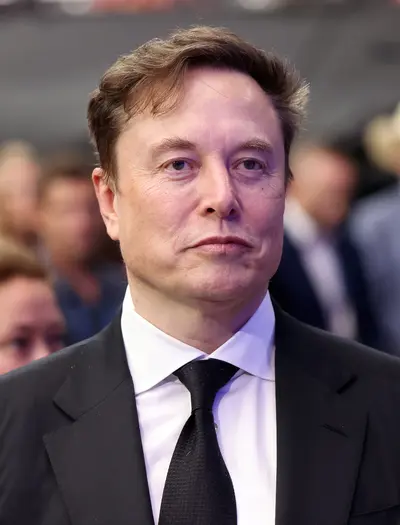
It's true that Ives put roughly 80% odds on a potential Tesla-SpaceX merger, but the timeline he's pointing to is closer to around 2027, not "late 2025." Elon Musk has mentioned overlap between the two companies' businesses, but he has never confirmed a merger. It's more reasonable to treat this as an option value rather than part of the base investment case for either stock.
Insight Times Editorial Desk