After AI Gets Hands and Feet, the Bigger Shift Is in Classrooms, Not Factories
Physical AI is not a robotics buzzword. As AI moves off the screen and starts manipulating real objects, it is reshaping how factories compete, where the line between human and machine work sits, and the oldest question in education: what should we teach.
Why the AI after chatbots needs hands
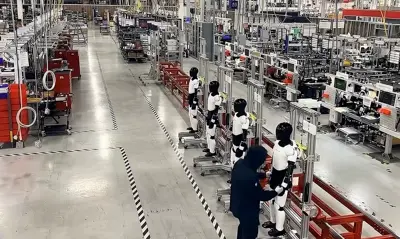
For the past few years, the AI most of us met lived inside a screen. It wrote text, generated images, wrote code. But a large share of the economy still runs outside the screen. Parts get moved. Metal sheets get placed on welding jigs. Boxes get sorted in warehouses. Anomalies get checked on factory floors.
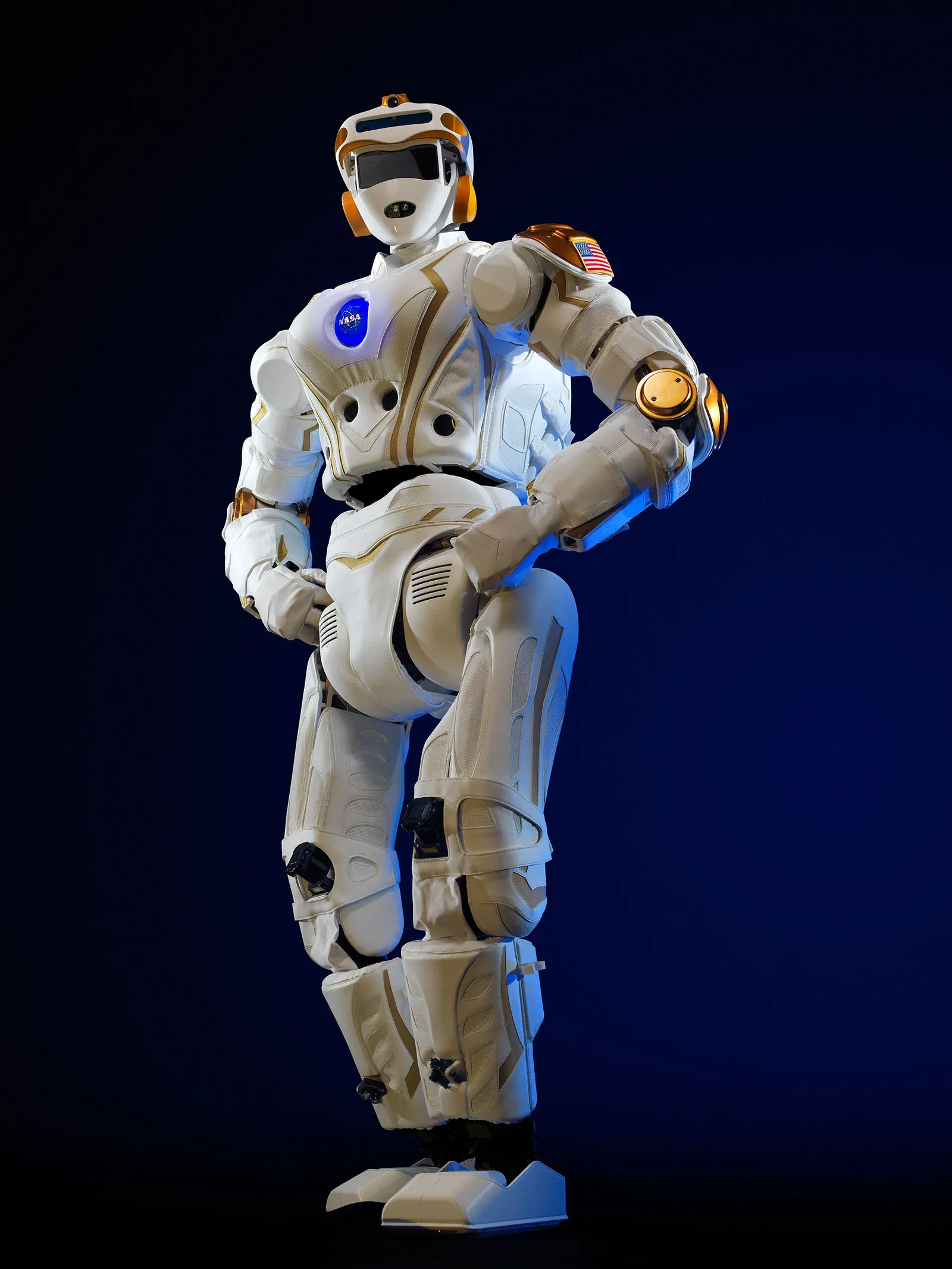
Physical AI is the technology trying to close that gap. Cameras and sensors see the real world, an AI model interprets the situation, and motors and joints act on it. If generative AI was a machine that thinks and talks, physical AI is on its way to becoming a machine that sees, moves, and finishes the job.
Goldman Sachs Research projects the humanoid robot market could grow to $38 billion by 2035, with shipments reaching roughly 1.4 million units. But before the forecast numbers, there is something more immediate to watch: how many hours a robot survives on an actual production line, how often it needs human help, and how much it costs to complete a single task.
BMW is the best-proven test site. Tesla could be the more important long-term one
The most concrete industrial humanoid track record disclosed so far belongs to BMW. Figure AI's Figure 02 units operated for roughly 1,250 hours in 2025 at BMW's Spartanburg, South Carolina plant, handling more than 90,000 sheet metal parts and contributing to the production of over 30,000 BMW X3 vehicles.
It was not glamorous work. Robots picked up metal parts and placed them repeatedly at designated spots on welding jigs. The numbers that matter are mundane ones: an 84-second cycle time, a target placement tolerance within 5mm. Industrial robots do not win by earning applause for a flashy move. They win by keeping the line running at 2 a.m. on a Tuesday.
Longer term, though, Tesla could turn out to be the more interesting test case.
Tesla is both a robot maker and a large-scale manufacturer. It runs its own car factories, designs the Optimus hardware, and controls its own AI models and computing infrastructure. That means when a robot fails on the factory floor, Tesla can collect that data, revise the model, and redeploy it on the same line, all inside one company.
Facts and expectations need to be kept separate here, though. There is not yet solid public evidence that Tesla is currently running hundreds of Optimus units on production lines performing large-scale real work. Tesla's second-quarter 2026 disclosures show that at Fremont, the company is tearing down the Model S and Model X production line and installing a first-generation Optimus production line, with plans to use early output at an "Optimus Academy" for training data collection and capability development. Related production facility construction is also underway in Texas.
So the fair read of where things stand: BMW is concrete proof that humanoids can do real factory work. Tesla has not yet shown that proof at scale, but if it succeeds, it is a candidate to build a self-reinforcing manufacturing system: a factory that makes robots, which then help that same factory make more robots and cars.
The real moat in physical AI may be failure data, not robot bodies
Watching an early humanoid drop a part or freeze mid-motion looks like failure. From an AI development standpoint, though, it is valuable data.
What made a robot's grip slip, what it misread when lighting changed, at what moment a human had to step in, how a successful trajectory differed from a failed one, all of this teaches the next model.
That is why the core asset in the physical AI race may not be the number of robots deployed. Millions of real-world trial-and-error attempts, along with the record of human corrections, could turn out to be the bigger moat.
This is where Tesla's structure gets interesting. In its car business, Tesla's edge was never just the vehicle hardware. It came from tying together the vehicle, software, data collection, training, and over-the-air updates into a single loop. Whether a similar loop can form around Optimus is the thing to watch.
Why robots go into factories before living rooms
Factories are an easy world for robots. Floors are flat, lighting is consistent, part specifications and movement paths are fixed. Hazard zones can be isolated and emergency stops installed.
Homes are the opposite. Toys, wet towels, pets, stairs, and a child's unpredictable movements all share the same space. For physical AI, that means dealing with far higher "real-world entropy."
Safety and liability differ too. Industrial sites already have safety rules, operating procedures, insurance, and liability frameworks in place. In homes, product liability, privacy, video data collection, and the safety of children and the elderly are all in play at once.
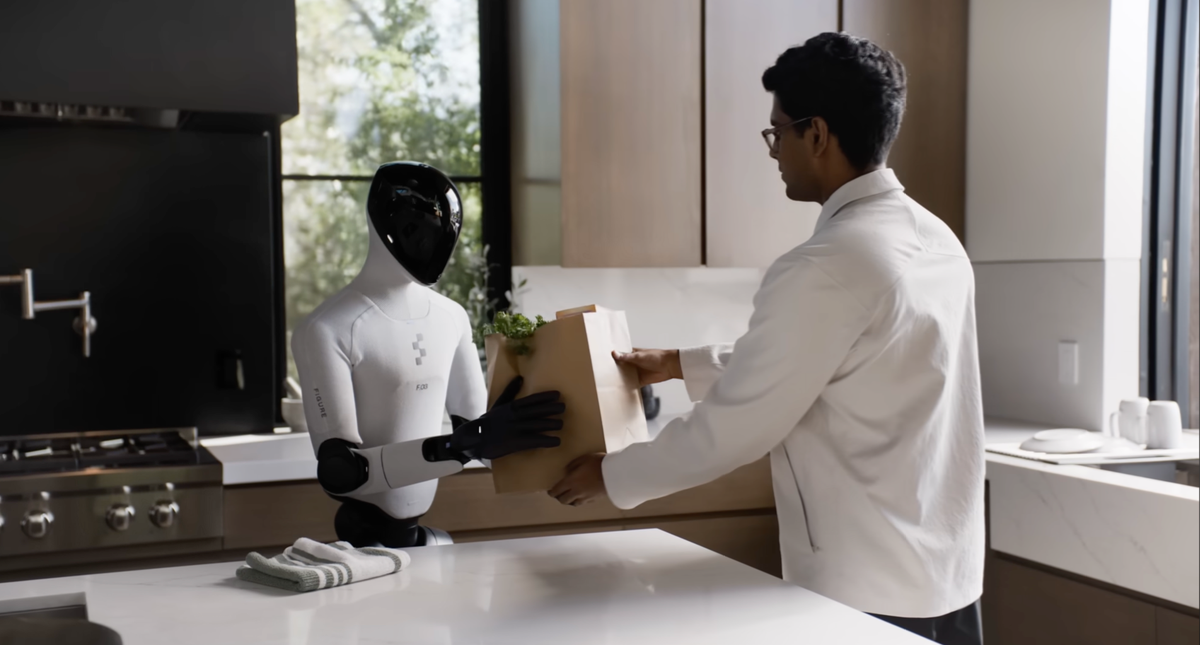
So it is still unclear exactly when household humanoids will go mainstream. What is clear is that they will need far higher reliability and social consensus than factory or logistics robots do.
The future of jobs looks less like "occupations disappear" and more like "occupations get taken apart"
Whenever AI and robots come up, the instinct is to erase job titles first. Will accountants disappear? Will developers disappear? Will designers disappear?
The real change is likely to be more granular than that, because a single job is made up of dozens of tasks.
A developer listens to requirements, designs architecture, writes code, tests it, deploys it, and fixes outages. A doctor takes a history, records it, diagnoses, explains, and decides on treatment. A teacher builds materials, explains them, spots a student's misunderstanding, motivates, and grades.
AI takes over some of these tasks first. Before a job disappears, it gets reassembled.
That is what makes Microsoft's 2026 Work Trend Index interesting. Its central finding is that organizations are moving past the stage of people occasionally using AI, toward a structure where agents handle execution and humans handle direction and judgment.
The productivity gap of the future may widen less between people who know how to use AI and those who don't, and more between people who know how to delegate work to AI and people who know how to take responsibility for the results.
Coding education is already moving from "writing code" to "directing a system"
A few years ago, teaching a child a future-proof skill basically meant teaching coding. Learn Python syntax, master for-loops and if-statements, type code line by line.
By 2026, that picture is aging fast.
"Vibe coding," where someone describes an app in plain language and lets AI write the code, has gone mainstream. A beginner can now build a working prototype of a web service or small app within hours.
Classrooms are already adjusting. A 2026 ACL study on NLP education let students use LLMs to generate code, while grading them instead on conceptual understanding and critical reflection. Carnegie Mellon's fall 2026 "Agentic Software Development" course is more direct about it. Its starting premise: the cost of producing plausible-looking code has dropped, and the cost of understanding, verifying, and maintaining that code now matters more.
Brown University's 2026 introductory computer science pilot is designed so students learn both hands-on programming and how to use coding agents together. The point is not to eliminate hand coding, but to give students a mental model for judging what an AI-written program actually does.
So debating whether kids should learn Python or JavaScript is already a slightly outdated question.
The more important question is this: can a child turn their own idea into a clear specification a computer can execute, test the output an AI produces, find what is wrong, and fix it?
After vibe coding comes "agentic making"
Vibe coding is not the end point either.
Early vibe coding was one person talking to one AI to build an app. The direction now is shifting from handing everything to a single AI toward splitting work across multiple agents with different roles.
One agent does market research, another designs the screens, another writes the code, and a separate agent handles testing and security review. Humans sit above all of it, setting goals and constraints and checking whether the pieces fit together.
Anthropic's own 2026 analysis of multi-agent systems points to a rapid rise in situations where AIs interact with each other inside shared environments like codebases and markets. OpenAI, for its part, is expanding its education products from AI that answers questions toward agentic capabilities that read materials, use tools, and execute multi-step tasks.
The "kid who's good with computers" of the future may not be the one who types fastest. It's more likely to be the kid who can break a complex goal into smaller tasks, assign each to the right AI, reconcile conflicting outputs, and take responsibility for the final result.
In other words, coding education is expanding from "training programmers" to "practicing the role of running a small tech company."
Six things kids need to learn now
So what should be at the center of education after 2026? Repeating nice-sounding words like "creativity" or "collaboration" is not enough. The AI era calls for much more specific skills.
First, problem selection. The cheaper AI makes producing answers, the more valuable it becomes to decide what problem is worth solving.
Second, writing specifications. A prompt going forward isn't a one-line request, it's closer to a requirements document: goals, user conditions, things to avoid, success criteria, and edge cases spelled out clearly.
Third, breaking down and delegating. Complex projects need to be split into tasks, with judgment about which parts go to a person, which to AI, and which to a robot.
Fourth, verification. In the AI era, the bottleneck may shift from "the ability to build" to "the ability to catch what's wrong." Checking sources, designing test cases, finding counterexamples, and reproducing results become the core skills to learn.
Fifth, taste and editing. Once anyone can produce similar-quality writing, images, or apps in minutes, the judgment to decide what to cut and what to keep becomes the differentiator.
Sixth, accountability. When something goes wrong with output an agent produced on someone's behalf, "the AI did it" won't hold up as an excuse. The most valuable people in the AI era may look less like executors and more like accountable approvers.
AI education should look different depending on a child's age
There's no need to teach elementary school kids agent orchestration from day one. What matters more at that stage is time spent writing by hand, reading, calculating, and building things physically, which forms an internal model of how the real world works. On top of that, it helps to let them use AI to build a game or small tool they've imagined themselves.
From middle school onward, vibe coding can become a genuinely good educational tool. Rather than memorizing syntax, students build an app that solves something that actually bothers them. But the finished product alone shouldn't be graded. What requirements they gave, why the AI's first attempt was wrong, and what they changed all need to be part of the evaluation.
High schoolers can go a step further: projects that split research, design, building, and testing across multiple AI agents, then bring in real users, log the bugs, and deal with privacy and security issues too.
At the university level, AI needs to be paired with a field of study. Biologists design experiments with AI, historians search through vast archives, designers build their own prototypes, and business students build small services and check how actual customers respond.
The unit of education may shift from "how many classes did you take" to "what did you build and verify in the real world."
The real crisis for elite universities isn't that AI hands out knowledge
Saying AI is about to erase the value of Harvard or Stanford also goes too far. The value of an elite university was never built on knowledge transfer alone. Talented peers, research infrastructure, faculty, networks, and selection signaling all work together.
But the pressure on universities is becoming clear.
In the past, the fact that someone learned difficult knowledge was itself scarce. Now the cost of accessing knowledge is falling fast. So universities need to prove what a student built, what research they did, and what problems they became able to solve, not just what they sat through.
According to the Stanford AI Index 2026, undergraduate computer science enrollment at US four-year universities fell 11% between 2024 and 2025, while AI-related graduate programs grew. At the same time, four out of five US high school and college students already use AI for schoolwork.
Going forward, the real competitor to a degree may not be AI itself, but a "provable portfolio." Apps with real users, published research, robotics projects, open-source contributions, small businesses: these are the kinds of output that will sit next to a transcript.
The most realistic change parents can make for their kids right now
There is a much wider space between banning a child from using AI entirely and handing it over with no limits at all.
The best starting point is steering AI use toward making, not consuming.
Instead of an extra hour of YouTube, build a small site describing your own interests. Instead of playing a game, try building a simple one. Don't stop at having AI plan a family trip, build a family travel budget calculator instead. Instead of having a book summarized, build a quiz app comparing its characters.
And parents should ask about the process, not just the result.
"What problem were you trying to solve?" "What did the AI get wrong at first?" "What did you decide yourself?" "Where did someone else get stuck using it?" "How did you check that this result was actually correct?"
Those five questions alone are enough to turn AI from a homework machine into a tool for training how to think.
Insight Times Editorial Desk