Why Tesla Jumped: Barclays Sets a $450 Target on SpaceX Merger Hopes

Hopes for a SpaceX merger moved the stock. Whether the rally lasts likely depends on how robotaxis turn into profit and cash flow.
Why did one brokerage call move the stock?

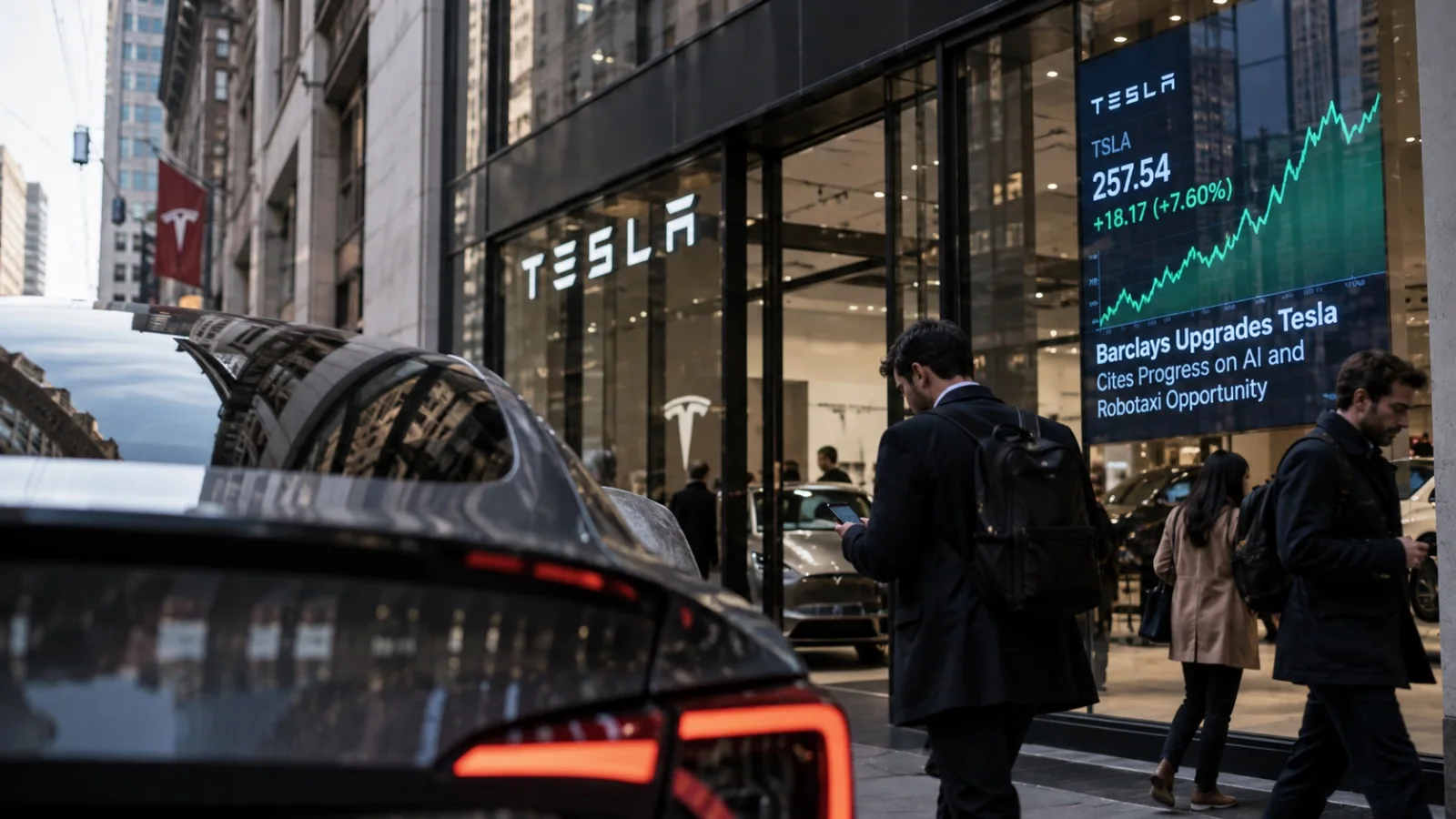
The direct catalyst for Tesla's rise on Oct. 26 was an upgrade from Barclays. Against the prior close of $372.22, a $450 target implies upside of about 20.9%. In premarket trading, the shares rose to around $380.

The important change is less the price target than the logic behind it.

Barclays assigned an acquisition premium to the possibility of a merger with SpaceX. It also factored in a recovery in auto sales and the growth potential of robotaxis. But $450 is an analyst's forecast. It is not a merger offer price or a confirmed valuation.

A SpaceX merger: hope is not the same as shareholder value

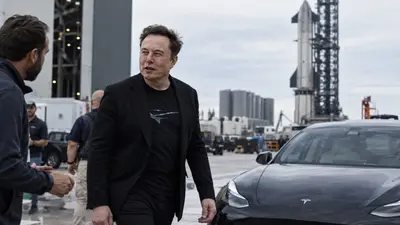
Barclays laid out a scenario in which SpaceX acquires Tesla in a stock swap. If such a deal materialized, Tesla shareholders could receive a premium.

The key issue, though, is the exchange ratio, not whether a merger happens. The economic benefit to existing shareholders would depend on how Tesla and SpaceX are valued, on new share issuance, on voting structure and on approval conditions.

Merger hopes can lift a stock. A merger itself does not guarantee higher shareholder value.

How much have the auto and energy businesses improved?

  • 2.6%: operating margin in the third quarter of 2026
  • -56%: operating income, year over year

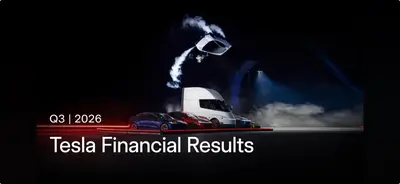
Tesla's third-quarter revenue was $28.046 billion, roughly flat from a year earlier. Operating income fell 56% to $718 million, and the operating margin was just 2.6%.

The energy business, by contrast, is gaining room to grow on data center power demand. Citing strong orders, Barclays said energy storage deployments could rise more than 50% in 2027. Actual deliveries and profit still have to be confirmed.

Robotaxis: driving a lot is not the same as making money

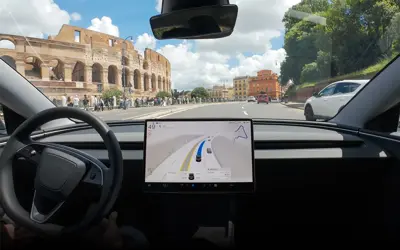
Tesla said cumulative unsupervised robotaxi miles in the third quarter rose eightfold from the previous quarter. Active paid FSD subscriptions rose to 1.74 million from 1.04 million a year earlier.

That is evidence the service is expanding. But the number investors ultimately need to see is how much of the revenue each vehicle earns is left as profit, not how far the cars drive.

Robotaxis can be judged a sustainable transport platform only if they still turn a profit after vehicle depreciation, remote support, insurance, charging and maintenance costs are all deducted.

Four things to watch

Merger hopes lifted Tesla, but robotaxi profitability and cash flow will likely decide whether the gain holds.

Insight Times Editorial Desk
More by topic

Starting with this story's topics, then what readers are following now

Investor psychology, decision-making and books on investing

TSLA

This story's topic34 storiesSee all →

The Cybercab is not a $30,000 car. Tesla is selling hours, not vehicles

No steering wheel, no pedals. The economics of Tesla's robotaxi turn on how many paid hours a day it runs, not on what it costs to build.

Tech

Tesla Energy's 13.7GWh Paradox: Expectations Ran Faster Than Deployments

Q2 deployments recovered but margins collapsed. Q3 set a record for deployments and still missed estimates. The issue is not the size of AI power demand but how fast it converts into Tesla revenue and profit.

Tech

Tesla's FSD Clears Eight European Countries. The Number That Matters Now Is Paid Conversion

European regulatory barriers for FSD Supervised are falling. But investors who lump supervised software revenue together with the value of driverless robotaxis risk pricing the same news twice.

Tech

Why Tesla Lined Up $30 Billion in Credit It Says It Won't Use This Year

Tesla's 2026 capex is set to nearly triple. The question is less about debt than about when spending on AI, robotaxis, chips and energy turns into cash flow.

Tech

The AI Bubble Question Has Changed: By Late 2026, It's ROIC Over GPUs

There is no sign yet that AI investment is slowing. If anything, hyperscaler spending forecasts keep climbing. But as the scale of that capital has grown, the market's question has shifted from "is AI growing" to "when, and how much, does this capital come back as cash."

Tech

Why Elon Musk's 4% Growth Call Deserves a Serious Read

Elon Musk says AI could double US GDP growth next year from roughly 2% to 4%. The number that matters isn't 4%, it's the idea that intelligence is turning from scarce labor into replicable capital.

Macro

The Number That Matters More Than 0.81 Seconds: 2028 and Tesla's Roadster

The second-generation Roadster has flown, using SpaceX-derived thrusters. For investors, the better question is not whether it can fly but what it can change in Tesla's value.

Tech

Robotaxi

This story's topic15 storiesSee all →

Tesla's 546 Robotaxis and Hundreds-a-Week Optimus Bots: What the Numbers Miss

Tesla is scaling two "physical AI" products at once, but registration counts and production counts do not tell investors whether either one is actually making money.

Tech

Rates Hit 5% Again, But AI Held - Now Wall Street Wants Cash Flow, Not Just GPUs

The Fed raised rates and the 10-year yield broke back above 5%, yet the Nasdaq did not crack. This week's real story is not the end of the AI rally but a change in what the market is grading.

Investing

When Will Tesla's Rally Finally Hold? The Case for 2027

The next leg up for Tesla will not come from another product reveal. It will come when self-driving, AI investment and Optimus stop being "future stories" and start showing up as real profit and cash flow. The first real test window is likely 2027.

Investing

Tesla's biggest asset is not the car: when Robotaxi and Optimus stop being options

Tesla's AI value sits in autonomy and humanoids, and both could dwarf car manufacturing. The gap is between a demo and a fleet that earns cash per vehicle.

Tech

ARK Sets Tesla 2031 Target at $4,400, Betting on 8.1 Million Robotaxis and Optimus

ARK Invest's new model implies a $17.5 trillion market cap for Tesla by 2031. It reads less like a forecast than a scenario that assumes robotaxis and robots earn real money.

Tech

Cybercab's Next Bottleneck Isn't FSD. It's Legally Deploying a Car With No Steering Wheel

NHTSA has told Tesla to submit the legal basis for Cybercab's self-certification by September 30. That does not mean an imminent halt or recall, but it makes clear the next hurdle for the robotaxi business is not just self-driving software. It is whether a purpose-built vehicle with no steering wheel or pedals can legally be deployed at scale on US roads.

Investing

A building that houses servers and networking gear and supplies them with powe…

US AI Data Centers Are Headed for 90GW. Gigawatts Now Matter More Than Dollars

Goldman Sachs expects US data center capacity to grow from 64GW at the end of 2026 to 90GW at the end of 2027. The AI race is moving from buying GPUs to building power plants and transmission lines alongside them.

Tech

Why the White House Swapped "AI" for "Super Intelligence"

Executive Order 14434 renames AI across the federal government without defining a new technology. The real story is about roughly $700 billion in capex, free cash flow and electricity.

Tech

Why Nvidia Is Happy to Help Make AI Models Nearly Free

Falling model prices can squeeze model makers. For Nvidia, the number that matters is the total volume of tokens generated worldwide and the compute that produces them.

Tech

Nvidia Put $2 Billion Into Lumentum. Optics May Be the Next Bottleneck, but the Stock Has Already Run

Optical networking is emerging as the next constraint on AI data centers. Investors need to separate the industry's growth potential from the price they are already paying for it.

Tech

Nvidia's Next Target After GPUs: Controlling What AI Agents Are Allowed to Do

OpenShell and Sentry are not about policing what an AI says. They are about controlling, at the server infrastructure level, which files and APIs an AI can touch, what it can execute, and who can actually pull the plug when something goes wrong.

Tech

AI Needs to Find $1 Trillion a Year From Somewhere to Pay Back Its Capex

Saying AI capex is big is no longer the point. The harder question is what end users have to pay for the buildout to pencil out, and Goldman Sachs puts that number at roughly $1 trillion a year.

Tech

Nvidia's $500 Billion Experiment: Wall Street Asks Who Backs the GPU, Not Just the Chip

The real issue in Nvidia's financing platform is not chip sales. It is how far Wall Street will trust GPU resale prices and rental income three to four years out.

Tech

HBM

63 storiesSee all →

Memory stacked next to the GPU.

Has Memory Peaked? Prices Are Cooling, but the Shortage Looks Set to Run to 2028

Price growth has slowed and consumer demand is already breaking. Server and HBM supply remains short, and Micron says more than 75% of its 2027 volume is already committed to customers.

Tech

AI Chip Peak Check: Demand Still Rising, Risk Building in 2027-2029 Supply and Funding

DRAM and NAND contract prices are still climbing and HBM suppliers hold the edge. Power shortages, AI financing costs and simultaneous memory expansion are the risks for later years.

Investing

How Far Can China Push DRAM Without EUV

CXMT says it has shrunk DRAM features to 11.95nm using quadruple patterning instead of EUV lithography. The real question is not whether China caught up, but how much more it now costs China to get there.

Tech

Memory Chip Supercycle: Not at Peak Yet, But 5 of 6 Warning Signs Are Flashing

Memory prices are still climbing, but the pace is slowing and PC and smartphone demand is starting to crack under the weight of higher chip costs. This looks less like a price peak and more like a profit plateau building toward the next supply cycle.

Investing

The Real ASML Number Isn't the 3% Pop, It's the 30% Capacity Hike

ASML's rally isn't just an AI trade. Customers are already locking in 2027 tool slots, and ASML is raising Low-NA EUV capacity by roughly 30% to keep up.

Investing

2027 Isn't the End: Citi's Case for a Memory Supercycle Running to 2031

Citi says the memory shortage timeline is stretching again. If AI shifts from "train once" models to continual learning, HBM, server DRAM and enterprise SSDs could all fall short at the same time.

Tech

Samsung, SK Hynix Sold Off on AI Fears. The Orders Haven't Followed Yet

The selloff reflects a market recalculating AI capex speed and memory earnings expectations, not confirmed cancellations. So far, the data show a gap between fear and reality.

Investing