The Number That Matters More Than 0.81 Seconds: 2028 and Tesla's Roadster
The second-generation Roadster has flown, using SpaceX-derived thrusters. For investors, the better question is not whether it can fly but what it can change in Tesla's value.
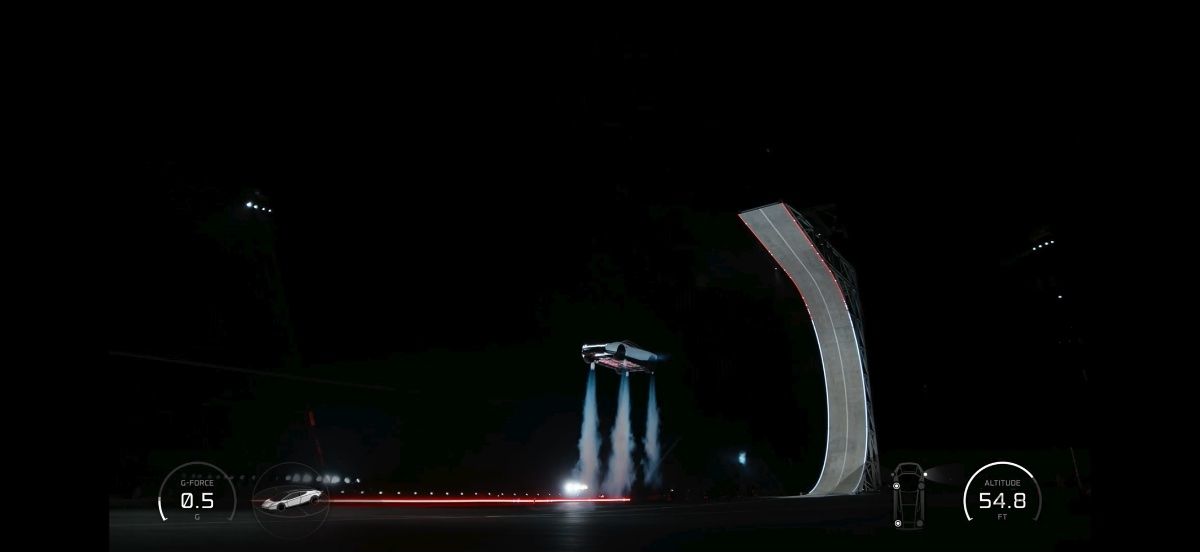
The car flew. It is not a long-range flying car.
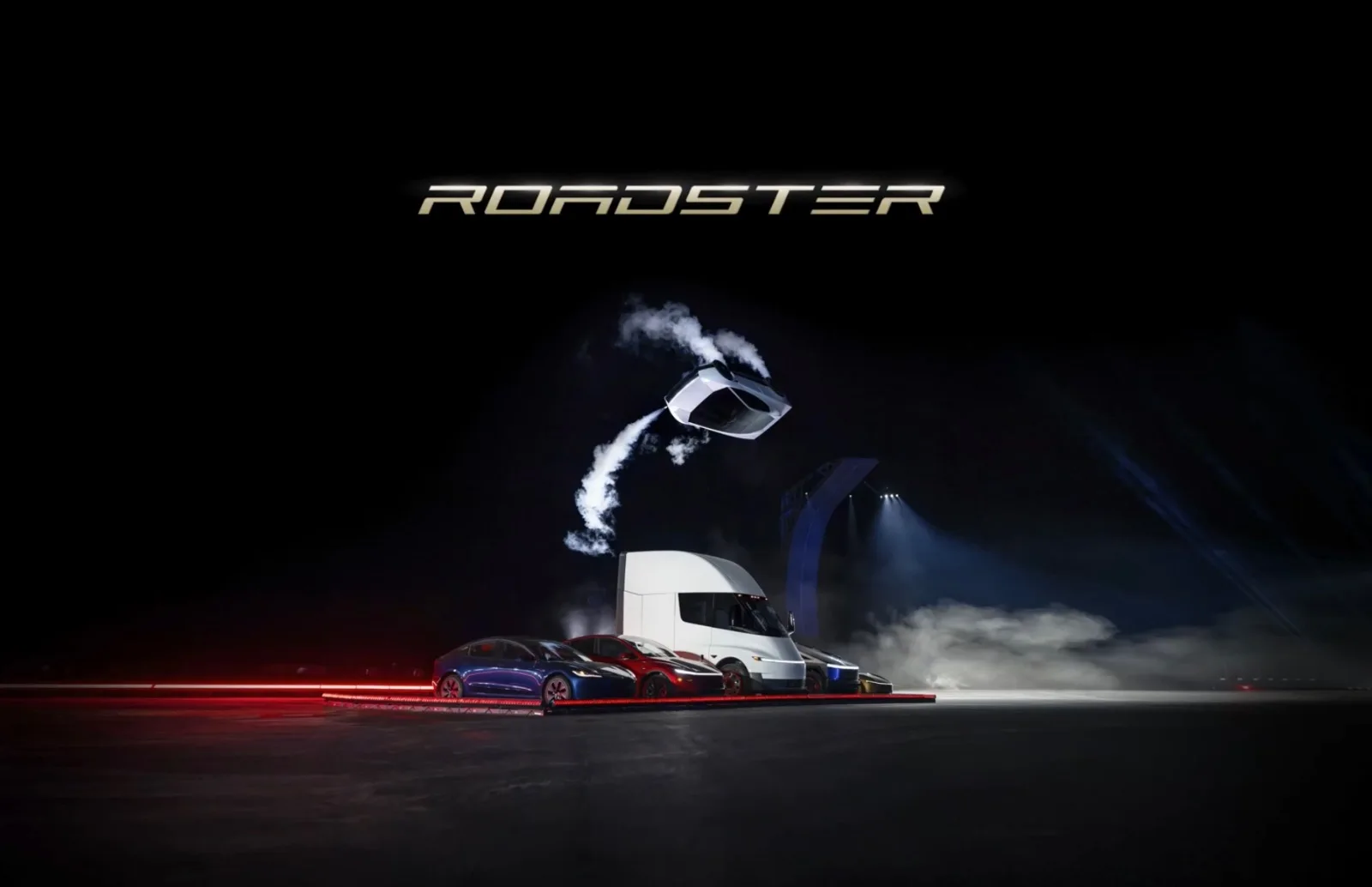
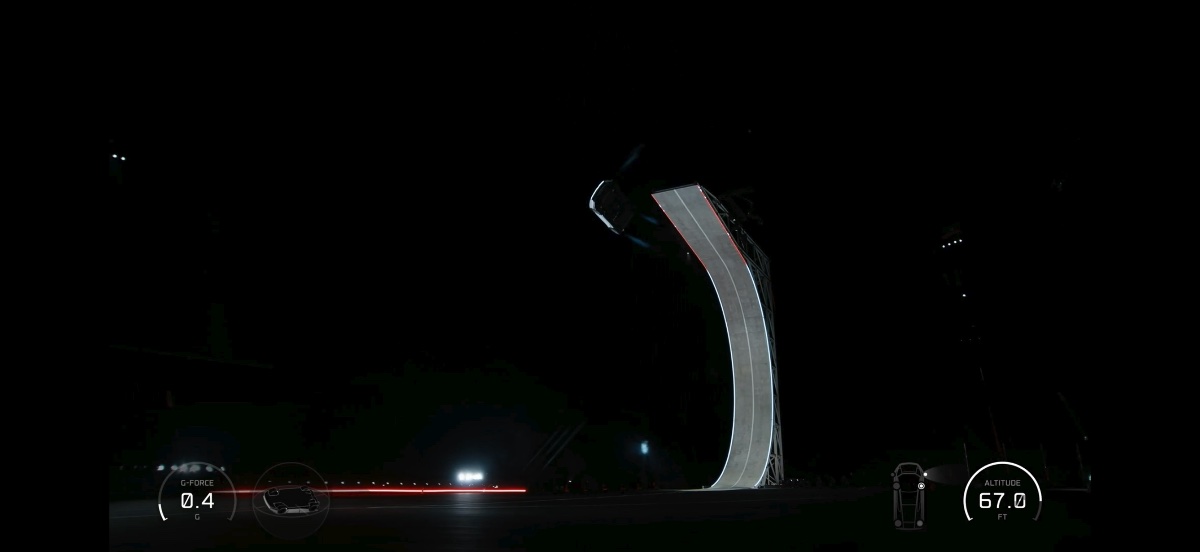
Tesla has finally re-unveiled the second-generation Roadster, delayed for about nine years. The strongest moment was not speed but aerial maneuvering. The car rode a huge curved ramp, flipped, left the ramp, used thrust systems in the underbody and around the body to control its attitude, and landed on its wheels. A separate demo showed it clearing a Cybercab, Cybertruck, Semi, Model Y and Model 3.
Lars Moravy, Tesla's vice president of vehicle engineering, described 10 cold-gas thrusters and a 600-liter compressed-air system. Tesla said it placed carbon-fiber overwrapped pressure vessels (COPVs) in empty spaces in the body. This is not like an aircraft that burns fuel to keep flying. The form shown so far looks like a system for short hovers, jumps, attitude control and explosive acceleration.
- 0.81 seconds: 0-60 mph acceleration shown in the demo video
- 10: cold-gas thrusters on the Rocket trim
- 2028: Tesla's stated production start target
Effectively a different car from the 2017 Roadster
The Roadster shown at the 2017 Semi event promised 0-60 mph in 1.9 seconds, a top speed above 250 mph, 620 miles of range, a 200 kWh battery and four seats. The new car differs in design, packaging and purpose. Its sharp body draws design inspiration from the SR-71 and F-35 fighter, and carries the design language Tesla built over nine years through the Cybertruck and Cybercab.
The most important change is range. All three trims are listed at about 300 miles. The old 620-mile figure should not be treated as a confirmed spec for the planned production car.
| Trim | Focus | Seats | Key features | Reservation |
|---|---|---|---|---|
| Performance | Road | 2 | Active aero, multimode intake system | $50,000 |
| Thrust | Racing | 2 | Rear cold-gas thrusters, sub-1-second 0-60 mph | $250,000 |
| Rocket | Aerial maneuvering | 1 | 10 thrusters around the car, attitude control and hover | Invitation only |
The Roadster's value is a "technology billboard," not volume
The Roadster is unlikely to change Tesla's earnings. Elon Musk himself has said in the past that the car would not make a large financial difference. Seth Goldstein of Morningstar, cited by Reuters before the unveiling, estimated annual sales of about 2,000 units. That is tiny next to Tesla's mass-market models.
Instead, the car does three things. First, it raises the ceiling for EV performance again. Second, it shows that Tesla and SpaceX, though separate companies, can cross-use people and technical ideas. Third, as Tesla shifts toward autonomy and robots, it leaves behind a brand symbol of the extreme in human-driven machines.
In that sense the Roadster resembles the Audi R8 or Lexus LFA, products that lifted a whole brand's technology image, more than a Ferrari-style profit model. The aim is impact, not volume.
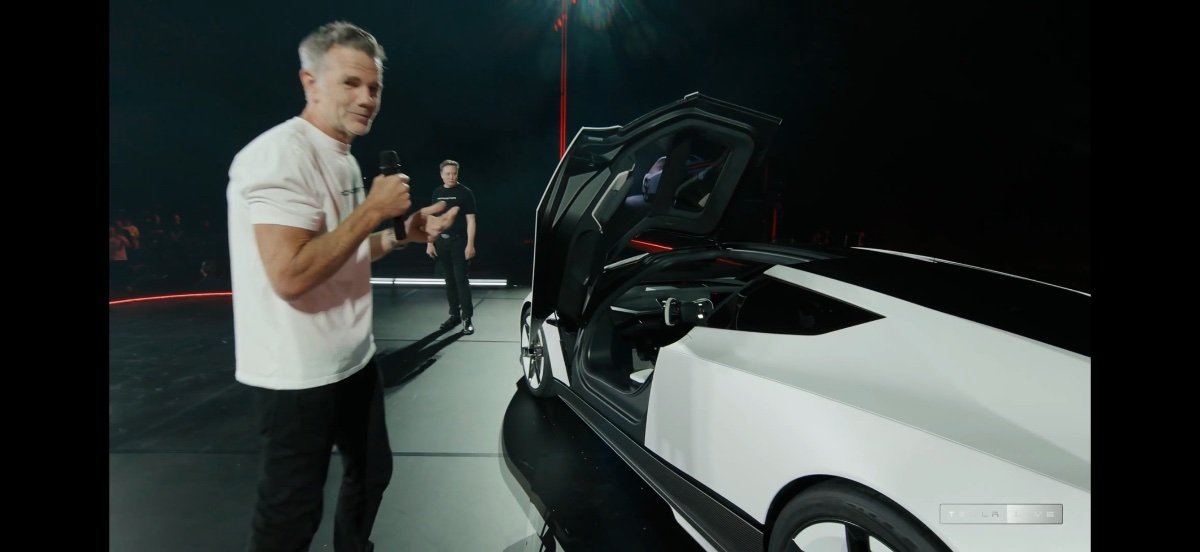
A successful demo is not a successful product
What the event confirmed is that a prototype performed real aerial maneuvers in a controlled environment. That does not mean it can do the same freely on public roads. Many problems remain: the durability of an ultra-high-pressure air system under repeated use, noise, pedestrian safety, jet flow around the vehicle, liability in accidents, and vehicle certification in each country.
The most important promise is 2028 production. The Roadster already missed a 2020 production target, and its schedule has changed several times. The demo proved technical possibility, but it is too early for investors to conclude that schedule credibility has been restored.
Insight Times Editorial Desk