When Will Tesla's Rally Finally Hold? The Case for 2027
The next leg up for Tesla will not come from another product reveal. It will come when self-driving, AI investment and Optimus stop being "future stories" and start showing up as real profit and cash flow. The first real test window is likely 2027.
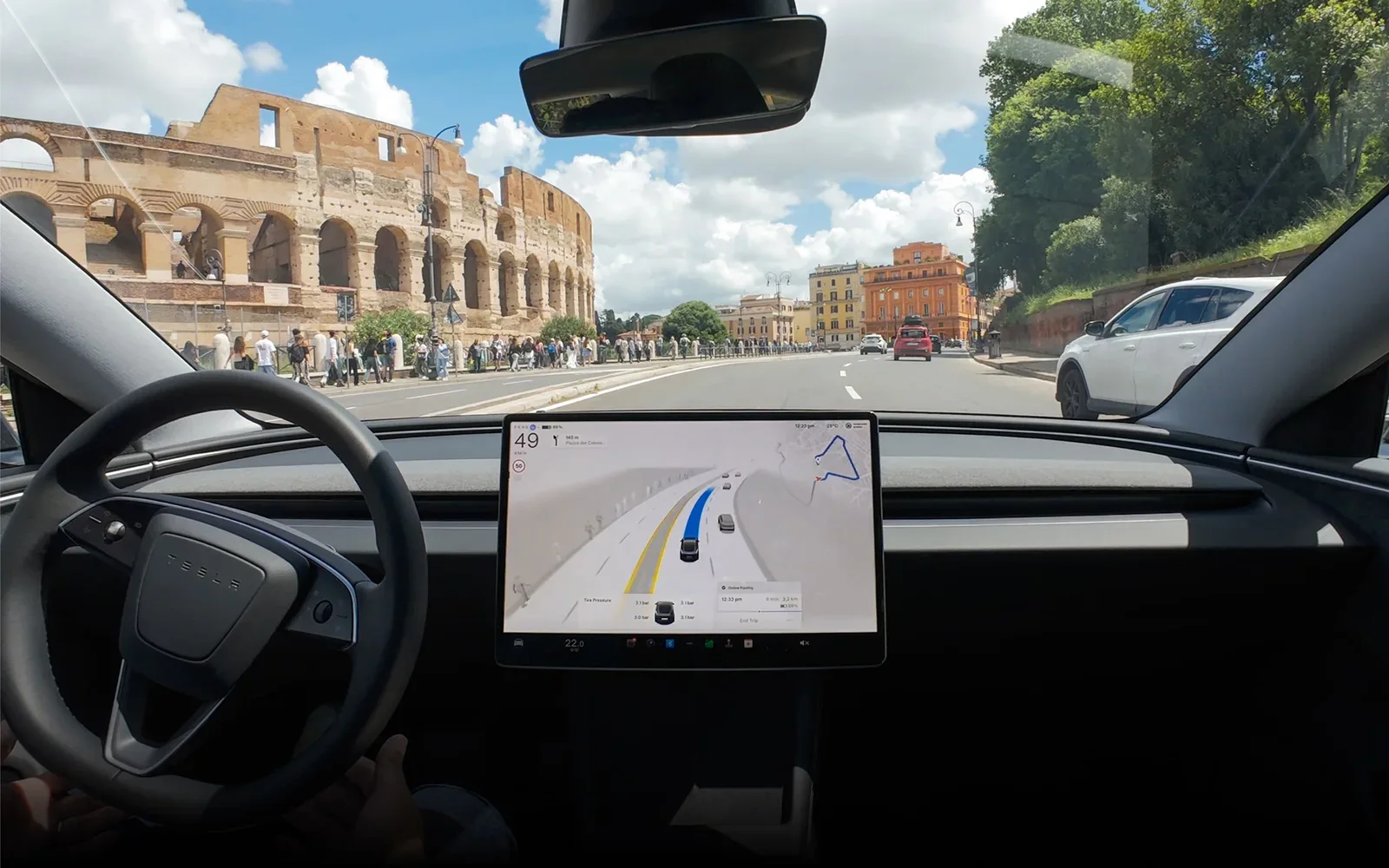
What Tesla investors actually want isn't a rally. It's a rally that lasts.
Tesla is not short on good news. If anything, it has the opposite problem. FSD, Robotaxi, Cybercab, Optimus, AI5, energy storage, its own custom silicon: the future-story pipeline never runs dry.
That is exactly why long-term investors are worn out. Every time a new event lands, the stock moves hard. Then, once the news cycle fades, the market snaps back to valuation and current earnings. The question investors are asking now isn't "is this possible?" It's "when does this turn into money?"
$28.2B — Q2 2026 revenue, up 26% year over year
1.4% — Q2 GAAP operating margin, still too thin to fully justify the future story priced into the stock
>$25B — Tesla's stated 2026 capex plan, a large upfront bet concentrated in AI and manufacturing transition
Tesla's second-quarter 2026 revenue came in strong at $28.236 billion, with deliveries of 480,126 vehicles. Operating cash flow was $4.697 billion. But capex jumped to $5.789 billion in the same quarter, pushing free cash flow into negative territory at -$1.092 billion. Cash and short-term investments remain healthy at $43.524 billion, so the question the market is asking isn't whether Tesla can survive financially.
So when does a durable rally actually start?
The most realistic answer: signals start building in the back half of 2026, and 2027 is when those signals get tested against actual earnings.
It helps to break this into three windows.
Second half of 2026 — Expectations rebuild Cybercab regulatory approval, Robotaxi expansion, Optimus production, and AI infrastructure spending start turning into real operating data. The stock can move ahead of earnings here, but volatility stays high.
First half of 2027 — The first proof window If autonomous driving's commercial scalability improves alongside auto margins and free cash flow at the same time, this is the window where the "future option" could get built into earnings estimates for the first time.
Second half of 2027 and beyond — Where the sustained uptrend gets decided If Robotaxi and Optimus start contributing to actual operating profit, and cash generation against capex becomes visible, event-driven spikes have a real chance of turning into a longer trend.
The important part is not "the stock rises starting January 2027." Markets don't wait for profit to actually rise before they move. They typically price things in six months, sometimes over a year, ahead of time.
So if 2027 becomes Tesla's earnings inflection point, the stock's inflection point could show up earlier, sometime in the second half of 2026. Conversely, if 2027 arrives and all that has grown is regulation and capex, with no visible improvement in cash flow, the structural re-rating gets pushed back too.
1. Auto margins need to turn first
Before the autonomous-driving story can carry weight, the existing car business needs to stop eating into profit. Tesla's overall automotive gross margin in Q2 was about 16.9%. Operating margin came down to 1.4%.
The first signal of a durable rally may not be a flashy Robotaxi announcement at all. It may be auto margins stabilizing without leaning on price cuts. Once the core business finds a floor, the market can layer in the value of future businesses far more comfortably.
2. Robotaxi has to move from "technology" to "economics"
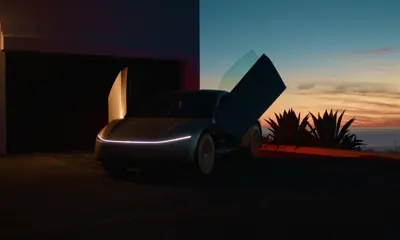
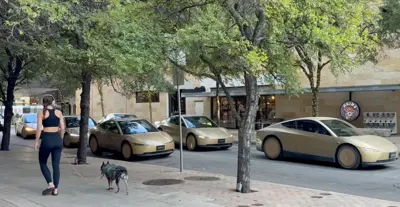
In its Q2 update, Tesla said Robotaxi is operating in seven major U.S. metro areas and that Cybercab production has begun. That is clearly different from the demo stage of a few years ago. But the harder questions start now.
How many paid hours does one vehicle run per day? How often does a human need to intervene? What does it cost to operate? How much revenue and profit does one vehicle actually generate?
Once these numbers start getting disclosed, the valuation debate around Tesla changes considerably. Right now, Robotaxi's value is priced mostly as an option. Going forward, it becomes something that can be modeled with real unit economics.
3. Free cash flow needs to climb back once capex peaks
2026 is one of the biggest investment years in Tesla's history. The company expects annual capex to exceed $25 billion, spanning AI compute, data centers, production lines, chips, Optimus, and AI assets Tesla runs itself.
That's why the number investors may need to watch most isn't revenue. It's free cash flow. If operating cash flow grows faster than the massive ongoing capex and FCF turns reliably positive again, the market starts shifting its read from "a company spending money" to "a company whose spending is making money."
4. Optimus could be the second engine behind the 2027 stock story
Optimus is unlikely to carry Tesla's earnings anytime soon. But that could change by 2027. Tesla is building Optimus production capacity in space at Fremont freed up by winding down the Model S and Model X lines, and has said it expects production to begin in late 2026.
What matters for the stock isn't footage of a robot walking or picking things up. What matters is how many units actually get deployed inside Tesla's own factories, how fast the cost to build one comes down, and how much human labor time it actually replaces. Once those numbers are confirmed, Optimus moves from a distant future story into something that can be built into a valuation model.
Why 2027, specifically
Several of Tesla's business cycles could plausibly converge around the same window.
| Business | 2026 | What to confirm in 2027 |
|---|---|---|
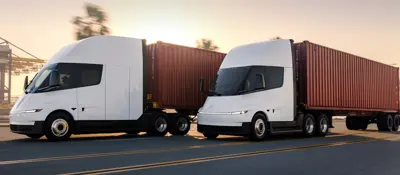
| Automotive | Record Q2 deliveries, thin operating margin | Easing price competition, margin normalization |
| Robotaxi | Service expansion, Cybercab production begins | Large-scale commercial operation, disclosed per-vehicle economics |
| AI / Capex | Spending plan above $25 billion | Slower capex growth rate, operating cash flow recovery |
| Optimus | Production line build-out, early production | Large in-house deployment, cost data |
| Energy | 13.5 GWh of storage deployed in Q2 | Whether high growth and profit contribution hold up |
If even two or three of these turn positive at the same time, the stock could react strongly. If all four move together, the picture changes far more dramatically.
Tesla's stock currently has one clear weakness: too much future is already priced in. But that cuts both ways. Once those future businesses start converting into actual profit, that same weakness becomes a strength. The market may stop valuing Tesla purely on car sales and start treating Robotaxi, AI, Optimus and energy as separate growth curves in their own right.
Rates and SpaceX are not the main plot. They're the pacing variable.
Interest rates are not what generates Tesla's core upside momentum. But if long-term rates stay elevated, that raises both auto financing costs and the discount rate applied to growth stocks, which can slow the stock down. Conversely, if the underlying business metrics improve sharply enough, earnings growth can offset the drag from rates.
The same logic applies to a possible tie-up with SpaceX. Until a concrete deal structure emerges, it stays a source of uncertainty, but it is not the key variable that will decide Tesla's long-term trend. What matters far more is how much real profit Robotaxi and AI investment generate inside Tesla's own business.
Insight Times Editorial Desk