Tesla's biggest asset is not the car: when Robotaxi and Optimus stop being options
Tesla's AI value sits in autonomy and humanoids, and both could dwarf car manufacturing. The gap is between a demo and a fleet that earns cash per vehicle.
Value Tesla as a carmaker and it looks expensive. Value it as an AI company and you are believing too much, too early
Tesla is hard to value because several businesses on different clocks sit inside one company.
The cash today comes from vehicles and energy.
The thing that could reprice the company is FSD, Robotaxi and Optimus.
These two halves are verified to very different degrees.
The car business already has production, deliveries, ASP, gross margin, operating margin and free cash flow.
Robotaxi and Optimus may address far larger markets, but large-scale deployment, unit economics, safety, regulation and maintenance costs have not been demonstrated at any meaningful size.
So the most dangerous error in owning Tesla is neither ignoring the future businesses nor modelling them as settled cash flows.
It is failing to separate current results from future options at all.
The car business right now mostly shows you what the options cost
Q2 2026 revenue was $28.236 billion, up 26% year over year.
Deliveries rose 25% to 480,126 vehicles.
Operating income fell 57% to $398 million.
Operating margin: 1.4%.
Automotive gross margin excluding regulatory credits, on a non-GAAP basis, was 16.3%.
Operating cash flow was $4.697 billion, but capex jumped to $5.789 billion, leaving free cash flow at negative $1.092 billion.
Vehicle sales are growing again, and at the same time AI and other R&D, new plants and AI infrastructure are squeezing both earnings and cash.
The message in those numbers is simple.
The options are not free.
Cash from the existing business is being reinvested to make Robotaxi and Optimus real.
1.48 million FSD subscriptions is the first piece of Tesla's AI story confirmed in money
Active FSD subscriptions reached 1.48 million in Q2 2026.
That is up 56% from 950,000 a year earlier.
The company said the FSD attach rate on new deliveries in North America passed 55%.
This matters because, unlike Robotaxi, FSD is software customers already pay for.
It is real evidence that Tesla's AI work is converting into willingness to pay.
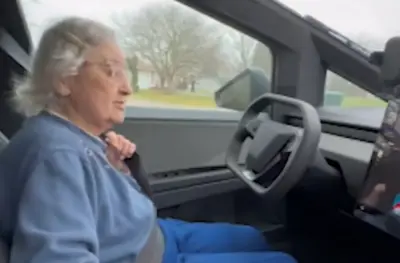
But FSD remains Supervised.
Tesla's own materials state that active driver supervision is required and that the feature does not make the vehicle autonomous.
Growth in FSD subscriptions should therefore not be read as proof of full autonomy.
The confirmed fact is that software monetization is scaling quickly.
Full autonomy is a separate verification problem.
Robotaxi is not about a car driving itself. It is about a fleet making money
Robotaxi gets judged far too easily on a single clip.
A car moves with nobody at the wheel.
It looks like success.
The bar for a business is much higher.
One car runs.
A hundred cars run.
A thousand cars run.
Tens of thousands run at once.
The crash rate is low enough.
The remote intervention rate is low.
Rider wait times are short.
Vehicle utilisation is high.
And after cleaning, charging, tyres, maintenance and insurance, cash is left over per vehicle.
Only then does Robotaxi become a business rather than a technology.
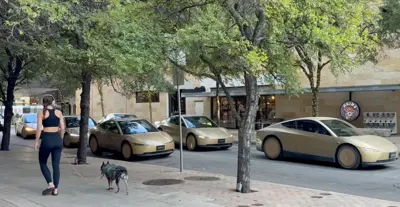
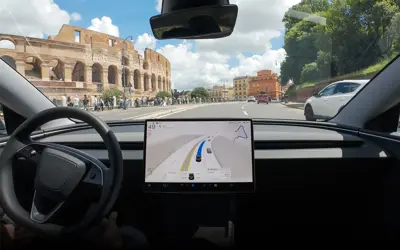
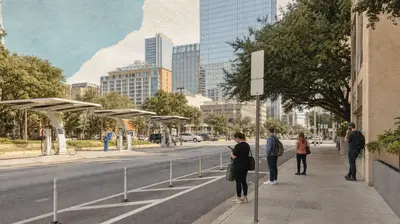
In its Q2 materials Tesla said it expanded the unsupervised operating area in Austin, and that in July it began unsupervised rides in Miami, Orlando and Tampa.
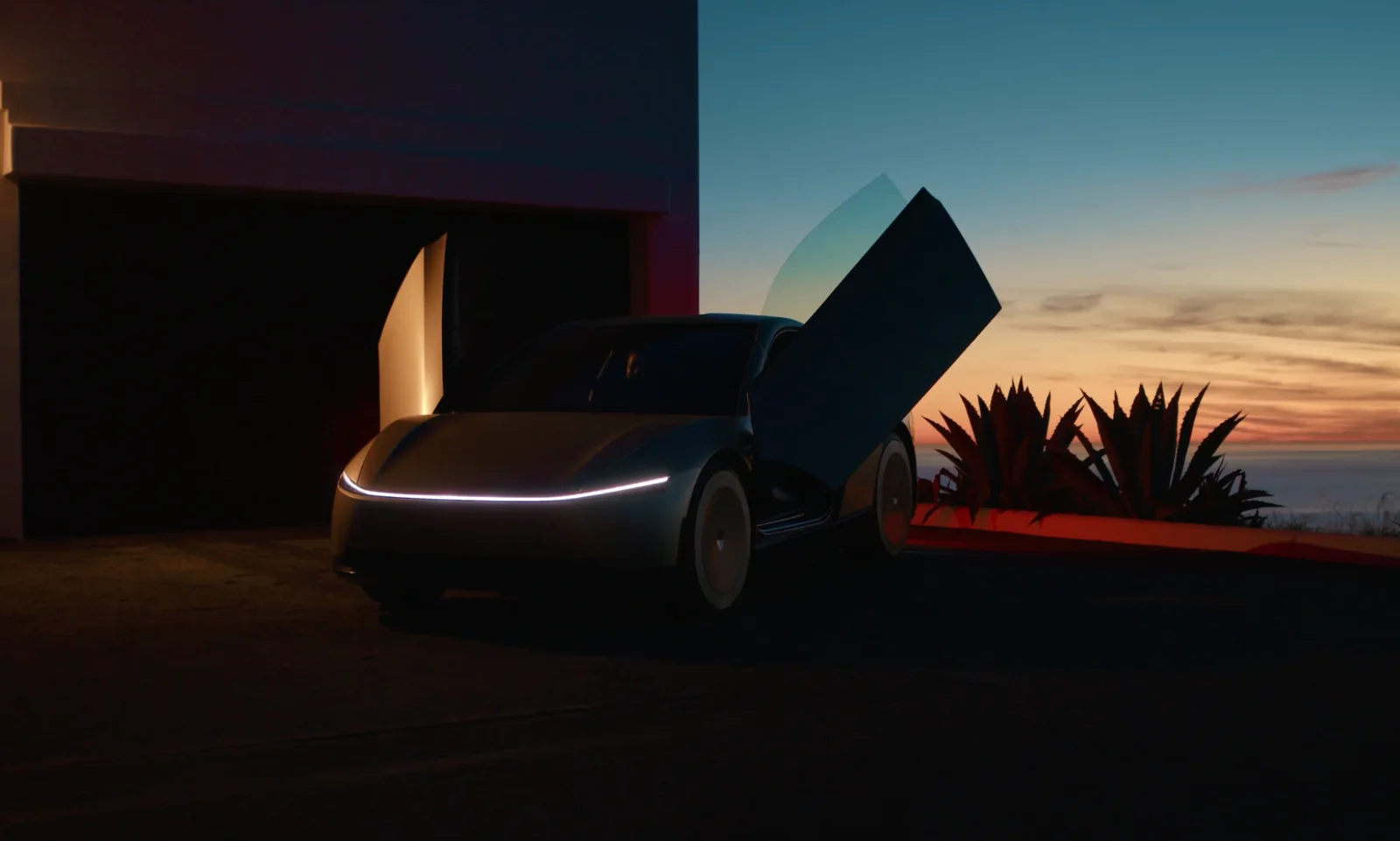
Cybercab production also started in Q2.
But there is still a long distance between an initial deployment and a national network.
The Cybercab in September 2026: started and scaled are not the same fact
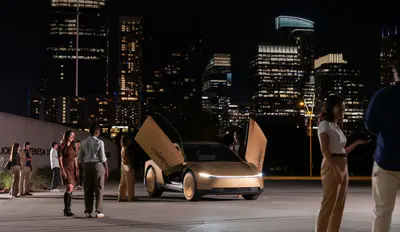
According to Reuters, Tesla began carrying passengers in early September in a limited part of Austin using the Cybercab, which has no steering wheel and no pedals.
Around 420 Tesla autonomous vehicles were registered in Texas, of which roughly 45 were Cybercabs.
That is a real milestone, because a purpose-built vehicle entered public-road service.
It is also still small.
On top of that, NHTSA opened a review of how the Cybercab meets existing federal motor vehicle safety standards.
The episode is a reminder to keep launch and scale apart when reading Tesla's autonomy news.
Starting service means clearing the first technical and regulatory gate.
Proving economics at scale is a different stage entirely.
Why Waymo and Zoox matter: Tesla competes on deployment speed, not just technology
The robotaxi market is not waiting for Tesla.
Waymo runs paid, fully driverless service in several US cities and is expanding to more.
Amazon's Zoox launched paid service in Las Vegas in 2026 and is widening testing to other cities.
Tesla's advantages in this race are substantial.
Video data from millions of vehicles already on the road.
In-house vehicle manufacturing.
The FSD software stack.
A dedicated Cybercab.
Charging infrastructure.
Vertical integration.
The competition has advantages too.
Waymo has accumulated considerable driverless operating experience, and regulatory operating experience, in specific metros.
Tesla's real edge has to be proven not by whether end-to-end AI is more elegant, but by whether it can deploy in more cities, at lower cost, more safely.
The costs that must go into any Robotaxi unit economics model
Treating Robotaxi as "no driver wages, therefore enormous margin" is a dangerous shortcut.
There is vehicle depreciation.
There is insurance.
There are crashes and repair bills.
There are tyres.
There is charging.
There is cleaning.
There is the cost of repositioning vehicles.
Remote supervision and customer support staff may be required.
There are compliance costs.
In slow hours, cars sit idle.
In peak hours, there are not enough of them.
The number that matters is not revenue per mile but contribution margin per paid mile.
Beyond that, look at the free cash flow one vehicle generates in a year against the upfront cost of the vehicle.
Robotaxi is an autonomy business and a very complicated fleet operations business at the same time.
Is Tesla's strongest moat data or manufacturing?
Data is the moat most often cited in the Robotaxi thesis.
Millions of cars drive real roads and generate video.
That data feeds model training.
New models are pushed back to the fleet.
More driving data accumulates.
It is a powerful flywheel.
Data alone is not enough.
In physical AI, you also have to build the hardware cheaply and quickly.
Tesla has the vehicle plants, the batteries, the power electronics, its own inference computer and over-the-air software delivery.
That vertical integration creates the possibility of much lower per-vehicle cost and faster deployment than a pure software licensing model.
So the moat is less "data" on its own than the structure that links data, manufacturing, software and energy infrastructure together.
Optimus may be the bigger market, but it is at an earlier stage of proof
It is hard to put a ceiling on the long-term addressable market for Optimus.
Factories.
Warehouses.
Logistics.
Services.
Homes.
Almost anywhere human labour exists is a potential market.
For exactly that reason, the overvaluation risk is large.
How much human work a general-purpose humanoid can actually replace is not a settled fact.
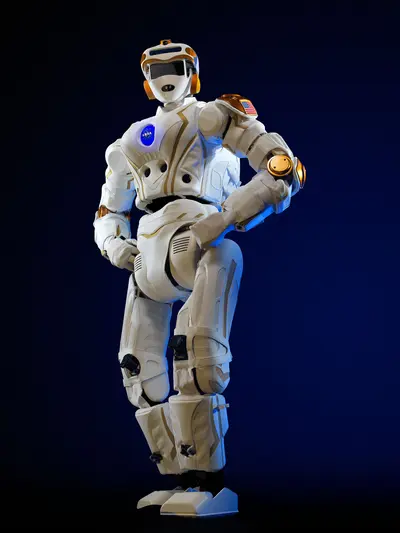
In its Q2 2026 materials, Tesla said it is dismantling the Model S/X production line at Fremont and installing the first-generation Optimus line.
The company expects to begin production soon, and said early Optimus builds will be used at Optimus Academy to collect training data and develop capabilities.
That phrasing matters.
The purpose of the first units is closer to learning and development than to customer sales.
This is still product validation.
The number to watch on Optimus is not how many get built
In the humanoid industry, production targets make the headlines.
Investors should separate capacity from economic deployment.
You can build 10,000 units.
That is not the same as 10,000 units working profitably at customer sites.
The KPIs that matter most for Optimus are these.
Actual working hours per day.
Charging time.
MTBF.
MTTR.
Human intervention rate.
Task success rate.
Service life of hands and joints.
Energy cost per task.
Annual MRO cost.
Cost per task versus a human worker.
Until those numbers are published, the large-scale economic value of Optimus should be handled as a scenario.
The upside is very large. It is not confirmed cash flow.
Owning the first customer is a serious advantage
Tesla has an asset most robotics startups cannot get.
Its own factories.
It does not have to convince an outside customer from day one.
It can find repetitive tasks inside its own plants.
Test on a real production line.
Fail.
Collect data.
Revise the hardware.
Update the software.
Redeploy.
The structure resembles the advantage Hyundai and Boston Dynamics have.
The robot maker and the first customer sit inside the same organisation.
Even here, internal testing and external commercialisation are different things.
Economics that work in Tesla's own plants do not guarantee the same ROI in another industry with another customer's constraints.
Why Tesla wants to own the AI compute too
In the Q2 materials, Tesla said construction and equipment procurement for its semiconductor fab in Austin continue.
The stated goal is to build long-term in-house chipmaking capability to secure stable supply of the logic and memory chips its products need.
That direction shows intent to move from carmaker to vertically integrated physical AI stack.
Data.
Training compute.
Inference chips.
Vehicles.
Robots.
Factories.
Energy.
If those pieces link into a single flywheel, the long-term moat could get considerably deeper.
But a fab demands enormous capex and is hard to execute.
Whether in-house chip production actually delivers a cost and supply advantage has to be verified on its own terms.
The biggest risk may be time, not technical failure
Even assuming the future businesses eventually work, investors can still lose money.
Time changes valuation.
Suppose mass Robotaxi deployment arrives five years later than expected.
Suppose Optimus commercialisation slips seven years.
Meanwhile automotive margins stay low.
Capex keeps going out the door.
Competitors multiply.
The technology can succeed in the end and the present value of the cash flows now embedded in the share price can still look very different.
The enemy of an option is not only impossibility.
It is delay.
That is why schedules and actual deployed units deserve relentless attention.
Which is why Tesla resists both simple valuations
Put Tesla on a conventional auto P/E and you are effectively valuing the Robotaxi and Optimus options at roughly zero.
Load the huge TAM of Robotaxi and Optimus into present value as near-certain and you are pricing execution risk far too cheaply.
The more reasonable approach is to break the company apart.
The value of today's vehicle and energy business.
The value of FSD's current monetization.
A probability-weighted option value for Robotaxi.
A probability-weighted option value for Optimus.
And the additional capex, dilution and execution risk those future businesses require.
Assess each separately.
The thesis ultimately rests less on how big the market is than on the probability of reaching it and how long that takes.
What to Watch
Whether registered and commercially operating vehicles go from dozens to thousands, and how fast.
Whether human intervention rates and crash rates fall as total miles rise. That, not mileage alone, is the real autonomy metric.
Whether profit per paid mile turns positive once insurance, maintenance, charging, cleaning and remote supervision are all counted.
Whether subscriptions and attach rate keep climbing from Q2 2026's 1.48 million. It is the first AI monetization metric to be verified.
For Optimus, actual in-plant working hours, failure rates, intervention and cost per task versus humans matter far more than announced build numbers.
FAQ
Is Tesla's Robotaxi service real?
Yes. Tesla has expanded unsupervised operation in Austin and some Florida cities and has begun Cybercab passenger service. The scale is early, conditions differ by market and regulator, and an NHTSA review is under way.
Do 1.48 million FSD subscriptions mean full autonomy is solved?
No. Subscriptions are strong evidence that monetization is being verified, but Tesla's own materials label FSD as Supervised and state that driver supervision is required.
What does the Cybercab launch actually signify?
Early-stage commercialisation. What matters from here is not the launch but subsequent fleet growth, paid miles, safety and unit economics.
When will Optimus be sold commercially?
Public disclosures do not support a specific date. Tesla has announced the first-generation production line and an initial data-collection plan, but large-scale external sales and per-task economics remain unverified.
What are the main risks?
Delayed commercialisation of Robotaxi and Optimus, regulation, safety, heavy capex, thin automotive margins, and the risk that expectations of future success are already priced too far into the stock.
Insight Times Editorial Desk