The Cybercab is not a $30,000 car. Tesla is selling hours, not vehicles
No steering wheel, no pedals. The economics of Tesla's robotaxi turn on how many paid hours a day it runs, not on what it costs to build.
A carmaker normally builds a vehicle, sells it to a customer, and books most of its money in that single moment. The Cybercab inverts the formula. Tesla is not chasing one sale. It is chasing a structure in which one vehicle generates thousands of rides over several years.
So asking only "what will it sell for?" is looking at half the question. The better question is "how many hours a day can one unit move with a paying passenger inside?" The real product here is closer to available operating time than to a car.
No steering wheel is a cost statement, not a design choice
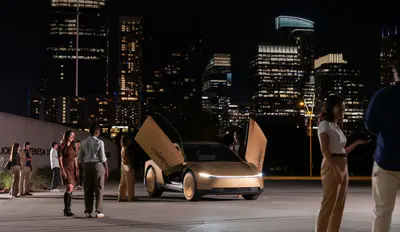
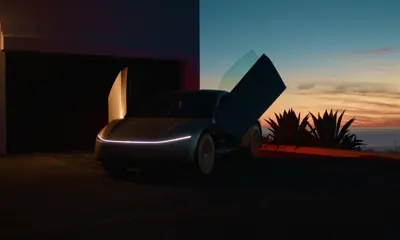
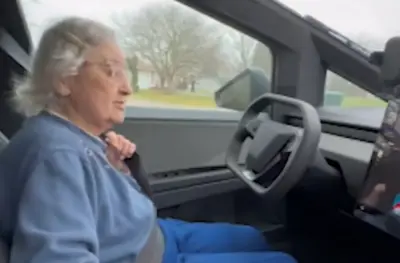
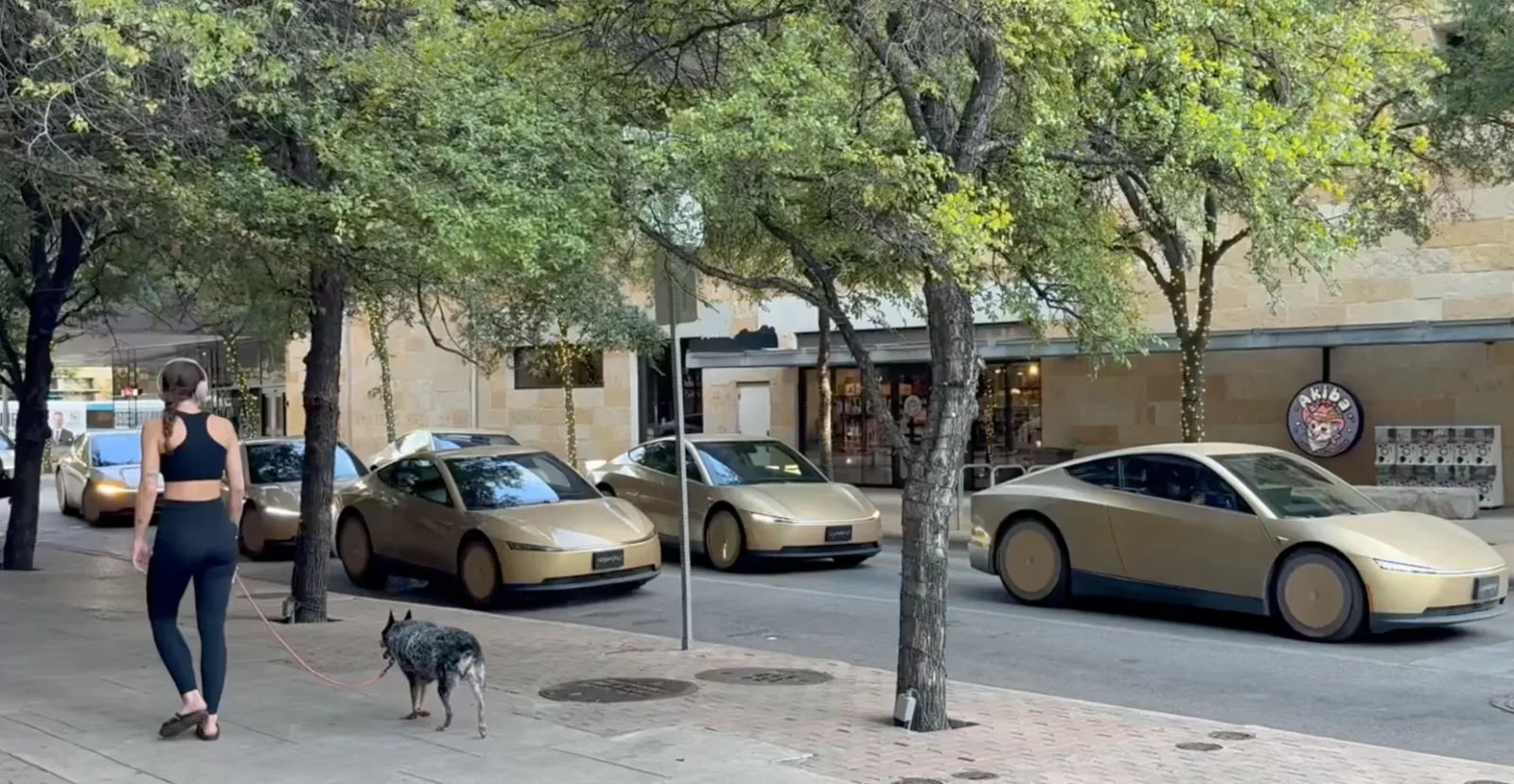
The Cybercab seats two and has no steering wheel and no pedals. Unlike a conventional passenger car, which keeps open the possibility of a human driving it, the Cybercab was designed from the start for driverless hailing. In this vehicle the driver's seat is not a comfort feature. It is a cost line that can be deleted.
That philosophy runs into the factory. Tesla is applying its "Unboxed" manufacturing method to the Cybercab. Instead of one car moving in sequence down a long assembly line as in a traditional plant, large modules are built in parallel across several zones and joined at the end. Tesla is using the approach to cut floor space, movement paths and the number of process steps.
In the second quarter of 2026, Tesla announced that Cybercab production had begun at Giga Texas and put installed annual capacity at more than 125,000 units. Installed capacity and actual output are not the same number. Ramp speed, yield and parts supply are separate variables.
The innovation is in revenue per vehicle, not the price of the vehicle
The largest cost in a traditional taxi business, and at Uber, is driver compensation. Once driverless operation is safely possible, that line shrinks sharply. That is where robotaxi economics begin.
Assume 20 paid rides a day at an average fare of $10. Annual fare revenue works out to roughly $73,000. Add advertising or partnership revenue and you can construct a figure around $75,000. But that is an upper-bound scenario, not a per-vehicle revenue number Tesla has disclosed.
Which is why a phrase like "the $25,000 build cost is recovered in four months" is not a payback period. It is simply production cost divided by monthly revenue. A real payback period requires looking at the cash flow left after operating costs, depreciation, insurance and accident expenses.
The enemy is not only Waymo. Idle time is an enemy too
A robotaxi does not make money just because its self-driving software is good. The only moment a vehicle earns is the time it carries a passenger and collects a fare.
Time spent charging, time spent at the wash, time spent cleaning a soiled interior, time spent changing tyres, time spent waiting on crash repair are all non-operating hours. Deadhead driving, moving empty to reach a passenger, produces no revenue either.
So the fact that a fleet has 1,000 vehicles matters far less than the answer to "how many hours a day do those 1,000 vehicles carry paying passengers?" That single number compresses demand density, wait times, charging speed, the maintenance system and remote-support efficiency into one figure.
Tesla has to choose between being a carmaker and being a platform
If Tesla owns and operates the Cybercabs itself, it keeps most of the fare revenue. It also carries the vehicle purchase cost, insurance, charging depots, cleaning and maintenance, and accident losses.
If instead outside operators or individuals own the vehicles while Tesla supplies the hailing network and the autonomy software, the capital burden falls. The fares then have to be split with vehicle owners.
That is why a hybrid model, an owned fleet plus a platform, looks natural over the long run. Tesla runs the service directly at first to control quality and data, then pulls in third-party capital once operating data accumulates and scales the network fast.
The bottleneck right now is regulation, not the factory
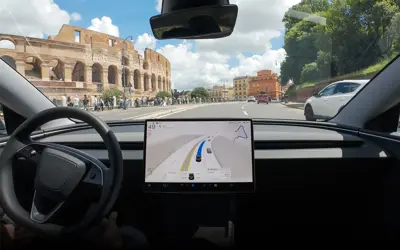
The Cybercab is already on real roads. In early September 2026, Tesla began limited paid operation in parts of Austin using Cybercabs with no steering wheel and no pedals.
At the same time, the National Highway Traffic Safety Administration opened an Audit Query on September 4 reviewing Tesla's self-certification. The core issue is how existing federal safety standards, written on the assumption of a steering wheel, brake pedal and mirrors for a human, were applied to a vehicle with no human driver.
This matters more than whether a launch permit comes through. Beyond federal vehicle safety standards, the United States layers on state and city operating permits, insurance requirements and remote-response obligations. The pace of the Cybercab business may be set less by FSD performance than by how quickly Tesla can widen the map of jurisdictions where it is allowed to run.
The moment a car becomes a cash-flow asset
If the Cybercab proves sustained high utilization and a low accident rate, the way cars are valued could change. Residual value could be calculated from the future fare cash flow a vehicle will generate rather than from used-car prices.
At that stage, financial structures become possible: fleet leasing, vehicle-backed lending, asset securitization. In the way a GPU in a data centre sells compute for several years, a Cybercab can be viewed as an asset bought once and then selling mobility services for years.
But a car is exposed to far messier reality than a GPU. Rain, snow, collisions, tyres, passengers who soil and break things, city-by-city regulation and insurance premiums all shake asset value. A single safety incident can change operating conditions not for one vehicle but for an entire city.
Sources
- [object Object]
Insight Times Editorial Desk