Tesla's Two-Year Sales Slide May Be Ending. Margins Will Say If It Counts
Third-quarter deliveries beat Wall Street estimates by about 30,000 vehicles. The number that matters more is 311,449, the fourth-quarter total that would snap two straight years of annual declines.
| Metric | Value | Note |
|---|---|---|
| Q3 2026 deliveries | 486,532 | -2.1% YoY, +1.3% QoQ |
| Beat vs. consensus | +6.5% | Versus Visible Alpha estimate of 456,896 |
| Q4 growth hurdle | 311,449 | Minimum needed to top 2025 full-year deliveries by even one vehicle |
One number changes the question
Tesla's auto business shrank 1.1% in 2024, to 1,789,226 vehicles. In 2025 it fell another 8.6%, to 1,636,129. Investors began asking whether the car business was in structural decline.
The third-quarter 2026 figures change that question. Tesla delivered 486,532 vehicles. That is 2.1% below the 497,099 a year earlier, but well above what the market expected. Year-to-date deliveries, including the first half, total 1,324,681.
So if Tesla delivers just over 311,449 vehicles in the fourth quarter, 2026 deliveries will top 2025. Tesla has delivered more than that in every quarter since mid-2022. The bar for a return to annual growth is not high.
Sales recovery is not business recovery
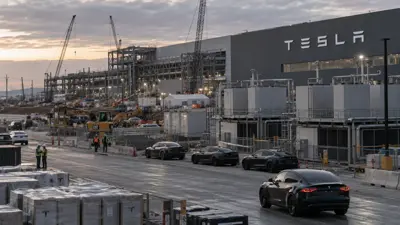
Tesla produced 464,391 vehicles in the quarter and delivered 486,532. Deliveries ran about 22,000 above production, which suggests existing inventory likely fell. That is a positive sign, but it does not by itself mean profitability has recovered.
In the second quarter, Tesla's automotive gross margin was 16.9%. Excluding regulatory credits, it was 16.3%. Capital spending that quarter was $5.789 billion, up 142% from a year earlier, and free cash flow was negative $1.092 billion. Even if vehicle volume rises, price cuts, incentives and regional mix can erode margins and weaken cash generation.
Tesla is running on two engines
| Engine | Current role | What investors watch |
|---|---|---|
| Legacy Cash Engine | Revenue and cash from vehicles and energy | Deliveries, ASP, auto margin, FCF, energy margin |
| Future Value Engine | Long-term value of FSD, Robotaxi, Cybercab, Optimus and AI | FSD subscriptions, unsupervised driving expansion, Cybercab production, Robotaxi utilization |
A large part of Tesla's valuation now rests on expectations for the second engine. But the first engine has to hold until FSD, Robotaxi and Optimus generate large amounts of cash. That is why a return to growth in car sales matters more than a routine sales headline. It acts as a cash flow bridge, buying time until the future businesses become real.
Can FSD change the economics of the car?
At the end of Q2, Tesla had 1.48 million active FSD subscriptions, up 56% from a year earlier. More than 55% of new North American deliveries included an FSD subscription. For investors to see the car as a platform that carries software revenue, and not just EV hardware, this metric has to keep rising.
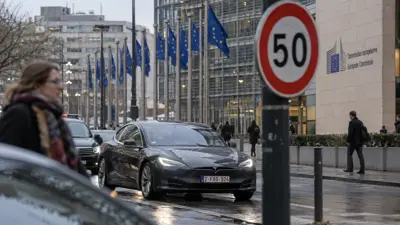
Europe offers recovery and regulatory risk at once. From January through August 2026, Tesla registrations in the EU, UK and EFTA rose 43.3% from a year earlier. In September, France rose 61.9% and Sweden 38.4%. Meanwhile, the EU rollout of FSD has been delayed by disputes over some safety rules. It is too early to credit FSD for Europe's rebound.
Oct. 21: what to watch beyond deliveries
Tesla's report on Oct. 21 is likely to show whether the sales rebound is turning into margin and cash.
Insight Times Editorial Desk