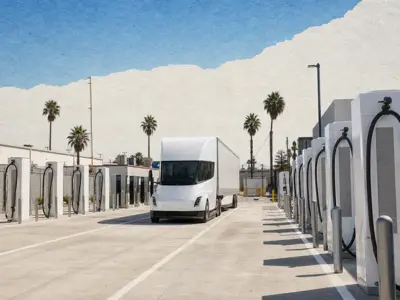
Tesla Semi Waited 9 Years. Now It's Rolling Off a Real Factory Line
The Tesla Semi, unveiled back in 2017, has finally reached full-scale production at a dedicated Nevada plant. The number investors should watch isn't the 50,000-unit annual capacity, though. It's what the truck actually saves per mile.
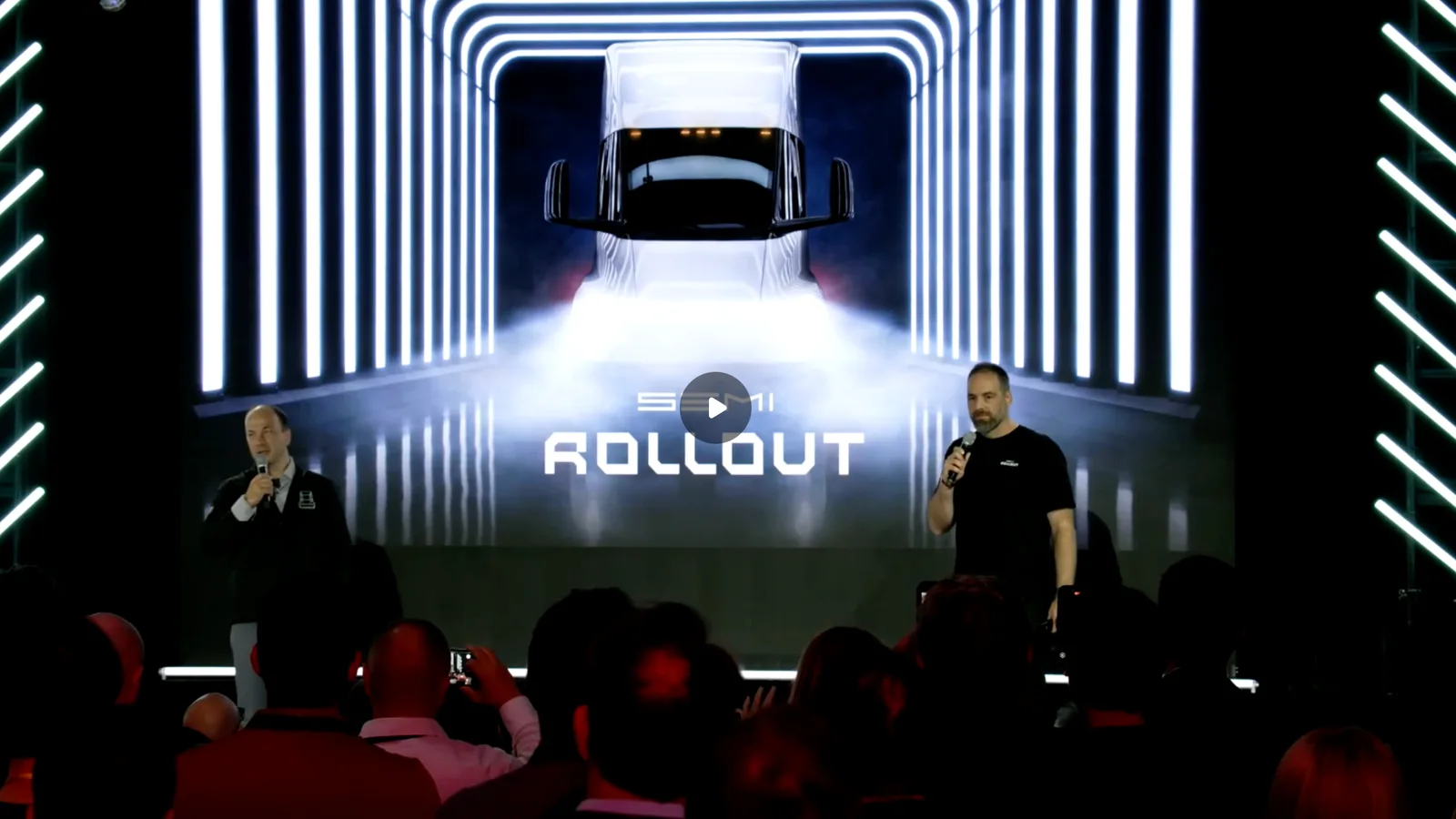
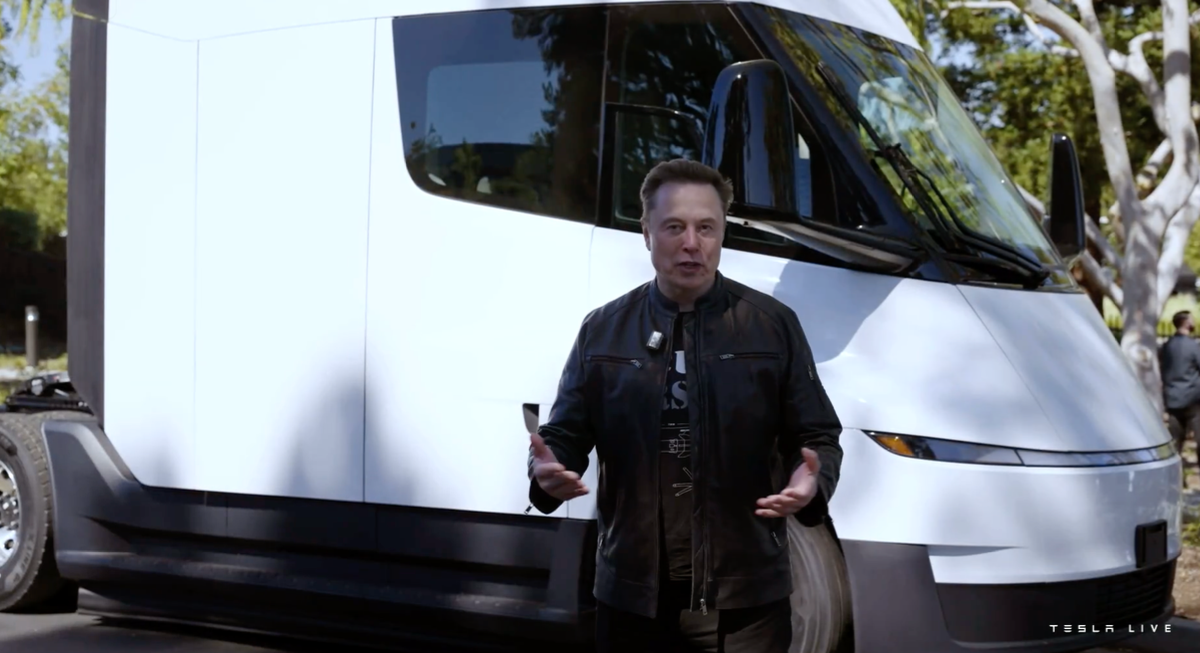
The number that matters more than 50,000 trucks a year is cost per mile
Passenger cars can sell on emotion. Commercial trucks don't work that way. When a logistics company decides to buy hundreds or thousands of trucks, it isn't looking at design. It's looking at Total Cost of Ownership, the full sum of purchase price, fuel or electricity, maintenance, uptime, driver costs, charging infrastructure and resale value, all rolled into a single figure: cost per mile.
Tesla's stated energy consumption for the Semi is 1.7 kWh per mile. Assume a depot buys power at 10 to 15 cents per kWh, and pure electricity cost comes out to roughly 17 to 25.5 cents per mile. Over 100,000 miles a year, that's about $17,000 to $25,500.
Diesel prices at the time of comparison make the gap look even more dramatic. According to the US Energy Information Administration, the national average on-highway diesel price on September 21 was $6.529 a gallon. Assuming a Class 8 diesel truck gets 6.5 to 8 miles per gallon, fuel alone runs about 82 cents to $1.00 per mile. Over the same 100,000 miles, that's roughly $82,000 to $100,000.
Simple energy cost comparison, assuming 100,000 miles a year
| Annual energy cost | |
|---|---|
| Tesla Semi | $17,000 to $25,500 |
| Diesel Class 8 | roughly $82,000 to $100,000 |
Semi figures assume 1.7 kWh/mile and electricity at $0.10 to $0.15/kWh. Diesel figures assume $6.529/gallon and 6.5 to 8 mpg. This comparison excludes charging infrastructure capital costs, demand charges, maintenance, insurance, depreciation and resale value.
So the tens of thousands of dollars in annual savings Tesla is pointing to can hold up on paper under today's high diesel prices. But that isn't yet the total cost of ownership for an entire fleet operation. Add grid upgrade costs, Megacharger installation, peak demand charges, truck price, uptime, insurance and resale value, and the outcome will vary widely by customer.
Why this rollout is different from the past
The Semi was first unveiled in 2017, with production originally promised for 2019. Limited customer deliveries began in 2022, but it took nearly nine years to reach full-scale mass production. What's different this time is that the product is no longer a prototype on a stage. It's now tied to an actual production line at a dedicated factory, delivering to customers.
- 50,000 — the Nevada plant's maximum annual design capacity. Not current output.
- 500 miles — the expected range for the Long Range version. Tesla emphasized real-world validation under fully loaded conditions.
- 1.2 MW — the Megacharger's peak charging power, said to restore up to roughly 60% of range in 30 minutes.
Tesla did not disclose concrete production volumes, pricing or order backlog for this year or next at the event. So the 50,000-unit capacity figure should not be read as 50,000 units sold. What investors need right now isn't capacity. It's how quickly that capacity converts into actual production and revenue.
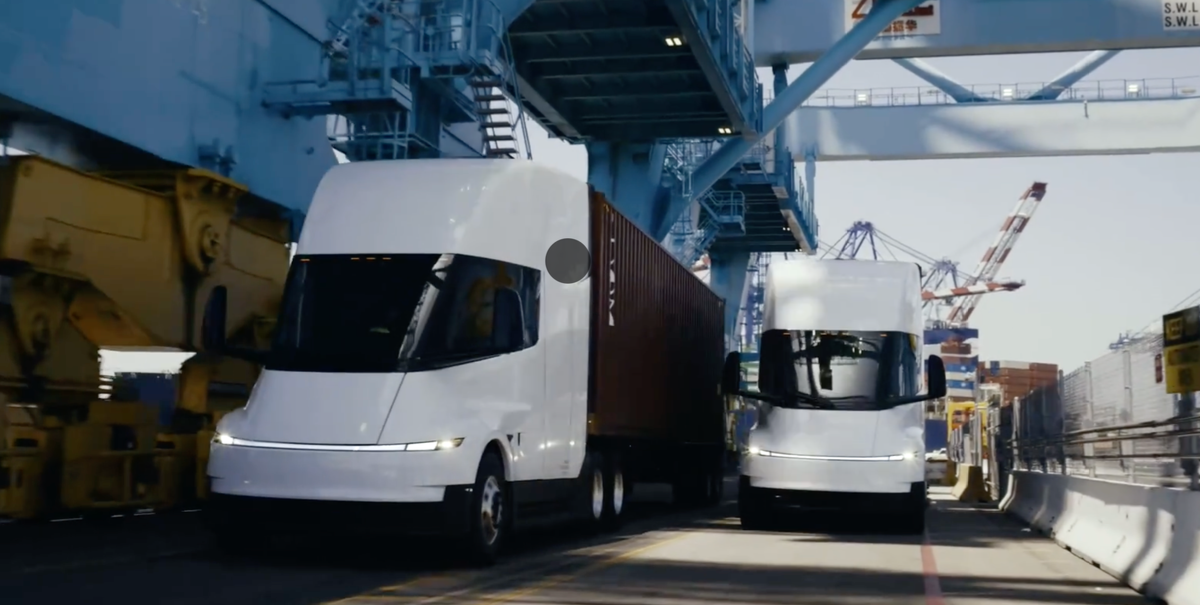
The real story in the 2,500-truck order is demand pooling
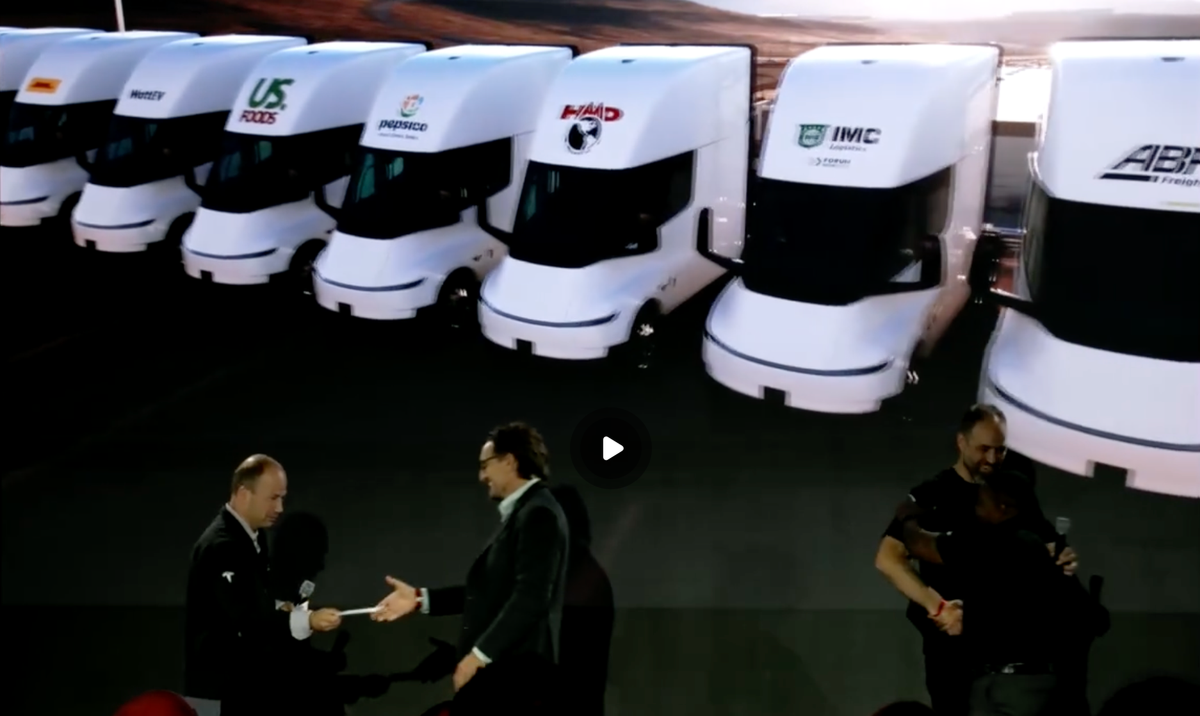
ZET SCALE is a shipper coalition that includes Microsoft and PepsiCo. The program announced a deal to procure 2,500 battery-electric Class 8 trucks in a single order and named Tesla as its primary supplier. Catalyst Mobility and the Smart Freight Centre said the volume is large enough to nearly double the current US electric Class 8 fleet.
Caution is warranted before assuming all 2,500 units are firm Tesla Semi orders, though. The official announcement lists Tesla as primary supplier alongside Kenworth, Volvo and RIDE as secondary suppliers. Reuters reported it as an order for 2,500 Semis, but for investment purposes it's safer to track how much of that volume Tesla actually secures.
The bigger shift here is that major shippers are moving past testing electric trucks one at a time and pooling demand to push down purchase prices and financing terms. In the commercial vehicle market, procurement structure and financing can matter as much as the technology's performance in determining how fast adoption spreads.
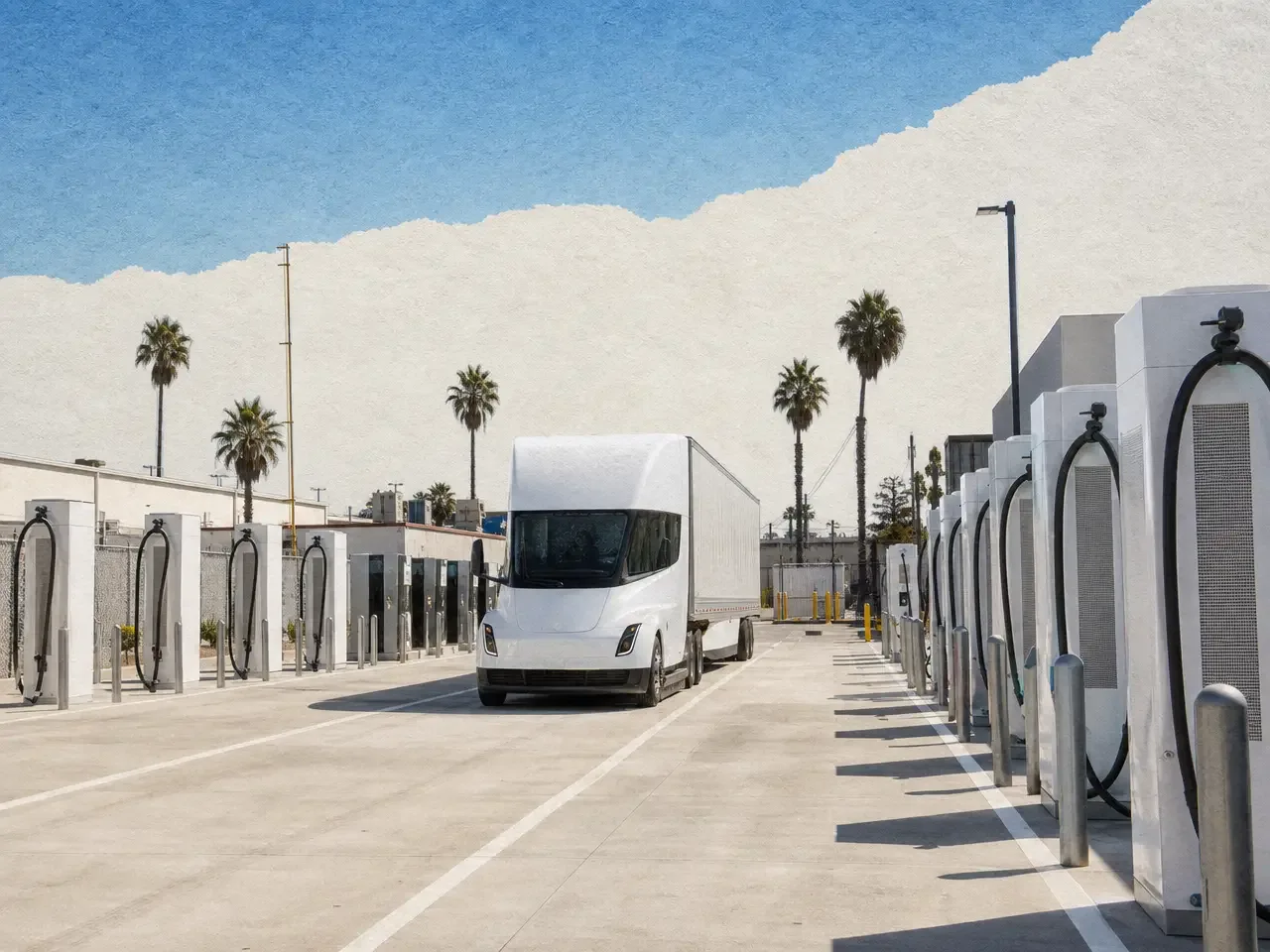
Selling the truck means selling the grid too
The Semi's bottleneck isn't just the battery. A single passenger EV using a fast charger is a completely different power problem from dozens of Class 8 trucks charging at once at a distribution center.
Tesla's Megacharger supports up to 1.2 MW of charging power, said to restore up to 60% of range for the Long Range version in 30 minutes. Put another way, as a fleet grows larger, depot transformers, power hookups, land and peak demand management all become part of what it takes to bring the trucks in.
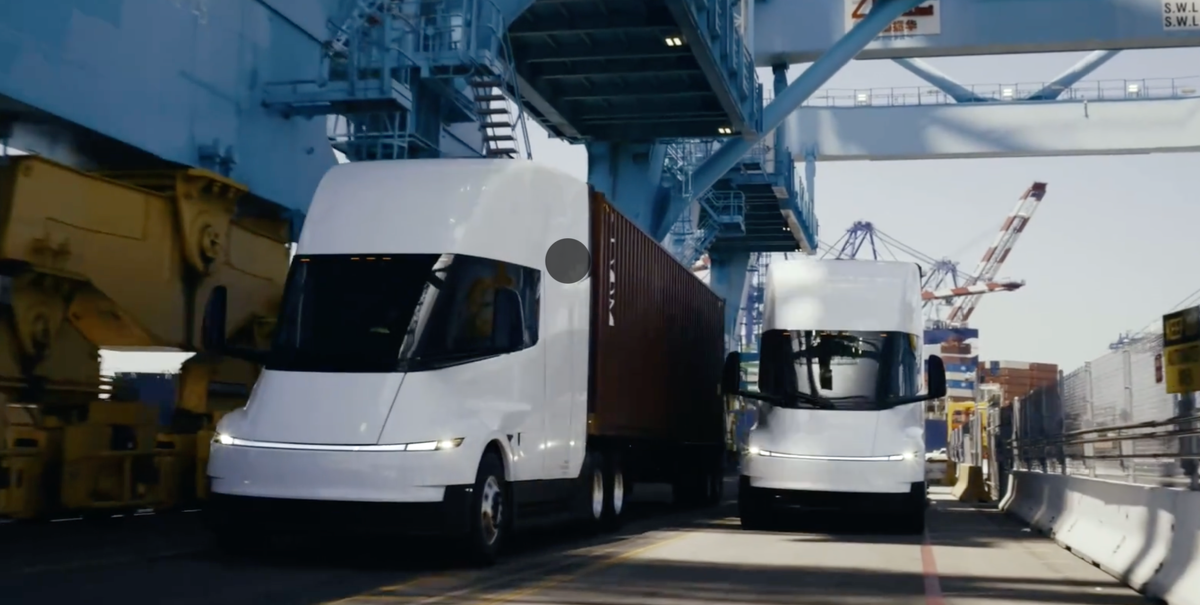
The bigger option is autonomy, but it's still just an option
Elon Musk mentioned plans to add self-driving capability to the Semi in a video shown at the event. No concrete commercial timeline for fully driverless freight was given, though. That should not be priced into the Semi's economics today.
Still, the reason this matters long-term comes down to cost structure. Electrification lowers fuel costs and some maintenance costs. If autonomy actually reaches commercial deployment, it would touch a far bigger variable: driver labor costs and daily operating hours. If the two come together, the Semi's ultimate form could end up closer to an Electric plus Autonomous Freight Platform than a simple electric truck.
For that investment thesis to hold, though, autonomous driving safety, regulatory approval, insurance, remote monitoring, actual driverless operating hours and accident rates all need to be proven first. What's confirmed today is an electric truck business. Autonomous freight is still a future value, not a present one.
Insight Times Editorial Desk