Stocks Rose, But the Discount Rate Rose More
A cooler Brent oil price and Microsoft's AI monetization pitch lifted US stocks, but the 10-year Treasury yield hit 5.23% intraday, its highest since 2007.
Stocks caught their breath as oil pulled back
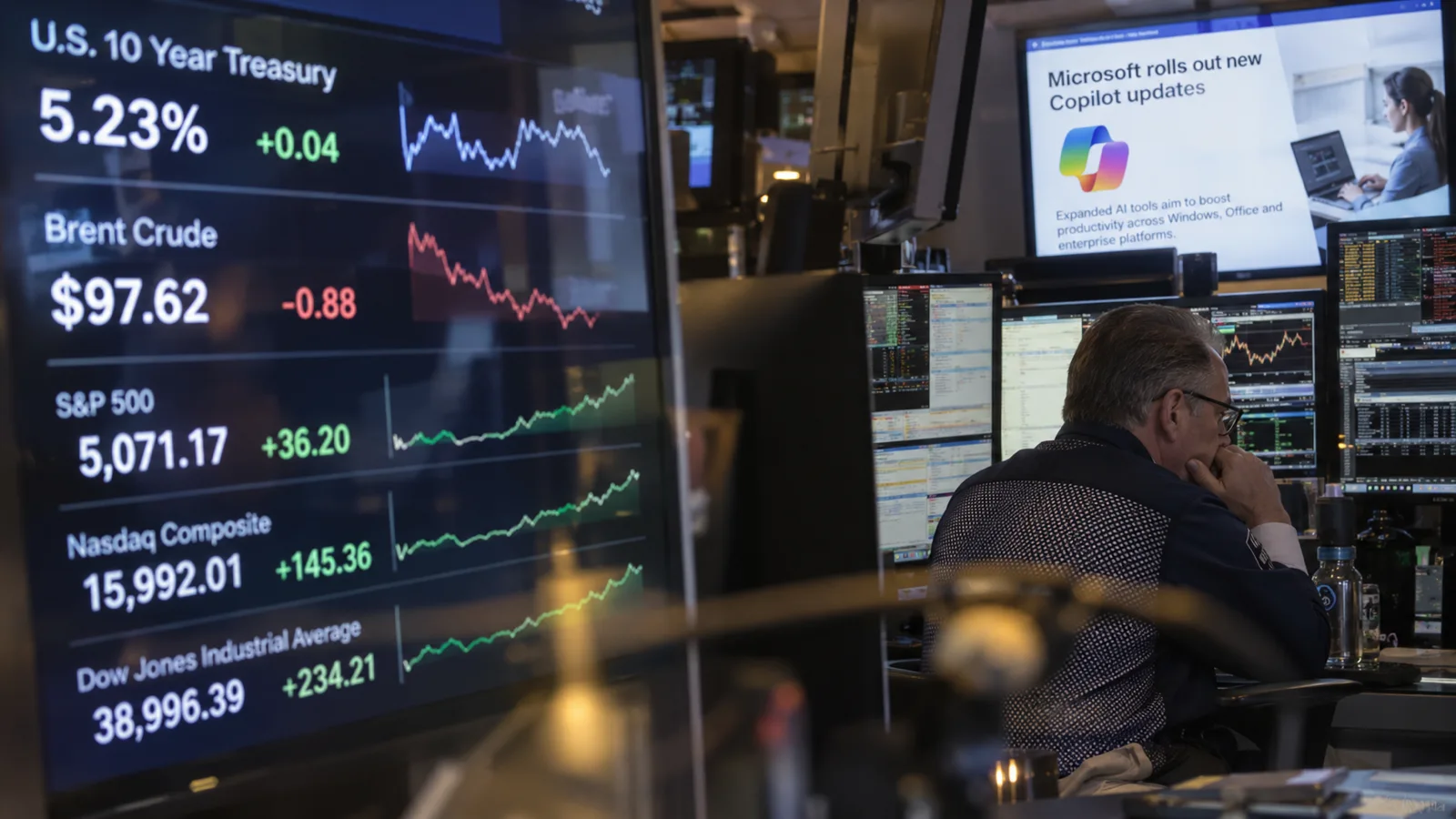
US stocks reversed the prior session's weakness on September 25. The Dow rose 0.93% to 51,828.62, the S&P 500 gained 0.51% to 7,743.41, and the Nasdaq added 0.48% to 27,068.72. The Russell 2000, by contrast, managed just a 0.07% gain.
Two things drove the move. First, renewed talk of the Strait of Hormuz reopening and a possible US-Iran deal pulled the geopolitical risk premium out of the oil market. Brent crude dropped below $98 a barrel intraday this week. Cheaper oil raises hopes that inflation expectations and consumer strain could ease, which in turn takes some pressure off equity valuations.
Still, it is hard to read this as the end of energy risk. Talks remain unsettled and supply chains have not visibly normalized. Brent around $100 a barrel is still a level that can weigh on US inflation and consumer spending.
DOW +0.93% (51,828.62) S&P 500 +0.51% (7,743.41) NASDAQ +0.48% (27,068.72)
Microsoft showed the market a revenue path for AI
Microsoft unveiled a Code feature that builds apps and dashboards from natural language inside the Copilot app, an always-on Autopilot agent, and direct integration with Word, Excel and PowerPoint. Microsoft shares rose 3.66% to $516.17.
The market did not react to the number of features. It reacted because Microsoft made it easier to explain why companies are spending money on AI. If AI stays confined to a chat tool, monetization is capped at a per-seat subscription fee. But once coding, document work and long-running agents live inside one app, the billing base can widen from seat count to workload and execution volume.
That connects to Meta's AI-driven rally the day before. In this market, companies where the link from infrastructure investment to the actual income statement runs clearly through advertising, software or cloud are getting a relatively higher valuation.
But the bond market was not reassured at all
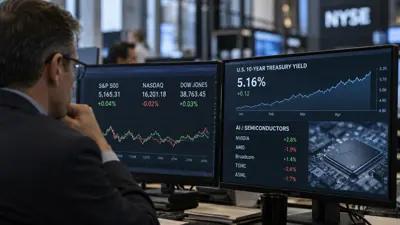
The same day, the 10-year Treasury yield climbed to about 5.23% intraday, reconfirming its highest level since 2007. Stocks rose, but the benchmark rate used to discount corporate value actually rose further.
Economic data gave the Fed little room to relax. The University of Michigan's September consumer sentiment index fell to 48.1 from 51.7 in August. Yet one-year inflation expectations rose to 4.6% from 4.0%, and long-term inflation expectations rose to 3.4% from 3.3%.
Durable goods orders were flat month over month, but orders for non-defense capital goods excluding aircraft, a leading indicator of business capital spending, rose 1.6% in August. For the market, that means slowdown signals are not the only story: AI-driven corporate investment still looks strong. When growth and inflation both hold firm at the same time, the case for long rates to fall quickly weakens.
It was a day when what was under the index mattered more than the index itself
| Asset / Stock | Move | Signal to watch |
|---|---|---|
| Microsoft | +3.66% | Premium for a platform with a concrete AI monetization path |
| Nvidia | +0.22% | AI cycle intact but valuation and rates cap the upside |
| Broadcom | +0.70% | Benefiting from diversification in AI infrastructure via custom ASICs and networking |
| Meta | -3.33% | Profit-taking and valuation strain after the prior day's surge |
| Tesla | -1.54% | Growth stock with heavy long-dated cash flows feels the pressure of a 5%-plus discount rate |
| Russell 2000 | +0.07% | High funding costs limit participation versus large caps |
The Russell 2000's weakness stands out. The Dow rose 0.93% while small caps essentially stood still. That suggests the drop in oil prices has not eased broader financial conditions enough. A 10-year yield above 5% hits companies that depend heavily on debt refinancing and capital raising more directly than it hits everyone else.
Insight Times Editorial Desk