Why Microsoft Rebuilt Copilot: AI Billing Shifts From Seats to Workload
The redesign is less about new features than about Microsoft expanding its enterprise AI revenue model beyond the per-seat subscription into task delegation and agent execution.

Copilot moves from app to work operating system
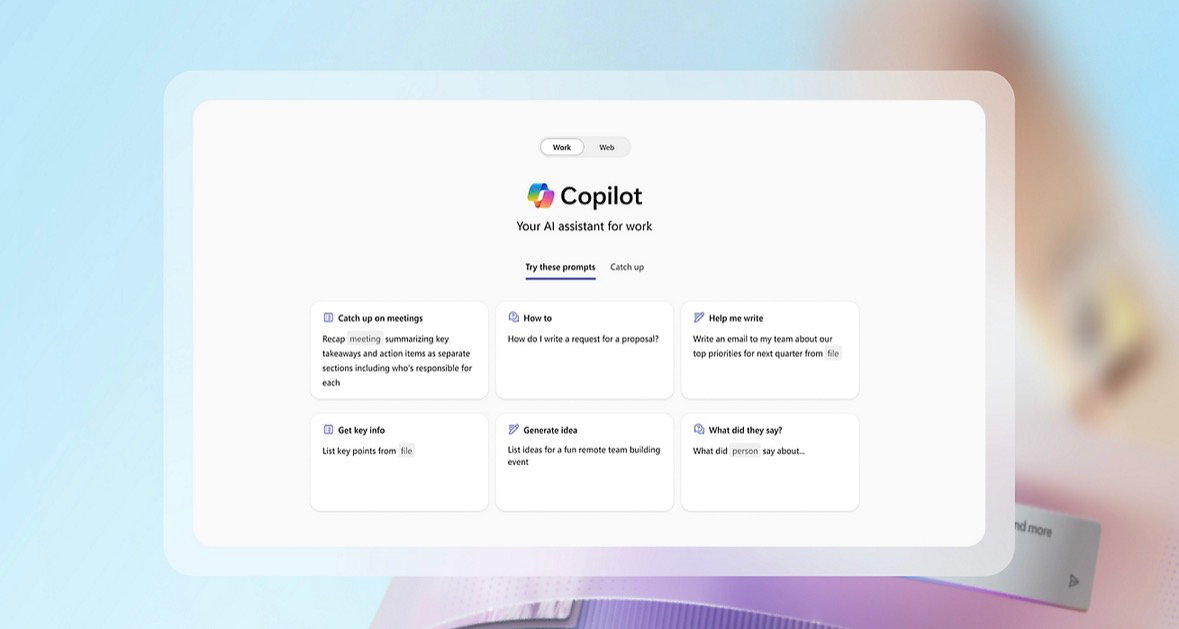
The new Copilot that Microsoft unveiled on September 25 stacks three layers into a single screen. Home links Chat and Cowork with Word, Excel and PowerPoint. Code lets users build apps, dashboards, automations and workflows through natural language. Autopilot is a persistent agent that keeps watching channels after a user steps away, following up on tasks and handling repetitive work.
The bigger shift is from an AI that produces files to an AI that finishes work. Microsoft says it wants users to simply state the outcome they need and let Copilot decide on its own whether to use Chat, Cowork or Code. That is an attempt to move the work interface away from picking an app and toward intent and outcome.
If this structure takes hold, Microsoft's competitive set changes too. It is not just ChatGPT or Claude anymore. Copilot could try to absorb the front-end experience now handled by Salesforce's CRM screens, ServiceNow's workflows, Atlassian's project management, and parts of low-code tools.
The real change is in the price sheet
Microsoft 365 Copilot's standard enterprise price is currently $30 per user per month. But long-running agent tasks are moving to separate usage-based billing. For Cowork, Microsoft charges Copilot Credits calculated from model usage, organizational context search, tool calls and runtime combined.
<div class="metrics"> <div class="metric"> <div class="value">$30</div> <div class="label">Microsoft 365 Copilot enterprise base price, per user per month</div> </div> <div class="metric"> <div class="value">450M+</div> <div class="label">Microsoft 365 commercial paid seats</div> </div> <div class="metric"> <div class="value">30M+</div> <div class="label">Microsoft 365 Copilot paid seats as of July 2026</div> </div> </div>
This combination differs from traditional SaaS. In the past, seat revenue grew only when a company added headcount. Now revenue can grow even with flat headcount, if one person delegates more tasks to multiple agents.
| Revenue layer | Billing structure | What Microsoft gains |
|---|---|---|
| Core productivity | Per-seat Copilot subscription | Predictable recurring revenue |
| Agent work | Cowork, Code, Autopilot usage | Higher spending ceiling per employee |
| Execution infrastructure | Azure, Fabric, data, security consumption | Expanded downstream cloud demand |
For investors, tracking "Copilot revenue" alone risks missing the full picture. Copilot is both an upsell product for Microsoft 365 and a sales channel that pulls in Azure, Fabric, Entra, security and data management services.
Low penetration is both an opportunity and a weakness
Microsoft disclosed more than 450 million Microsoft 365 commercial paid seats in January 2026, and said in July that Microsoft 365 Copilot paid seats had passed 30 million. A simple comparison puts penetration at roughly 6.7%. The two figures come from different points in time, so this is not a precise current penetration rate, but the direction, still low, is clear.
That number says two things at once. First, the upsell base remaining is still very large. Second, Copilot has not yet overwhelmingly converted the existing Office install base.
So the success of this redesign should be judged by actual conversion metrics, not feature counts. The things that matter are whether paid seats keep growing, whether existing customers use it more often week to week, whether Code and Autopilot generate additional usage revenue, and whether pilot customers move to company-wide rollout.
Microsoft's edge is not the model, it is enterprise permission structure
An enterprise agent cannot be deployed simply because it answers questions well. Reading email, scheduling meetings, editing documents, querying data and spending money all require controlling who can do what.
Microsoft already holds the pieces for this: identity and permissions through Entra, communication through Teams and Outlook, documents through Microsoft 365, data through Fabric, business systems through Dynamics, execution infrastructure through Azure, and a security and audit framework. That is also why Autopilot is designed to run as a separate identity inside a company's directory, with controlled permissions.
This is an asset that standalone AI apps cannot easily replicate. As companies put agents into real workflows, permissions, security, data boundaries and audit logs may end up mattering more than differences in model performance.
But as AI revenue grows, so do costs
Agents cost more than chatbots. They read multiple documents, call tools, run for extended periods, and save intermediate states. Microsoft itself breaks down Cowork pricing into model usage, context search, tool calls and runtime.
Revenue growth alone is not enough to watch. What matters longer term is the contribution margin on agent revenue. Even if higher usage lifts Azure revenue, gross margins could come under pressure if GPU, data center, power and model costs grow faster.
That is also why Microsoft emphasizes Auto model routing and FinOps features. Using cheaper models for tasks that do not need a top-tier model, and setting spending caps by department and user, may be necessary to keep customers' AI costs from spiraling, and to keep adoption sustainable.
Insight Times Editorial Desk