Weekly Check: The AI Bull Market Isn't Over, It's Just Gotten Harder
A 5% 10-year yield, 470 gigawatts stacked up in Texas, Chinese DRAM, and whether data centers actually get switched on are starting to decide who wins the AI trade through 2027.
What a 5% 10-year Treasury changes
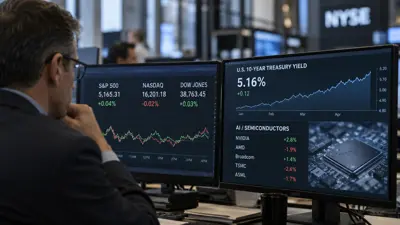
The Federal Reserve raised its benchmark rate by 25 basis points on September 16, lifting the federal funds target range to 3.75-4.00%, effective September 17. But right now, long-term rates matter more to growth stocks than the policy rate does. On September 24, the 10-year Treasury yield climbed to roughly 5.2%, and the 30-year hit 5.48%. When the discount rate used to bring future profits back to present value rises, it gets harder to justify high valuations for earnings that sit far out in the future. The impact lands hardest on sectors where expectations already run ahead of current profits: AI software, robotics, space.
That is why the market's contradiction is so stark right now. The Nasdaq sits near record highs while long-term rates sit near their highest level in roughly two decades. The two can keep moving in the same direction for a while, but only on one condition: AI company earnings per share and cash flow need to grow faster than rates are rising.
The scarce asset in AI data centers isn't GPUs anymore
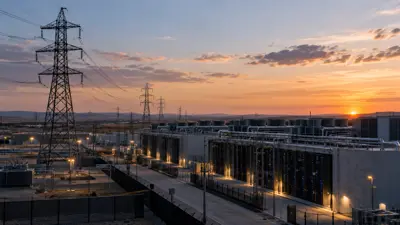
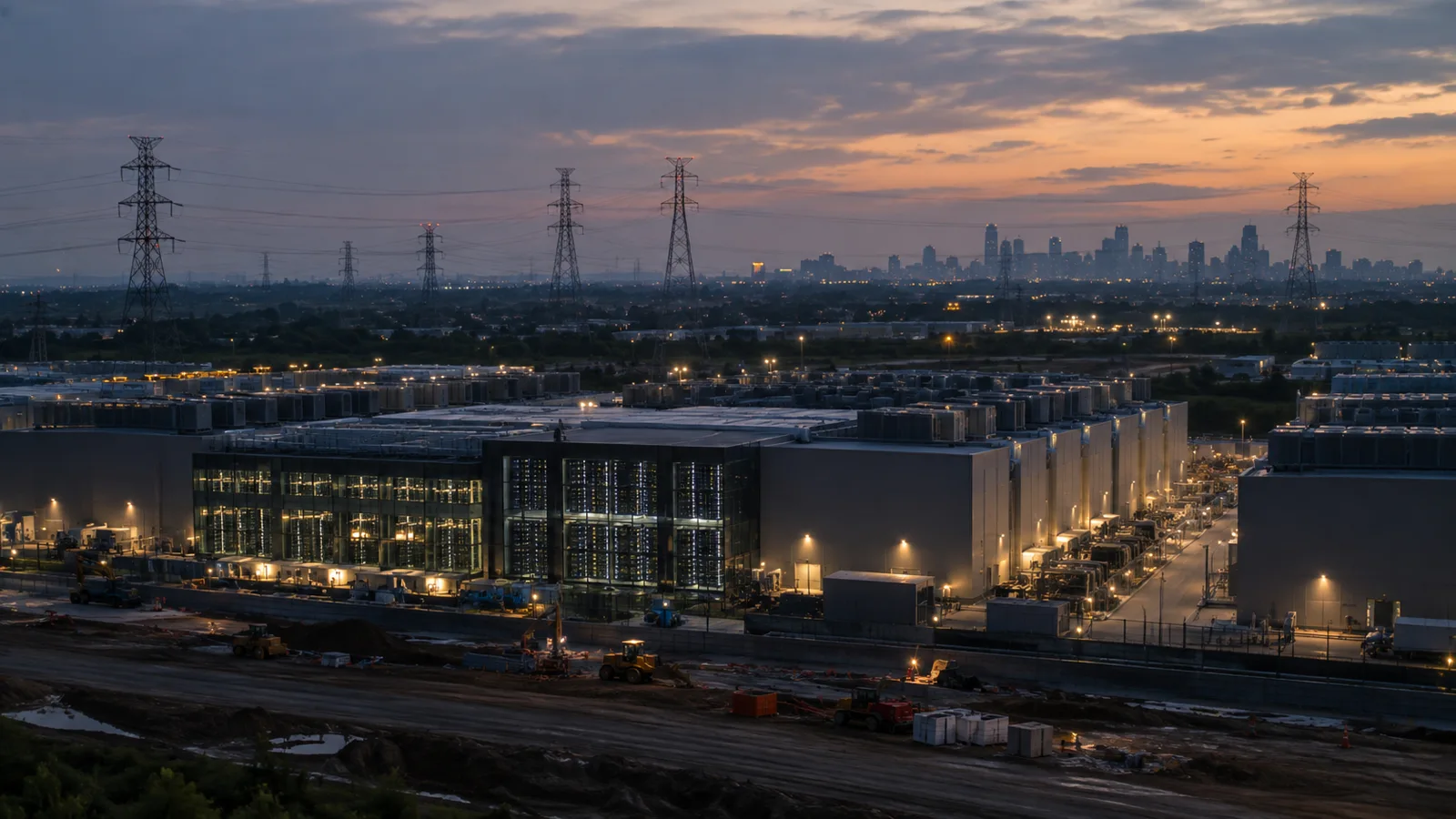
The most important development this week came out of Texas. Governor Greg Abbott has paused new state permits for data centers while regulators audit their impact on the power grid and water use. The ERCOT interconnection queue has more than 470 gigawatts of large power-demand projects stacked up, including data centers, roughly five times Texas's peak electricity demand.
That number does not mean all of it gets built. Developers routinely file duplicate applications across multiple candidate sites. That is precisely why the number investors should watch is changing. Goldman Sachs projects US data center power demand will grow from 31 gigawatts in 2025 to 66 gigawatts in 2027. At the same time, the firm estimates only about 60% of capacity scheduled for the next year, and about 50% of capacity scheduled two years out, will actually come online on time.
Going forward, evaluating data center companies means separating Announcement Capacity from Energized Capacity. The size of a project pipeline may matter less to a company's valuation than whether it has secured grid interconnection rights, transformers, transmission access, generation capacity, water, and permits.
Who benefits when AI gets cheaper
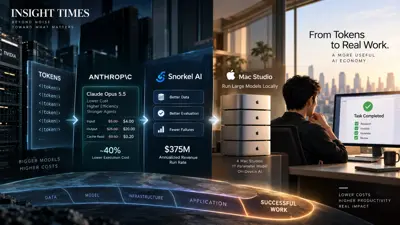
Anthropic unveiled Claude Opus 5.5 on September 22, priced 20% lower per API call than the previous Opus 5, with operating costs down 40% from the prior generation, according to the company. It marks a shift in the center of gravity of AI competition, from intelligence itself to intelligence per dollar.
That shift is a demand accelerant for the AI industry as a whole. The same budget now buys more inference and more agent workloads. But it is a pricing headwind for the model companies themselves. It could be an opportunity, on the other hand, for infrastructure that earns more as usage rises, cloud, chips, networking, power, and for applications that convert AI into real productivity gains.
By 2027, "how much AI is being used" will likely no longer be enough on its own. The key equation for shareholder value is likely to become how far AI revenue growth outpaces the growth rate of capital expenditure and financing costs.
Memory: HBM and commodity DRAM are no longer the same trade
China's CXMT has started mass production on a fifth-generation DRAM platform and unveiled a 24Gb LPDDR5X chip. The company says the new platform can boost total die output per wafer by at least 50% over the prior generation.
That does not mean CXMT is about to threaten SK hynix, Samsung, or Micron in HBM directly. But in commodity DRAM, rising Chinese supply could undercut pricing power. Memory investors should not treat "AI memory is strong" as a single blanket statement. HBM average selling prices and supply-demand balance can stay strong even as commodity DRAM pricing and China's capacity additions carry a separate risk. Within the same memory company, the two markets can move in opposite directions.
Insight Times Editorial Desk