Nasdaq
31 articles on this topic, newest first.
Nov 2026 5 stories
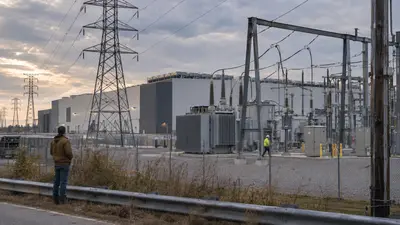
Has the AI Investment Case Changed? What the Post-Midterm Rout Altered, and What It Didn't
The selloff gives little reason to think AI's long-term growth story has collapsed. It does raise questions about how fast, and on what terms, that growth becomes earnings.

It Wasn't AI That Broke. It Was the Wait for Payback
An election shock lit the fuse, and leveraged unwinding and risk-control selling widened the drop. As the payback period for AI spending stretched, the market began pricing each company differently.
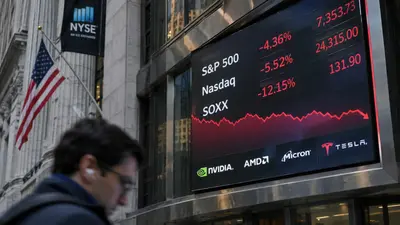
Stocks Plunged Despite Lower Rates as Wall Street's Doubts About AI Spending Grow
The S&P 500 fell 4.36% and the Nasdaq 5.52% on Nov. 5. The selloff looks more like a repricing of lofty expectations than proof that AI earnings have turned.

Companies Pledge More AI Spending, and Wall Street Sells: Marvell Falls 12.72%
Oil dropped and manufacturing improved, but questions about how AI infrastructure gets funded, and when it pays off, weighed on tech. Who foots the bill is starting to separate winners from losers.

The S&P 500 Barely Fell. Why Did Your Stocks Get Crushed?
Index numbers and brokerage accounts can tell different stories. In an AI-driven pullback, breadth is the first thing to check, before direction.
Oct 2026 19 stories

Nasdaq Falls 2.86%, Chip Index Sinks 7.20%: Bear Market Start or Last Dip Before a Rebound?
AI cloud revenue is surging, yet the Philadelphia semiconductor index lost 7.20% in a day. The task is less about calling the bottom than separating real risk from overblown fear.
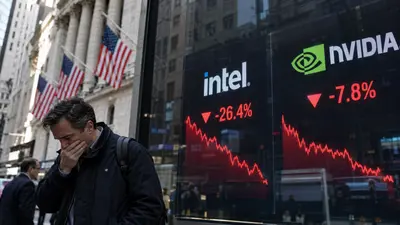
Intel Plunges 28.58%, SOXX Breaks 200-Day Line: What Really Drove the AI Chip Selloff
The Nasdaq fell 2.86% and the Philadelphia Semiconductor Index dropped 7.20%. AI demand has not vanished. The market is recalculating how much money the buildout takes and how long it takes to earn it back.
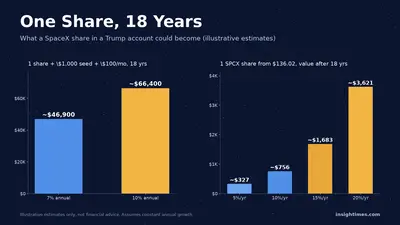
Why Musk wants to give 72 million US children a share of SpaceX
Elon Musk says he will gift one SpaceX share to every American child. The plan is not yet detailed, and the bigger driver of a child's wealth may be 18 years of steady saving.
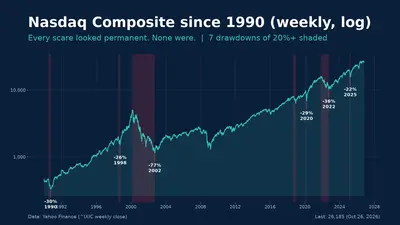
Nasdaq Futures Drop 2.36% as AI Spending Fear Returns. Should Long-Term Investors Sell?
After Alphabet and Amazon earnings, the market is asking less about AI demand and more about capex and cash flow. The worry is not new, and the useful question is whether your own investment thesis still holds.

Alphabet Falls 12.29%, Nasdaq Slips 1.38%, and the Russell 2000 Rises Alone
AI payback doubts weighed on tech, but the broad market held. Investors seem to be asking what they should pay for AI growth, not abandoning it.
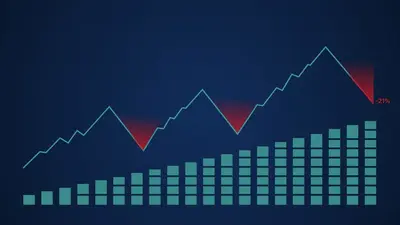
A 20% Drop in Chip Stocks Is the Norm, Not the Exception: SOX Data Since 1994
Since 1994 the Philadelphia Semiconductor Index has dropped an average of 29% within a year and still finished the year up 20.7% on average. For long-term investors, headlines about declines from the peak come with a useful counterweight.

AI Demand Is Strong. So Why Are AI Stocks Falling?
The market is moving from an era of supply shortages to an era of investment payback. The question is no longer how big AI gets, but who keeps the cash.

Chips Plunge 6.72% as Meta's Cash Flow and Lam's Supply Limits Hit AI Trade
The Nasdaq fell 2.60% on Oct. 22, but the equal-weight S&P 500 rose. The selloff centered on one question: how much AI costs and when it pays back.
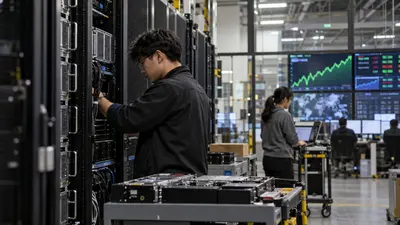
Nasdaq +1.05%, SOXX +2.07%: AI Server Demand Climbs the Wall of a 5.15% Yield
Tech led a rebound on Wednesday as Super Micro's raised outlook turned AI hopes into revenue numbers. Mixed after-hours reactions to Tesla, Meta and Lam Research now test whether it lasts.
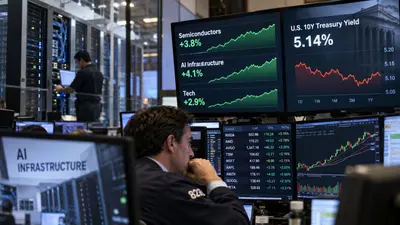
Chips Surge on Oct. 19, but CoreWeave and a 5.14% 10-Year Show the Cost of AI Debt
SanDisk rose 5.53%, Micron 2.97% and the Nasdaq 1.11%. CoreWeave slipped 0.44%, and the 10-year Treasury yield hit 5.14%. Hopes for AI demand and the financing risk of AI infrastructure are starting to pull in different directions.
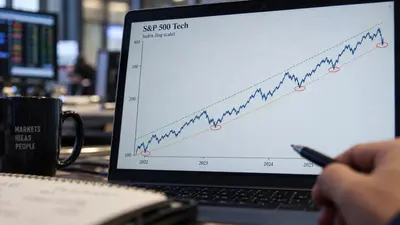
Tech Selloff: Is the Bull Market Over? Wall Street's Four-Year Chart Says Not Yet
The uptrend has survived five double-digit pullbacks in four years. This time, AI companies' debt and cash flow are the new variables.
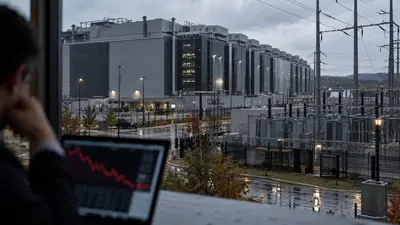
AI Is Growing. Why Are AI Stocks Falling?
Chip demand is strong, yet prices are wobbling. In October 2026 the market is asking not how fast AI grows, but how quickly the capital behind that growth returns as cash.

Nasdaq Falls 2.14%, SOXX Drops 4.14% as CoreWeave Debt Fears Spread Across the AI Supply Chain
The Friday selloff did not start with a collapse in AI chip demand. It started in the bond market, with doubts over whether AI data-center builders can pay for their buildout.

Stocks Bounce, but the AI Selloff May Not Be Over: A Two-Week Playbook
The Dow rose more than 1% while the Nasdaq barely moved and semiconductors kept falling. A W-shaped retest looks more likely than a V, and the task now is surviving the next drop.

This, Too, Shall Pass. But Investors Should Come Out Tougher
Selloffs will keep coming. Lower debt, less concentration and steady buying can make them easier to live with.
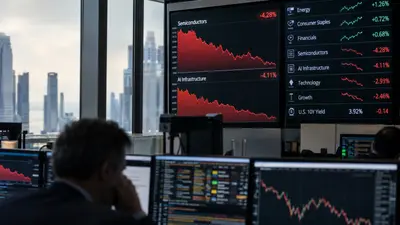
Rates Fell, Chips Cracked: Wall Street Worries About AI Payback, Not OpenAI Revenue
About two-thirds of S&P 500 stocks rose on Oct. 8, yet the Nasdaq fell 1.25%. Money did not leave the market so much as reprice the return on AI spending.

S&P 500 Slips 0.22%, but 73% of the Market Fell
Long-term yields above 5% weighed on small caps and semiconductors on Oct. 7. A strong 10-year Treasury auction and a few large tech names limited the index's losses.

Nasdaq Hits a Record With the 10-Year at 5.31%, but Only AI With Visible Earnings Got Paid
The Nasdaq closed at an all-time high even as the 10-year yield climbed to 5.31%. The gains were narrow: money went to a few AI names most likely to turn spending into revenue and cash flow.

PCE Cooled, but the 10-Year Yield Climbed to 5.29%
On Sept. 30, only the Nasdaq rose. Investors weighed strong growth and long-term yields more heavily than the softer inflation data.
Sep 2026 7 stories
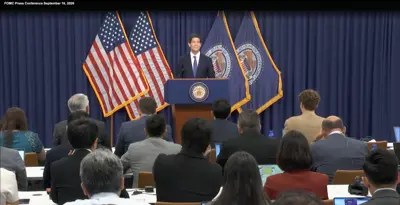
Fed Hikes 25bp, 10-Year Hits 5%. Why Did the Nasdaq Hold Up?
The Nasdaq slipped just 0.01% and chip ETF SOXX rose 0.64% even as the Fed raised rates for the first time in three years and the 10-year yield pushed back toward 5%.
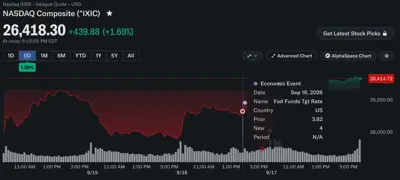
Nasdaq Jumps 1.69% as Rates Ease, But This Rebound Was Different
Falling oil and a retreat in the 10-year below 5% lifted growth stocks, but the real story was money concentrating in AI's actual bottlenecks: GPUs, memory, servers and power.
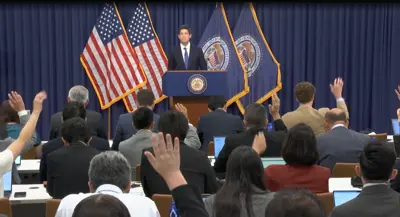
Fed Hiked Rates. So Why Did the Nasdaq Jump 1.69%?
Oil and the 10-year yield fell together, and chips pulled the market back up. The rally says more about real discount rates and energy prices than about anyone ignoring the Fed.

Weekly Check: The AI Bull Market Isn't Over, It's Just Gotten Harder
A 5% 10-year yield, 470 gigawatts stacked up in Texas, Chinese DRAM, and whether data centers actually get switched on are starting to decide who wins the AI trade through 2027.

Nasdaq Hits Record, S&P 500 Goes Nowhere: Memory Chips Drive a Narrow Rally
The Nasdaq notched a second straight record close, but the S&P 500 was essentially flat as gains concentrated in memory and chip-equipment stocks while banks slid.

Meta +11%, ARM +17%, Nasdaq +2.26%: AI Agents Ignite a Chip Rally
Meta's consumer AI agent Muse hit No. 1 on the App Store, and the market started repricing AI demand. This time it wasn't just GPUs. CPUs, memory, networking and chip equipment all moved. But Treasury yields and oil are still too close to the line to call this a new trend after just one day.
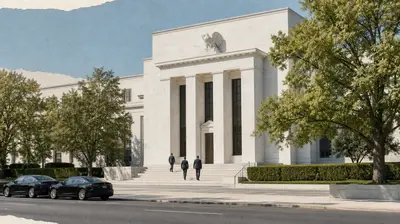
The Signal Markets Sent Before the FOMC: Nasdaq Fell, But Chips Didn't Break
Oil above $108, the 10-year near 5%, and a 25bp hike almost fully priced in. The question for markets is no longer whether the Fed hikes, but whether this is the last one.
Nothing featured in this section yet.
Not more news. Ideas that stay with you.
Instead of the daily flood of headlines, we send the knowledge and perspective you need to think long-term about U.S. stocks and AI investing, in one email each morning.
We only ask for your email. Every issue has a one-tap unsubscribe link.