Chips Plunge 6.72% as Meta's Cash Flow and Lam's Supply Limits Hit AI Trade
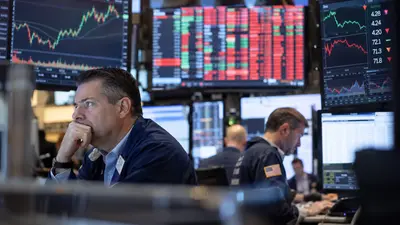
The Nasdaq fell 2.60% on Oct. 22, but the equal-weight S&P 500 rose. The selloff centered on one question: how much AI costs and when it pays back.
1. Chips plunged, but most US stocks rose
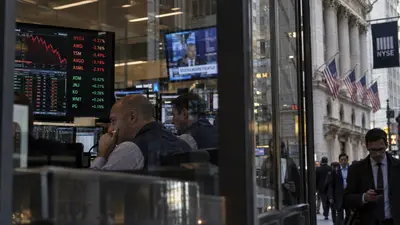
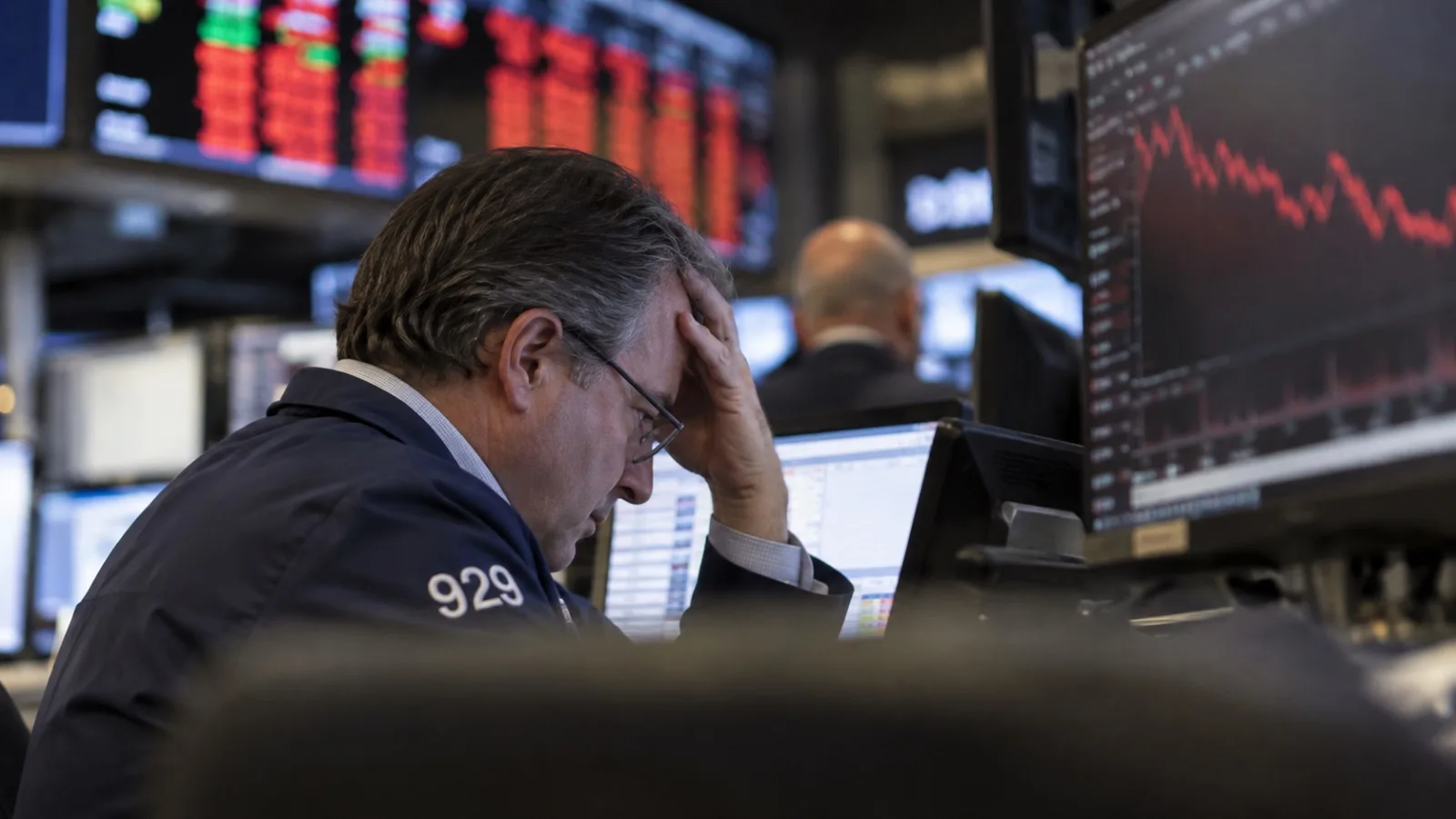
Wall Street erased the previous day's hopes of a rebound in a single session on Oct. 22. The S&P 500 fell 1.21% to 7,663.43. The Nasdaq fell 2.60% to 26,008.86. SOXX dropped 6.79%.
Moves on Oct. 22
| Index | Change |
|---|---|
| Semiconductors (SOX) | -6.72% |
| Nasdaq | -2.60% |
| S&P 500 | -1.21% |
| Dow | +0.02% |
| Russell 2000 | +0.11% |
| S&P 500 equal weight | +0.73% |
The equal-weight S&P 500 actually rose 0.73%. Consumer staples and utilities were also strong. Large-cap AI names dragged the indexes lower, while a good number of stocks advanced.
That differs from a classic across-the-board dump. Money does not appear to have left equities all at once. The pattern looks more like investors cutting exposure to AI spending and moving into relatively defensive areas.
2. Meta's problem was not revenue but the cash left after investing
Meta's third-quarter revenue was $64.601 billion, up 26% from a year earlier. Operating cash flow was $32.79 billion. But free cash flow (FCF), which accounts for capital spending, was negative $2.12 billion.
The company also announced plans for a new class of non-voting Class C shares that could be used to fund AI investment. The market read this less as stronger growth expectations and more as a signal of future funding needs. Meta shares fell 6.98%.
One quarter of negative FCF is not a liquidity crisis. Meta ended the third quarter with $82.45 billion in cash and marketable securities. The key issue is not whether cash is short now, but when such heavy spending can be recovered in sufficient cash returns.
3. Lam Research: strong demand can still mean slower growth
Lam Research reported record revenue of $8.21942 billion for the quarter ended in September, up about 22.3% from $6.72224 billion in the prior quarter. The stock still fell 11.76%.
The problem the company described was not a collapse in AI demand. It was that a shortage of cleanroom space and supply chain constraints on some components could limit the industry's ability to meet demand into 2027. Midpoint guidance of $8.6 billion for the quarter ending in December also failed to clearly beat elevated expectations.
There is a paradox here. Even if customers are eager to order, revenue arrives late if fabs and equipment are not ready on time. Healthy long-term demand and a sharp short-term drop in the stock can happen together.
The spread of selling is likely part of the same reset in growth expectations: AMAT -8.16%, ASML -6.93%, AMD -8.10%, Micron -6.26% and Nvidia -4.40%.
4. Treasury yields fell 19.3 bp, so why did tech fall more?
The 10-year Treasury yield fell to 4.953%. Lower long-term yields usually help growth stocks, whose future earnings carry more value.
Not this time. One reading is that worries about the payback period and uncertainty of AI investment outweighed the benefit of lower yields.
Brent crude rose 4% to $113.17 a barrel. Middle East supply fears added to pressure on inflation and corporate costs. The VIX climbed to about 19 but closed below 20. Heavy selling was concentrated in one sector, and there is not yet enough evidence to call it a broad financial-market panic.
5. Tesla and CoreWeave: different businesses, the same question
Tesla fell 3.08% to $374.58. Third-quarter free cash flow was better than expected and its 2026 capital spending plan was lowered. Even so, the market weighed the long-term payback on its autonomous driving and robotics businesses.
CoreWeave plunged 10.06%. For a business that relies heavily on borrowing and infrastructure expansion, the cost of capital matters more as the AI payback period lengthens. A sharp share-price drop alone does not show an actual debt repayment problem.
The question the market posed on Oct. 22 was not whether AI will grow. It was how much money that growth requires, when the invested money comes back, and how much cost companies must bear in the meantime.
In the next rebound, the thing to watch is less the size of the index gain than which companies recover together. That is likely to help separate a short-term bounce from a real return of confidence in AI investment.
Insight Times Editorial Desk