US AI Data Centers Are Headed for 90GW. Gigawatts Now Matter More Than Dollars
Goldman Sachs expects US data center capacity to grow from 64GW at the end of 2026 to 90GW at the end of 2027. The AI race is moving from buying GPUs to building power plants and transmission lines alongside them.
26GW Says More Than $500 Billion
AI investment has so far been explained in dollars. $50 billion, $100 billion, $1 trillion. The bigger the number, the larger the scale looks, but the less clear it is what actually gets built. The same $10 billion buys very different amounts of computing capacity depending on GPU prices, land, interest rates, construction costs and cooling methods.
Power is different. An AI factory produces nothing until the GPUs, HBM, networking, cooling and power conversion equipment all run. The physical ceiling comes down to one question: how much electricity can actually be delivered?
- End of 2026: 64GW. Raised 5GW from the earlier forecast of 59GW.
- End of 2027: 90GW. Cut 5GW from the earlier forecast of 95GW.
- One-year increase: +26GW. About 41% above the 64GW base.
26GW Is a Grid Construction Problem, Not a GPU Purchase
One gigawatt is one billion watts. The AP1000 nuclear reactor certified by the US Nuclear Regulatory Commission has an electrical output of at least 1,000MW, or about 1GW. As a rough way to grasp the scale, 26GW is comparable to the electrical output of a few dozen large reactors. Data center capacity and generating capacity cannot be matched one for one.
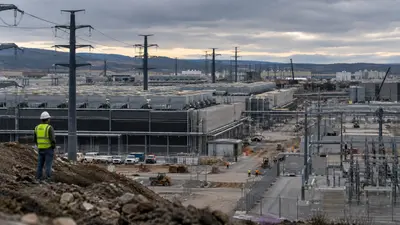
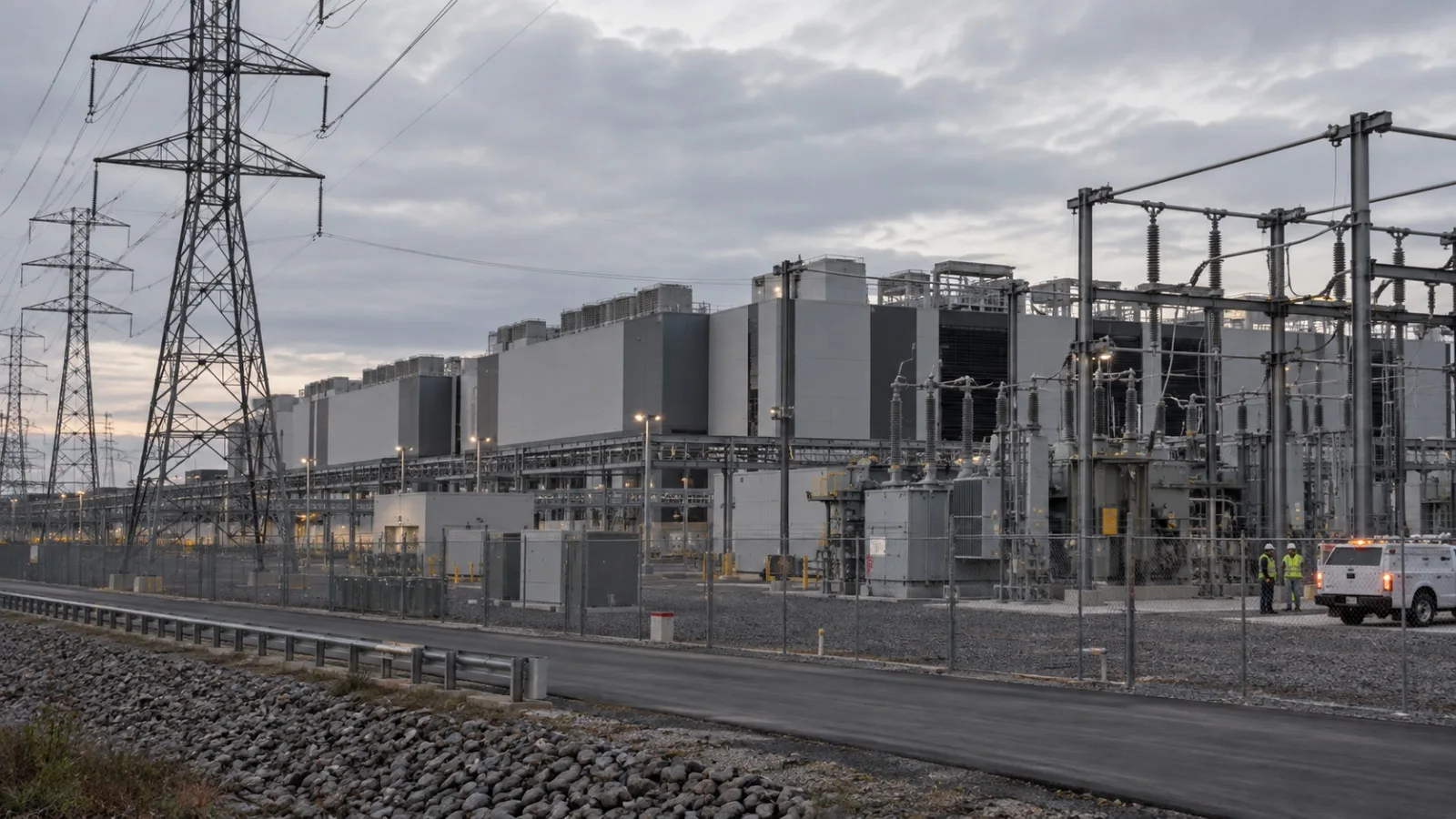
The analogy matters less than the breadth of equipment required. Turning 26GW into working data centers takes more than GPUs and server racks. Generation, transmission lines, substations, large transformers, switchgear, UPS systems, cooling, backup power, land and fiber all have to move at once.
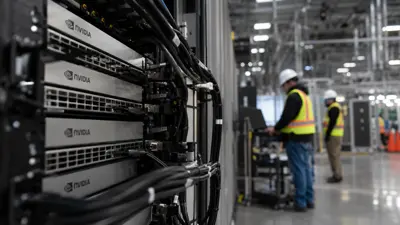
Compute. More computing power from Nvidia, AMD and custom ASICs lifts demand for HBM, networking, power conversion and cooling together.
Memory and networking. Micron, SK hynix, Samsung Electronics, Broadcom and Marvell could see system-level demand grow as AI clusters get larger.
Electrical infrastructure. The bottleneck is shifting to electrical equipment, and companies such as Schneider Electric and Eaton gain a bigger role. The Department of Energy says large transformers can take more than a year to procure.
Power and grid. Even with a power plant secured, a delayed grid connection keeps an AI factory dark. That is why FERC has moved to overhaul interconnection rules for large power users.
Up for 2026, Down for 2027: A Question of Schedule, Not Demand
The most interesting part of the forecast is its direction. The 2026 number rose 5GW, while the 2027 number fell 5GW. If AI demand were simply weakening, both years would more naturally move lower.
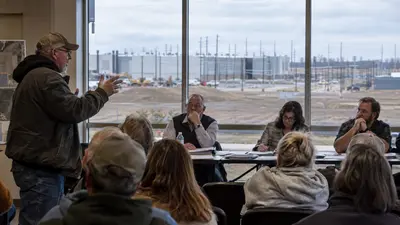
The pattern instead suggests near-term construction is running faster than expected, while power procurement, grid interconnection, permitting and local opposition could cap the schedule further out. Goldman noted that political opposition to US data centers is growing, but said the growth outlook through 2027 is largely intact.
A number more important than 90GW comes up here: the on-time completion rate. In earlier analysis, Goldman put the share of data center capacity scheduled for the next one to two years that comes online on time at roughly 50% to 60%. What matters is less the total of announced projects than how many actually get electricity.
The bottleneck in AI data centers is moving from GPU to HBM to networking, and now toward power, grid and permits.
The federal government sees the same problem. In June 2026, FERC asked transmission operators in six regions to revise their rules to speed up grid connections for large power users such as data centers. The DOE's 2026 transmission needs study also said additional transmission infrastructure is required because of growth in data centers and large industrial loads.
Insight Times Editorial Desk