The Smarter Banks' AI Gets, the More Fragile Markets May Become
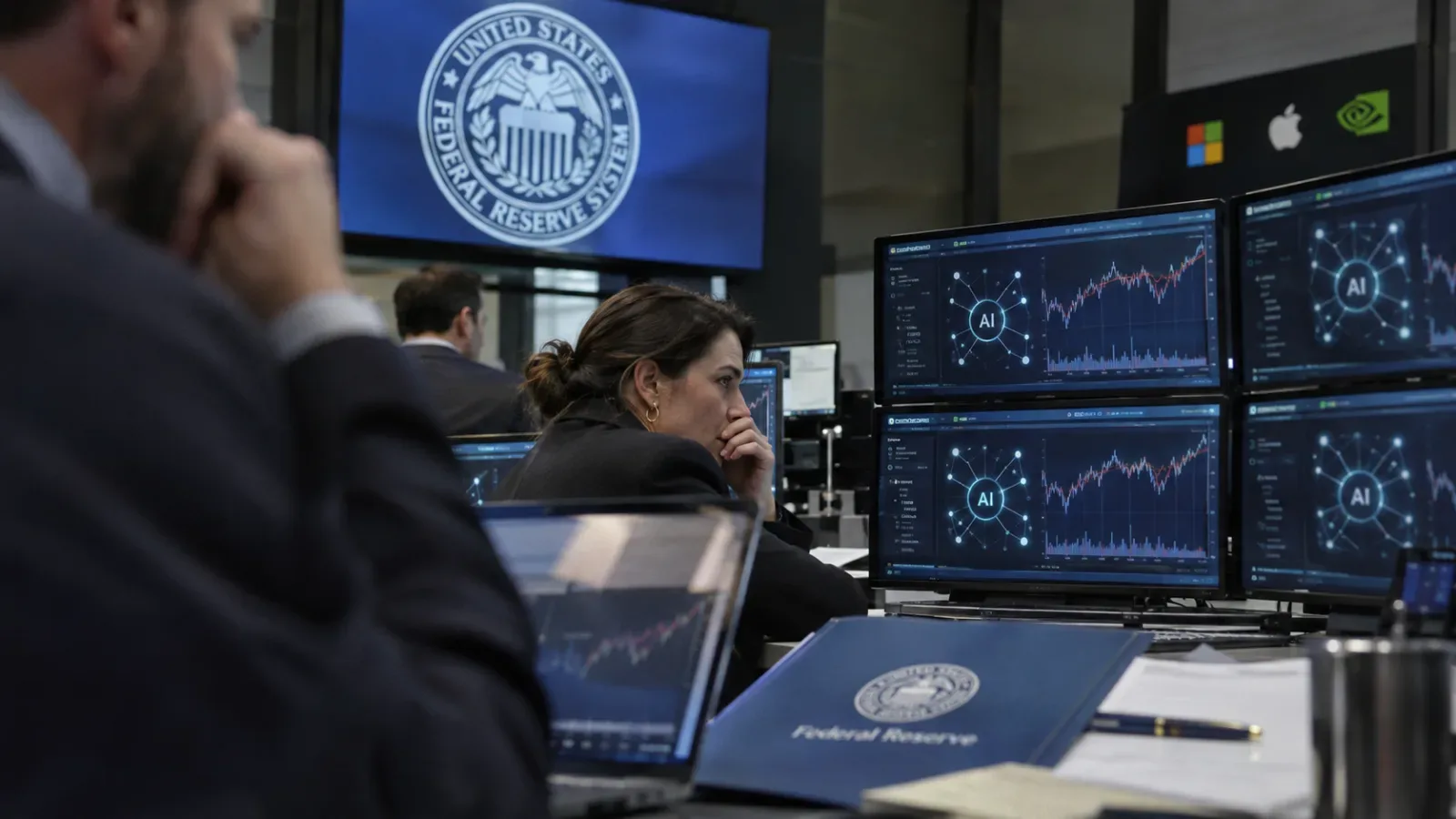
In the Fed's Financial Stability Report survey, 87% of respondents named AI a key risk. The worry is not only wrong answers. Markets can also shake when everyone finds the same right answer and acts at once.
The 20-second read
1. Why would smarter banks be risky?
Imagine every bank adopts a strong AI system. It spots risky trades quickly and reads market shifts faster than people do. For an individual bank, that is a clear advantage.
Now suppose the AI systems at many banks learn from the same data and reach similar conclusions. One day they read the same warning sign and start selling together. Decisions that are rational for each firm can become a shock for the whole market.
That is the concern Fed Governor Michael Barr raised on Nov. 16. AI makes finance more efficient, but it can also push judgments and actions in one direction.
2. The 87% is not a crisis probability
In the Fed's Financial Stability Report, AI was the potential risk market participants cited most often.
87% Share of survey respondents who named AI a key financial stability risk. This is not the probability of a financial crisis.
The worry has several parts. Money may concentrate in AI-related investment. Financial firms may depend on similar technology. Attackers may use AI in cyberattacks.
These overlap with the old paths to a crisis: asset prices swing, leveraged investments come under pressure, and liquidity dries up just when trades need a buyer. AI may not add a new cause of crisis so much as speed up how an existing shock spreads.
3. When AI finds the same answer, selling arrives together
In markets, the order and speed of reactions matter as much as the information. When people judge on their own, decisions land at slightly different times. When similar AI models analyze the same news, sell decisions can bunch up.
- Same information. AI at many firms reads similar signals.
- Same judgment. Decisions to cut risk come at about the same time.
- Simultaneous selling. If buy-side liquidity is thin, price declines grow.
- More pressure. Falling prices can trigger further risk reduction.
What Barr warned about is this automated, simultaneous judgment. It does not explain a crisis that has already happened. It is a risk scenario the Fed prepares for.
AI could also improve market surveillance and widen participants' access to information. The key is not AI itself but how similar the models and rules are that everyone relies on.
4. Customers' AI agents can move banks too
It is not only the AI that financial firms use. AI agents acting for customers are a new variable.
If an AI requests a deposit transfer or a trade, what should the bank verify? It must confirm that the real customer gave permission, that the agent acts within that permission, and that the transaction can be stopped.
If AI agents move money at the same time in an anxious period, the strain on a bank's liquidity management could grow. In cybersecurity, AI makes attackers stronger, but defenders also use it to find and fix vulnerabilities.
5. Chair Warsh asked a different question about the whole economy
The same day, Fed Chair Kevin Warsh said AI could bring large changes to productivity and growth. But the size, scope and timing of the effect are uncertain. He laid out cases together: productivity gains spread widely, the employment shock grows, or expected investment returns turn into disappointment. This was not a signal about the path of interest rates.
6. Your portfolio may be more lopsided than it looks
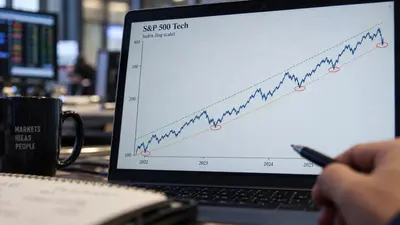
You own QQQ. You hold an S&P 500 ETF. You add a semiconductor ETF and a few favorite big-tech stocks. The names and products differ, but you may be investing repeatedly in the same AI growth expectation.
Long-term investors should check this. Holdings split across accounts and ETFs do not split the risk. Look at overlap in underlying holdings and the common factors that move them, not at product names.
The check is simple. Open each ETF's top holdings and see how much they overlap with your individual stocks. Then test how sensitive the portfolio is to shared drivers: AI investment expectations, the semiconductor cycle and big-tech valuations.
What to watch
The principle for investing in the AI era need not get more complicated. Start by understanding not how many things you own, but what makes them move together.
- If the AI systems at many banks reach similar judgments from similar data, selling could pile up all at once.
- Fed Governor Barr's concern is that a decision that is rational for each bank can still be a shock to the market as a whole.
- It is the share of survey respondents who named AI as a major financial stability risk.
- It does not represent the probability of a financial crisis.
- No. In the article, this is a risk scenario the Fed is preparing for, not an explanation of a crisis that has already occurred.
- Still, the concern is that price drops could deepen if liquidity is thin.
- Banks must check that the real customer gave permission, that the action is within the scope allowed, and that the transaction can be stopped.
- If AI agents move money at the same time in anxious periods, banks' liquidity management burden could grow.
- Not necessarily. Even with different product names, you may be investing repeatedly in the same AI growth expectations.
- It is worth opening up each ETF's top holdings to see how much they overlap with individual stocks you own.
What to watch
Insight Times Editorial Desk