Why Would Nvidia Guarantee Its Customers' Data Center Loans?

Nvidia is reportedly in talks to back financing for Nscale's West Virginia data center. Nothing is signed, and the terms are not public.
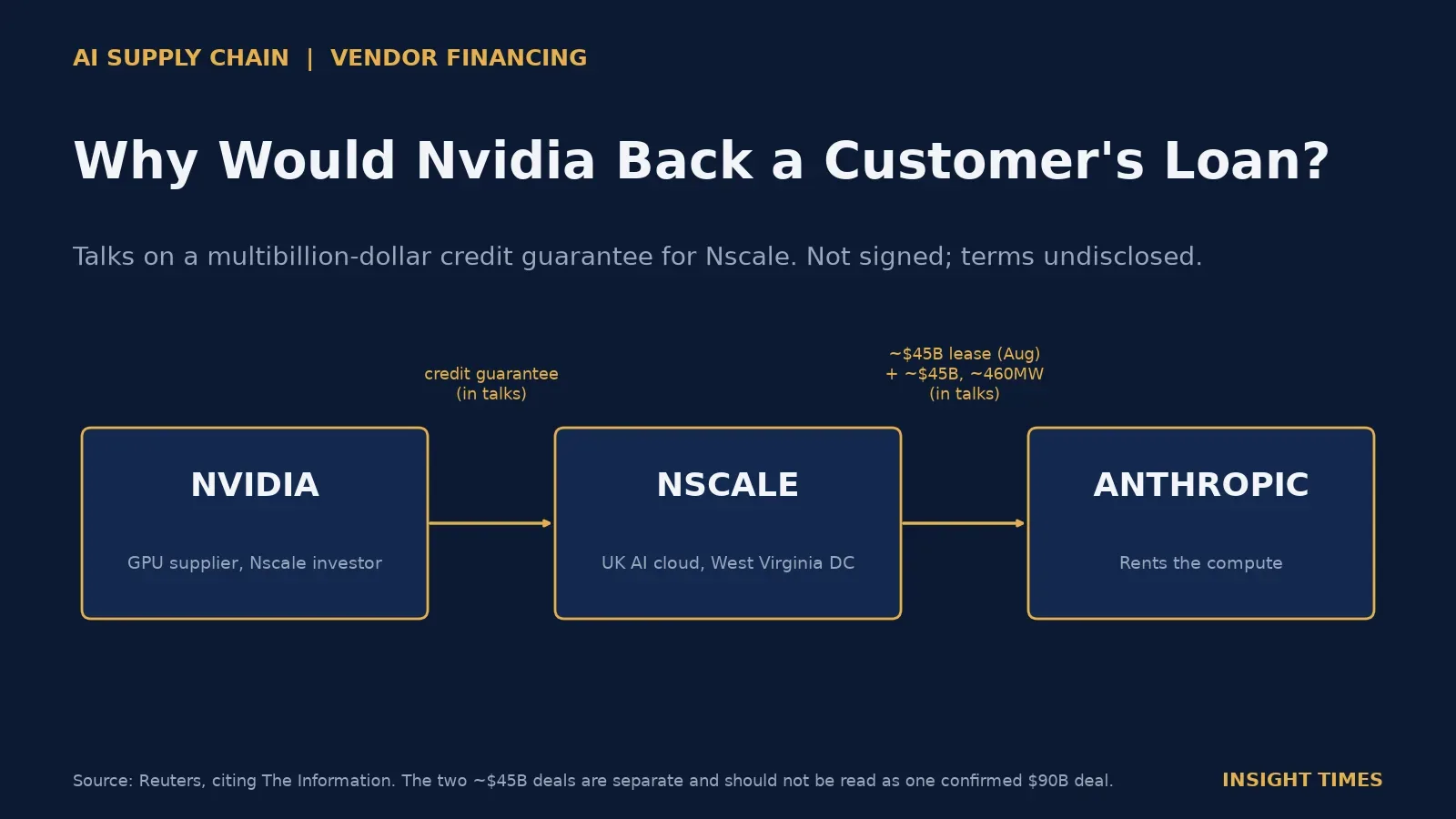
Dark navy cover. Flow diagram: Nvidia to Nscale (credit guarantee, in talks) to Anthropic (~$45B compute lease signed in August plus a separate ~$45B, ~460MW deal in talks). Title: Why Would Nvidia Back a Customer's Loan?

1. Why a chip supplier is weighing finance

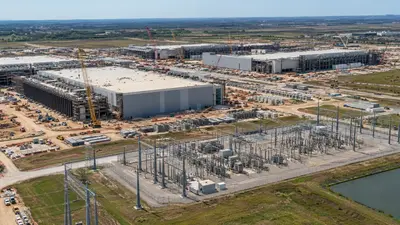
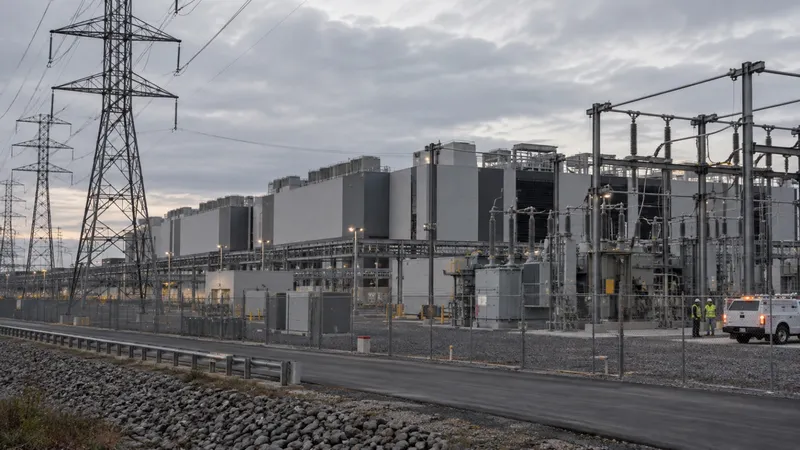
Nvidia is in talks to provide a credit guarantee to help Nscale, a UK-based AI cloud company, fund a data center in West Virginia, according to reports. The reported size is in the billions of dollars.

Nscale builds AI computing infrastructure, and Anthropic is expected to use the data center's computing capacity. Nvidia is already an investor in Nscale.

Flow of the deal

  • Nvidia: supplies GPUs and is weighing a credit guarantee
  • Nscale: builds the data center and supplies computing capacity
  • Anthropic: leases computing capacity to train and run AI models

The key point is that Nvidia may do more than sell GPUs. It may also help customers finance their capital spending. But the guarantee has not been signed, and the amount and terms are not final.

2. The $45 billion contract and the extra talks: what is confirmed

Last August, Anthropic signed a contract to lease about $45 billion of computing capacity at Nscale's West Virginia data center. The two companies are also reportedly discussing a separate deal for about 460MW of additional capacity. Reports say that deal could also be worth about $45 billion.

ItemDetailStatus
Existing compute leaseAbout $45 billionSigned
Additional compute dealPossibly about $45 billionIn talks
Capacity tied to the additional dealAbout 460MWIn talks
Nvidia credit guaranteeReported at several billion dollarsNot signed, terms undisclosed

The existing $45 billion and the $45 billion under discussion should not be added into a confirmed $90 billion contract. Likewise, the size of the lease and the size of Nvidia's guarantee are different numbers.

3. Vendor financing: finance that supports sales

Vendor financing is when a supplier of products or equipment provides funds, or other financial support, to help a customer buy. Think of an aircraft maker helping an airline finance a purchase.

Similar logic could apply to AI data centers. If Nscale raises money, it can proceed with construction and GPU purchases. For Nvidia, that could mean more chances to sell GPUs.

Financial support does not automatically guarantee GPU sales, though. The actual purpose of the talks, and whether they are linked to GPU purchase contracts, has not been disclosed.

4. How a guarantee differs from a direct investment

If Nvidia invested $1 billion directly in Nscale, that cash would go out the door. If it guaranteed a $1 billion loan, the same amount would not leave immediately.

If the borrower repays as scheduled, Nvidia might never pay out under the guarantee. If the borrower defaults, Nvidia could bear losses depending on the contract terms.

So a guarantee should be viewed as separating immediate cash outlay from potential future loss. The guarantee amount alone does not establish an actual loss or an accounting burden. The specific terms and accounting treatment of these talks have not been disclosed.

5. The other side of AI demand: customers' ability to fund it

AI cloud companies need enormous capital to build data centers and buy GPUs. If they expand before generating enough cash from their own business, they may lean more on outside borrowing.

If lenders pull back or raise rates, data center construction could be delayed, and GPU purchases could be affected. That is why a supplier's guarantee could ease funding constraints.

Money and revenue circulating within an industry is not a problem in itself. If utilization and computing-service revenue are strong enough, customers can use financial support and still repay their debt. If service prices fall or utilization falls short, customers' ability to repay weakens, and the risk can pass to the guarantor.

The distinction that matters is between investment backed by real usage demand and investment that depends on continued outside financing.

6. Five things long-term investors can watch

  1. Guarantee amount and maximum possible loss. If a deal is signed, how much risk does Nvidia take on?
  2. Loan maturity and repayment terms. Do the data center's cash flows match the timing of debt payments?
  3. Link to GPU purchase contracts. How does the financing connect to actual GPU orders?
  4. Cash generation at Nscale and Anthropic. Does demand for computing capacity turn into steady cash flow?
  5. Spread to other customers. If similar support is repeated, Nvidia's risk structure would need a broader assessment.

For investors who build positions gradually over a long period, one news item at the talks stage is not enough reason to change an investment approach. At the same time, enthusiasm over AI growth should not lead anyone to ignore customers' financial health. A more reasonable approach is to check, in order, whether a deal is confirmed and what cash flows actually materialize.

This article is for information only and is not investment advice. Investment decisions and responsibility rest with the investor.

Nvidia's guarantee is still under discussion, and what matters is the guarantee's terms and the cash the data center actually earns.

Insight Times Editorial Desk

More by topic

Starting with this story's topics, then what readers are following now

Investor psychology, decision-making and books on investing

Data Centers

This story's topic84 storiesSee all →

A building that houses servers and networking gear and supplies them with powe…

US AI Data Centers Are Headed for 90GW. Gigawatts Now Matter More Than Dollars

Goldman Sachs expects US data center capacity to grow from 64GW at the end of 2026 to 90GW at the end of 2027. The AI race is moving from buying GPUs to building power plants and transmission lines alongside them.

Tech

Tesla Energy's 13.7GWh Paradox: Expectations Ran Faster Than Deployments

Q2 deployments recovered but margins collapsed. Q3 set a record for deployments and still missed estimates. The issue is not the size of AI power demand but how fast it converts into Tesla revenue and profit.

Tech

Why Nvidia Is Happy to Help Make AI Models Nearly Free

Falling model prices can squeeze model makers. For Nvidia, the number that matters is the total volume of tokens generated worldwide and the compute that produces them.

Tech

Why the White House Swapped "AI" for "Super Intelligence"

Executive Order 14434 renames AI across the federal government without defining a new technology. The real story is about roughly $700 billion in capex, free cash flow and electricity.

Tech

Nvidia's Next Target After GPUs: Controlling What AI Agents Are Allowed to Do

OpenShell and Sentry are not about policing what an AI says. They are about controlling, at the server infrastructure level, which files and APIs an AI can touch, what it can execute, and who can actually pull the plug when something goes wrong.

Tech

2027 Investing Needs Alignment, Not Prediction

A new investing book argues the hard part was never picking the next winner. It's staying aligned with where value and bottlenecks are moving while keeping old human weaknesses in check.

Investor Mind

AMD Crossed $1 Trillion, and the Market Started Looking at CPUs Again

AMD's stock topped a $1 trillion market cap for the first time. The rally isn't just about being an Nvidia alternative. It reflects a reassessment of AMD as a full-stack AI infrastructure vendor, one that bundles CPUs, GPUs and networking, as AI shifts from chatbots to agents and reignites data center demand for CPUs.</deck> <parameter name="oneline">As AI moves from chatbots to agents, the market has started counting the CPU sitting next to the GPU again.

Tech

NVDA

This story's topic82 storiesSee all →

Amazon Goes After Nvidia's Strongest Moat, and It Is Software, Not GPUs

Amazon's open-source TorchNeuron aims to let existing AI code run on its Trainium chips. The contest comes down to the total cost of AI compute and the return on Amazon's $220 billion in annual capital spending.

Tech

The US-China Summit Didn't Erase Taiwan Risk for Chip Stocks
Washington's Taiwan policy held, but roughly $14 billion in arms sales is still on hold. For AI chip investors, the summit reads less like risk removed and more like a fragile balance extended.

Macro

Nvidia Put $2 Billion Into Lumentum. Optics May Be the Next Bottleneck, but the Stock Has Already Run

Optical networking is emerging as the next constraint on AI data centers. Investors need to separate the industry's growth potential from the price they are already paying for it.

Tech

ASML Is Discussing 2030 Orders. How Long Can the AI Chip Supercycle Last?

Despite bubble worries, ASML sees equipment shortages through 2028. Investors should watch future production capacity, not just today's orders.

Tech

AI's Next Bottleneck Is Money, Not Chips

Broadcom is lending Anthropic up to $42 billion, and Nvidia wants to build a $500 billion market for loans backed by GPUs. The AI race may turn on what rate buyers pay to borrow.

Tech

Nvidia's $500 Billion Experiment: Wall Street Asks Who Backs the GPU, Not Just the Chip

The real issue in Nvidia's financing platform is not chip sales. It is how far Wall Street will trust GPU resale prices and rental income three to four years out.

Tech

AI Data Centers' Next Bottleneck: Getting Power From the Grid to the GPU

Securing a gigawatt of power does not mean a gigawatt reaches GPU compute. The next fight in AI infrastructure is happening inside the data center, over how little electricity gets wasted before it reaches the chip.

Tech

CapEx

This story's topic66 storiesSee all →

Money a company spends on things it will use for years — plants, equipment, bu…

Memory Chip Supercycle: Not at Peak Yet, But 5 of 6 Warning Signs Are Flashing

Memory prices are still climbing, but the pace is slowing and PC and smartphone demand is starting to crack under the weight of higher chip costs. This looks less like a price peak and more like a profit plateau building toward the next supply cycle.

Investing

Google Catches Up, and Rivals Run Ahead Again

The real test for Gemini 4 Argon is not AI performance. It is whether Google can win customers and keep them.

Tech

AI Needs to Find $1 Trillion a Year From Somewhere to Pay Back Its Capex

Saying AI capex is big is no longer the point. The harder question is what end users have to pay for the buildout to pencil out, and Goldman Sachs puts that number at roughly $1 trillion a year.

Tech

SpaceX AI Revenue Jumps 830%, but Starlink Still Earns the Real Money

In its first quarter as a public company, SpaceX turned profitable and guided to as much as $40 billion in fourth-quarter capex. A possible Tesla merger adds another question for investors.

Investing

Meta's Muse Wonder Is a Bid for the AI Operating System, Not Just a Model

An AI agent that remembers, decides and acts is Meta's next platform bet. Whether it pays off depends on user trust and sustainable profit, not just model quality.

Tech

AI Can Lift More Than Stocks: It May Push Long-Term Yields Higher Too

The AI boom can grow the numerator of corporate earnings while also growing the denominator of the discount rate. Investors watching long-term Treasury yields now need to add "AI capital demand" to the Fed, inflation and the deficit.

Tech

Why Tesla Lined Up $30 Billion in Credit It Says It Won't Use This Year

Tesla's 2026 capex is set to nearly triple. The question is less about debt than about when spending on AI, robotaxis, chips and energy turns into cash flow.

Tech

GPU

This story's topic58 storiesSee all →

A chip built to draw graphics, whose ability to run thousands of identical cal…

The AI Bubble Question Has Changed: By Late 2026, It's ROIC Over GPUs

There is no sign yet that AI investment is slowing. If anything, hyperscaler spending forecasts keep climbing. But as the scale of that capital has grown, the market's question has shifted from "is AI growing" to "when, and how much, does this capital come back as cash."

Tech

If GPUs Are the Muscle, the Network Is the Nervous System

AI data centers do not get faster just by buying more GPUs. When thousands of accelerators cannot exchange data on time, the most expensive asset in the building sits idle. That is the whole investment case for Arista.

Investing

The Cheaper Tokens Get, the Bigger Your AI Bill Gets

As AI shifts from training to inference, the token is becoming an industrial commodity. Falling prices are not cutting demand, because agents and automation consume tokens at a scale no human chat session ever did.

Investing

The Next AI Chip Race Is About How Chips Connect

Applied Materials will lift its stake in Dutch equipment maker BESI from about 9% to 20%. The bet is less about control than about a new way to link chips.

Tech

Musk Borrowed $40 Billion for GPUs. He Also Warned AI Cloud Firms Could Go Bust

SpaceX's giant financing shows a new dividing line in AI: who borrows matters as much as how much is spent. Firms with other revenue may outlast those that rent out GPUs alone.

Tech

Why Nebius Is Keeping Some 2027 AI Capacity Off the Shelf

Nebius mixes long-term contracts, short-term premiums and auctions. Holding back capacity pays only if the servers stay busy, and it is not yet clear the pricing will last.

Tech

Nvidia and AMD Back Common Design to Build AI Data Centers Like Lego Blocks

A new Open Compute Project spec aims to let one building host rival chip systems. Whether it speeds up construction is not yet confirmed.

Tech