Why the White House Swapped "AI" for "Super Intelligence"
Executive Order 14434 renames AI across the federal government without defining a new technology. The real story is about roughly $700 billion in capex, free cash flow and electricity.
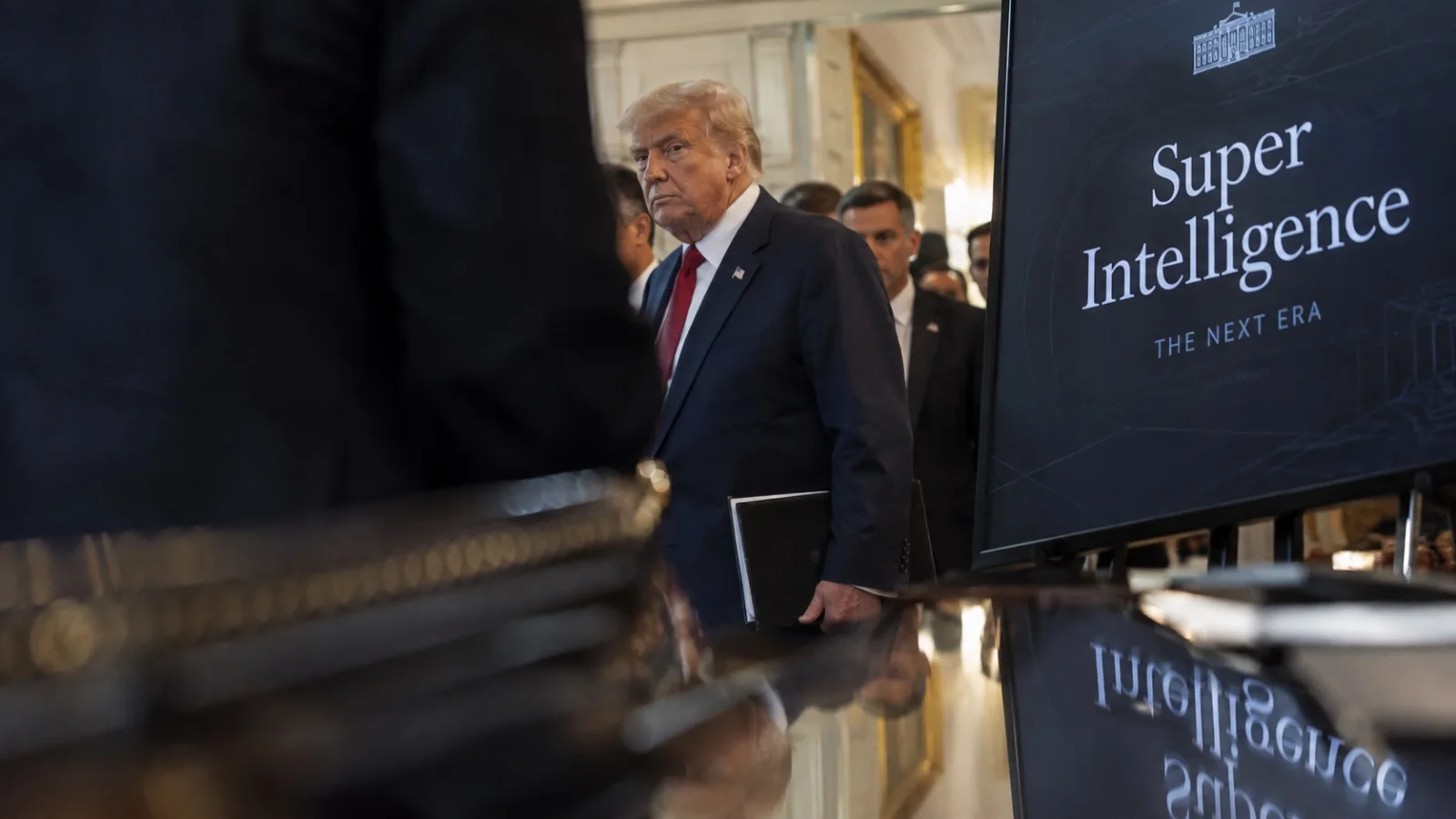
"Superintelligence" is not yet a technical fact. But once the US government adopted the term as official policy language, the vocabulary that capital markets use to explain regulation, national security and hundreds of billions of dollars in AI capital spending began to shift.
The name says "super intelligence." The law still says AI.
Executive Order 14434, issued by the White House on Sept. 29, directs federal agencies to use "Super Intelligence" instead of "Artificial Intelligence" in official correspondence, websites and policy documents. But Section 3 of the same order does not define SI as a new stage of technology. For now, it keeps the existing AI definition in 15 U.S.C. 9401(3).
That matters. Superintelligence as Nick Bostrom described it is a hypothetical stage in which a system far outperforms the best human minds in nearly every cognitive domain. The White House's SI is an administrative term that covers today's frontier models and agents. So what has happened is less a technical declaration that ASI has arrived than a political rebranding, in which the state renames the social meaning of a technology.
| AI | AGI | Bostrom-style ASI | White House SI | |
|---|---|---|---|---|
| Core meaning | Broad AI systems in use today | Human-level general cognition | Broadly surpasses the best human intelligence | Policy term covering frontier AI |
| Current status | Commercialized | Contested goal | Hypothetical future | Adopted administratively |
| Legal definition | 15 U.S.C. 9401(3) | No unified definition | Academic concept | Currently uses the existing AI definition |
The real shift is in regulatory philosophy
The same day, major companies including Google, Meta, Nvidia, Anthropic, OpenAI and xAI signed the White House Accord on Super Intelligence. It lays out four layers of safeguards: internal model monitoring, dedicated control teams, outside audits and board-level independent oversight.
The accord is not law. It carries no automatic criminal penalties and no pre-approval regime. What the Trump administration stresses is corporate self-control and after-the-fact accountability, not strong central regulation. The Super Intelligence Force, announced Oct. 4, is centered on Jay Clayton and coordinates the federal response. So far, its visible role looks more like policy coordination among stakeholders such as industry, consumers and infrastructure operators.
Behind it: about $700 billion in capex
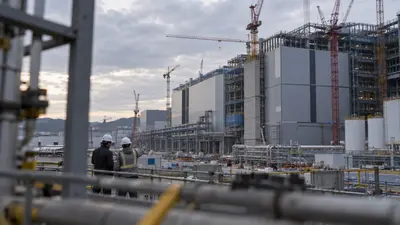
The timing of the stronger political narrative and the surge in Big Tech capital spending is no coincidence. A Reuters analysis citing Visible Alpha data puts 2026 capex at Alphabet, Amazon, Meta and Microsoft at about $698 billion. Fitch expects spending at the same four companies to rise more than 75% from a year earlier, to $700 billion.
- Microsoft 2026: about $190B. Company guidance, centered on AI infrastructure and data center expansion.
- Alphabet 2026: $180B to $190B. Raised from an initial $175B to $185B on higher server and data center spending.
- Meta 2026: $130B to $145B. Latest guidance as reported by Reuters.
The investor question is no longer "who builds the biggest model." It is who recovers this spending as cash flow. Microsoft justifies its investment with Azure growth and demand constraints, but Reuters has pointed out that Big Tech capex is growing faster than cloud revenue. Meta's second-quarter free cash flow fell to $784 million from $8.55 billion a year earlier.
Depreciation is a quiet but important variable
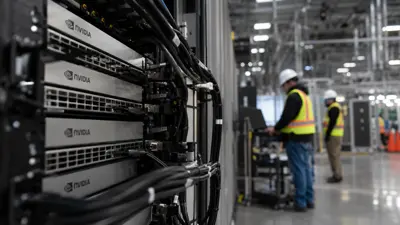
The economics of AI servers are uncertain for more than equipment prices. How long a company assumes the gear will last changes its margins. Alphabet generally depreciates servers and network equipment over six years. Microsoft uses a range of two to six years. Amazon, citing the pace of AI obsolescence, cut the useful life of some servers and network equipment in 2025 from six years back to five.
So rather than declaring that six-year depreciation is wrong, investors should check how closely real GPU replacement cycles and asset utilization match the useful lives on the books. If equipment loses economic value faster than expected, depreciation or impairment charges could weigh on future earnings.
Electricity sits at the bottom of the SI race
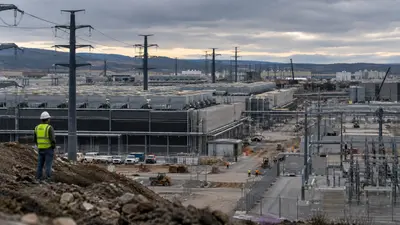
However large the superintelligence narrative grows, physical limits remain. The IEA expects global data center electricity use to nearly double, from about 485 TWh in 2025 to about 950 TWh in 2030. That is more than Japan's total electricity consumption today.
The US matters more. The IEA says data centers could account for nearly half of US power demand growth through 2030. A data center can be built in two to three years, but generation, transmission and grid interconnection take longer. FERC data also show the interconnection process for generation and storage projects stretching to a median of about five years before commercial operation.
Insight Times Editorial Desk