Looking for the Memory Peak? Watch Capex, Not Prices
Micron's record quarter and surging long-term contracts show AI memory demand has not rolled over. Its aggressive FY27 expansion also gives the first hard numbers on the risk of supply normalizing in 2028.
Why it is hard to call this a peak
Micron reported fiscal fourth-quarter 2026 revenue of $54.23 billion. That compares with $41.46 billion in the prior quarter and $11.32 billion a year earlier. Guidance for the next quarter is $61.5 billion, plus or minus $1.5 billion, well above the consensus estimate of $57.02 billion.
Customer behavior is even stronger. Financial commitments tied to long-term supply agreements rose from $22 billion to $32 billion in three months. Remaining performance obligations (RPO) climbed from $100 billion to $150 billion. One reading is that customers are prioritizing secured volume over waiting for lower prices.
Prices have not turned either. TrendForce projects fourth-quarter 2026 conventional DRAM contract prices up 10% to 15% from the prior quarter, and NAND Flash up 15% to 20%. A decline in average selling prices, the classic early sign of a peak, has not shown up.
NAND is not one market
NAND is already splitting. In PCs and smartphones, high prices are slowing purchases, and buyers are drawing down inventory and cutting capacity.
Enterprise SSDs are the opposite. TrendForce expects enterprise SSD bit demand to grow more than 80% in 2026 from a year earlier. AI inference, agentic AI, real-time retrieval, KV cache and vector databases are driving demand for high-capacity QLC SSDs.
So "NAND is strong" is less accurate than "enterprise SSD is strong while consumer NAND meets growing price resistance."
The real warning light is supply investment
Strong demand does not mean low risk for the stock. The next inflection point in the memory cycle is increasingly likely to come from supply.
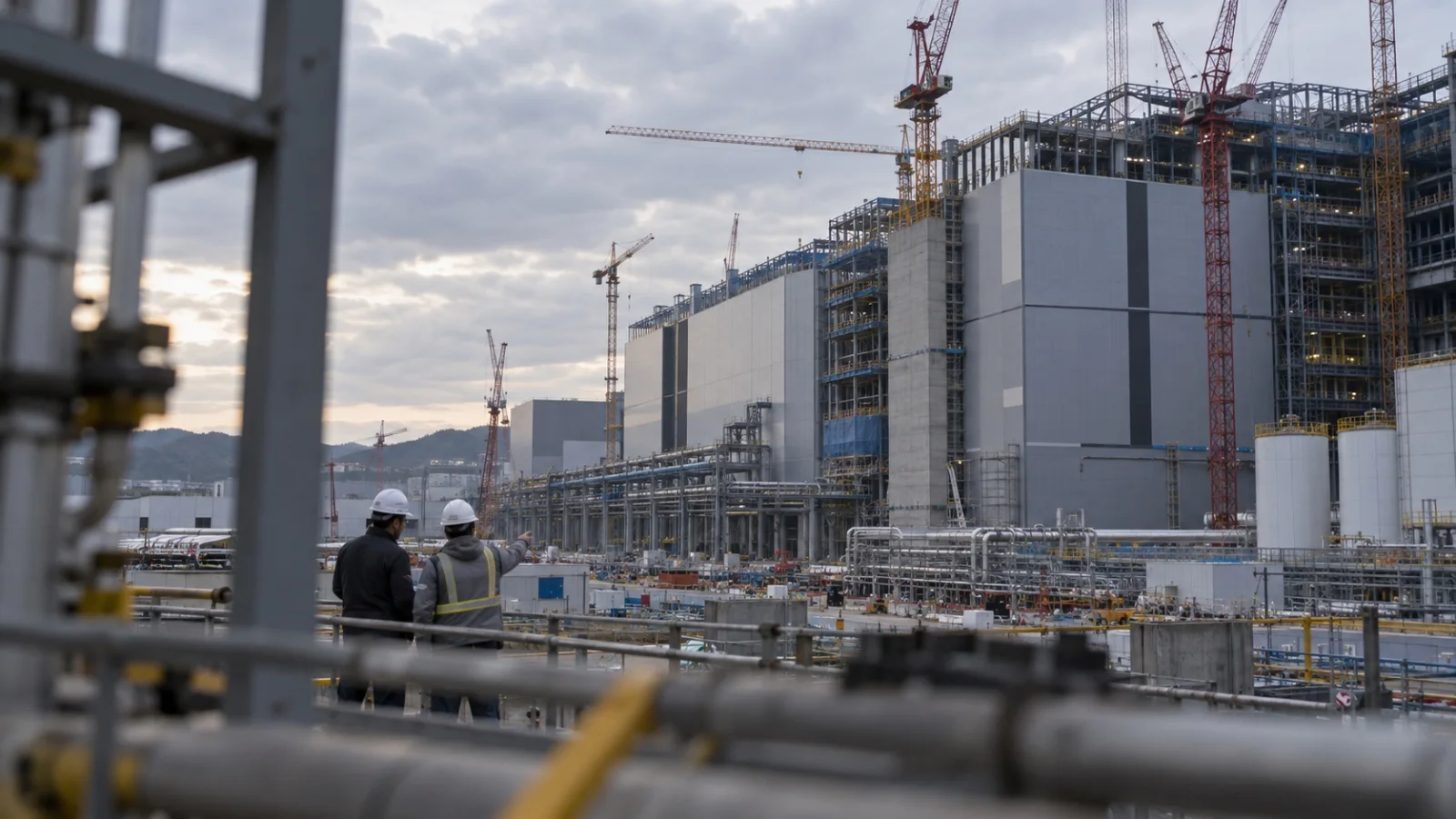
Micron has guided to about $11.5 billion of capex in the first quarter of FY27 and about $25 billion for the first half. It plans to spend more in the second half than in the first. The figures show how intense the current shortage is. They also signal future supply growth.
Actual wafer output from new fabs arrives with a lag, so it is too early to call an oversupply. But the open question is what bit supply the heavy 2026 and 2027 spending turns into by 2028.
AI spending moves toward a cash-flow test
The end customers for memory, the hyperscalers, are also moving past a phase of simply spending cash. According to Reuters, Amazon considered moving about $8 billion of Nvidia Grace Blackwell GPUs into a special purpose vehicle and leasing them back.
Another Reuters analysis cited a Bain calculation that, to justify current AI infrastructure spending, hyperscalers would need more than $4.2 trillion in new revenue over the next five years, beyond cost savings in existing markets.
AI usage and infrastructure demand remain strong. But going forward, investors will need to track not only capex growth but also depreciation, operating cash flow, free cash flow, debt and lease obligations.
Insight Times Editorial Desk