When AI Slows Down, Some Companies Make More Money
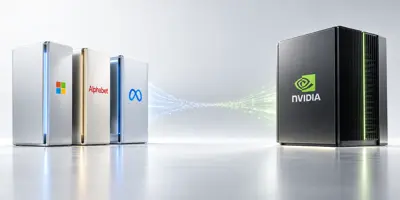
When talk of slowing AI development speed hit the market, Nvidia and chip stocks sold off while Microsoft, Alphabet and Meta rose. That split may not be an accident.

Same AI industry, so why did stocks split?
Until now, AI investing has run on roughly one formula. A better model needs more compute, more compute needs more GPUs and data centers, and most AI-related companies grow together as a result.
But as AI becomes a massive industry in its own right, that formula stops being so simple. Nvidia benefits every time new compute demand shows up. Bigger models, more inference, and shorter hardware replacement cycles all turn into revenue for the company.
Microsoft's math is a little different. Once you have already bought the GPUs, built the data centers, and locked down the power, what matters next is how long you can run those same assets at high utilization to generate Azure and Copilot revenue.
So if AI service demand holds up even as the pace of model improvement slows somewhat, hyperscalers can afford to delay new equipment purchases and instead pull forward the monetization of infrastructure they already have. This is the point where Nvidia's economic interests and Microsoft's stop being fully aligned.
The paradox of $800 billion in CAPEX
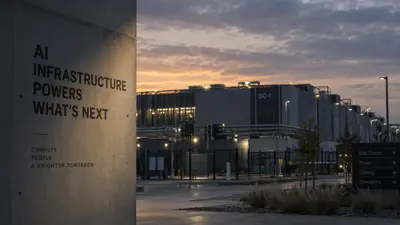
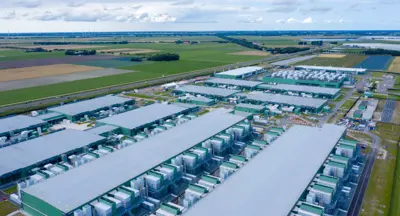
Reuters estimates that combined AI infrastructure spending by major Big Tech companies will come close to $800 billion in 2026. For the supply chain, that is a massive pool of revenue. But for the buyers, CAPEX is both an investment in future growth and a cash outflow today.
Microsoft's most recent earnings show this tension clearly. Capital expenditure in fiscal 2026's fourth quarter was $41 billion, and about two-thirds of that went to relatively short-lived assets like GPUs and CPUs. Operating cash flow was $55.4 billion, but free cash flow, after accounting for the heavy investment spending, came to just $19.6 billion.
On the other side, Microsoft Cloud revenue rose 27% to $59.3 billion in the same quarter. In other words, the issue is not a lack of AI demand. What matters next is how fast revenue growth can outrun the burden of capital spending and depreciation.
The AI investment cycle may be moving from Build to Harvest
Phase 1: Build
Racing to lock down GPUs, networking, HBM, power, and data centers as fast as possible. This is the stretch that has held the market's attention from 2023 through 2026.
Phase 2: Deploy
Businesses and consumers start putting AI into actual work and products. Token usage, seat counts, and cloud AI revenue become the numbers that matter.
Phase 3: Harvest
Utilization on existing infrastructure rises while the growth rate of CAPEX slows, pushing free cash flow and ROIC higher.
The current debate does not mean the AI industry has jumped straight into the Harvest phase. It more likely means that the market is starting, for the first time, to seriously price in the possibility that Build-phase acceleration will not last forever.
The number to watch now is not CAPEX
</markdown>
Insight Times Editorial Desk