The AI Bubble Question Has Changed: By Late 2026, It's ROIC Over GPUs
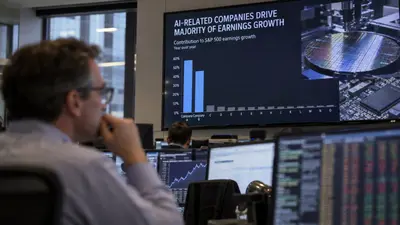
There is no sign yet that AI investment is slowing. If anything, hyperscaler spending forecasts keep climbing. But as the scale of that capital has grown, the market's question has shifted from "is AI growing" to "when, and how much, does this capital come back as cash."
Is this an AI bubble? Start by asking a different question
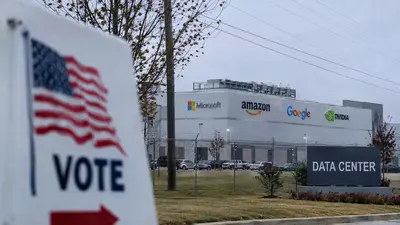
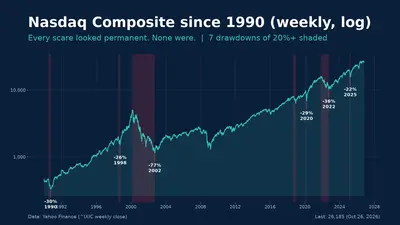
Comparing the 2026 AI market to Cisco in 2000 misses something important. The similarities are real: a new technology arrived, infrastructure spending exploded, and the market priced in future demand fast. But the primary buyers of AI infrastructure today are mega-cap platform companies with far stronger cash generation than the fragile telecom startups of that era.
That does not mean "this time is different" settles the debate either. Even when customers have strong balance sheets, if returns on that investment fall short of the cost of capital, the pace of spending eventually adjusts. So the more accurate version of today's bubble debate is not whether AI is useful, but how far the pace of capital flowing into AI is outrunning the pace of cash AI actually generates.
Key numbers:
- $0.7–0.8 trillion — Estimated range for 2026 capex among major US hyperscalers. Which companies are included, and how spending is counted, varies by source.
- $0.9–1.4 trillion — Major forecast range for 2027. The number itself matters less than the direction: estimates keep getting revised up.
- $200 billion+ — AI-related public credit issuance in the first five months of 2026, per Morgan Stanley.
One caveat worth flagging: hyperscaler capex overall is not spent on AI alone. It is mixed together with data center buildings, servers, networking, power infrastructure, and general cloud investment. Comparing figures across institutions as if they use identical definitions can be misleading.
Three real fault lines
1. It's about the speed of cash recovery, not revenue
Sequoia's 2024 "AI's $600 billion question" was less a precise 2026 break-even estimate than a framework for how to look at the problem. In 2025, Bain estimated that justifying the scale of AI compute expansion through 2030 will require enormous new revenue, and that the gap between expected and needed revenue could reach roughly $800 billion a year.
The point is not any single number. Even if token usage and AI revenue surge, if capex, power costs, and financing costs grow faster still, the free cash flow left for shareholders could end up smaller than it looks on paper.
2. A GPU's accounting life and its economic life may not match
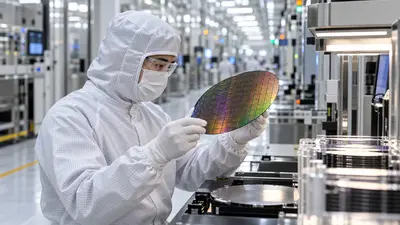
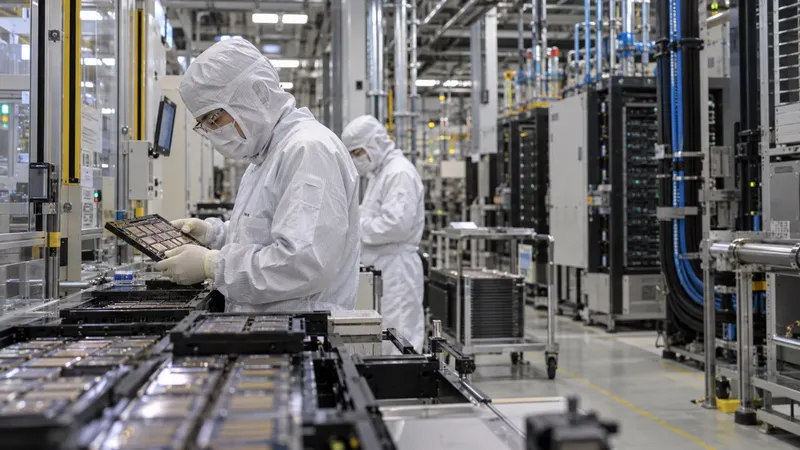
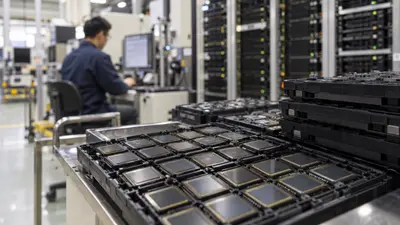
Goldman Sachs points to the useful life assumed for AI silicon as one of the most important variables driving total AI infrastructure investment. Large operators currently depreciate servers and networking gear over roughly four to six years, but Nvidia is effectively releasing new architectures on an annual cycle.
A new chip does not automatically make the old GPU worthless. Older chips can be redeployed for inference, synthetic data generation, or lower-cost workloads. But if the economic replacement cycle turns out to be shorter than the accounting depreciation period, cost recognition accelerates and margins come under pressure sooner than expected. This debate sits at the center of AI valuation.
3. AI investment is shifting from "cash-rich buyers" to "credit-market financing"
As AI spending approaches the level of operating cash flow, debt and project finance are playing a bigger role. Morgan Stanley found that AI-related public credit issuance topped $200 billion in just the first five months of 2026. In September, new financing structures, including residual-value guarantees to support AI data centers and chips, began spreading quickly.
This shift does not automatically signal a crisis. But going forward, corporate bond spreads, lease obligations, project-financing terms, and capex relative to operating cash flow are likely to become better early-warning indicators for the AI cycle than GPU order books.
2027-2028: the money moves from "faster chips" to "cheaper compute"
Nvidia's Rubin platform touts 336 billion transistors, 288GB of HBM4 memory per GPU, and up to 22TB/s of memory bandwidth. The technical lead remains strong. But as inference grows into the center of AI compute, the customer question shifts from top-line performance to how cheaply a single inference can be processed.
This is where custom accelerators like Google's TPU, Amazon's Trainium, and Meta's MTIA, along with the ecosystem designing them, start to matter. Rather than fully replacing general-purpose GPUs, they lower costs for repetitive, large-scale workloads and check some of the GPU's pricing power.
| Segment | Investment logic | Numbers to watch | Key risk |
|---|---|---|---|
| GPUs / advanced packaging | High-performance compute for frontier training and general-purpose use | GPU ASPs, HBM supply, CoWoS utilization | Customer capex adjustments, alternative silicon |
| Custom ASICs | Lower inference TCO, in-house platform optimization | ASIC revenue, customer count, share of inference workloads | Design concentration, single-customer dependence |
| Power / cooling | A physical bottleneck independent of chip generation | Power contracts, backlog, transformer and cooling lead times | Regulation, project delays, interest rates |
| AI software | Converting capex into actual revenue and productivity | ARR, cRPO, FCF margin, customer ROI | Price competition, high multiples |
Power is now a component of the AI industry, not a backdrop
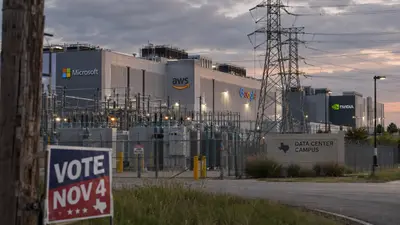
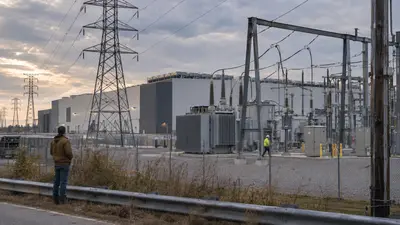
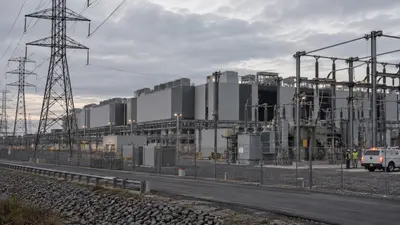
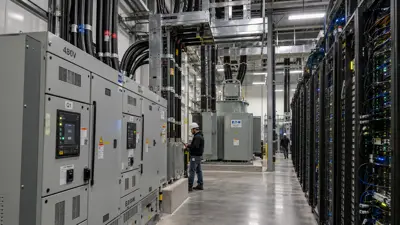
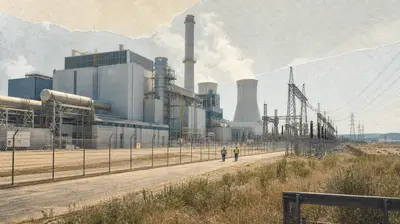
Power is no longer a background variable for data centers. On September 21, Texas paused new state-level permits related to data centers pending a comprehensive review, a sign that the AI bottleneck is shifting from chips to the power grid and its social costs. ERCOT's interconnection queue had piled up more than 470 gigawatts of large power-demand projects, including data centers.
That means power generation, transmission and distribution, transformers, cooling, and data center power-management software need to be evaluated on a longer time horizon than the GPU cycle. Chips get replaced; electricity demand does not go away. Conversely, without secured power, even the most expensive GPU cannot generate revenue.
The seeds for 2028 and beyond sit off-screen
Physical AI and quantum computing have far less revenue visibility today than GPUs do. They are better viewed as long-dated options than as core holdings right now.
Tesla has framed Optimus Gen 3 as its first design meant for mass production, and is preparing to begin production before the end of 2026. What matters is not the robot demos but actual production volumes, failure rates, cost per task, and productivity relative to human labor. Claims like "more than 1,000 units already running in factories" cannot currently be verified against public disclosures.
In quantum computing too, roadmaps and actual results need to be kept separate. IBM is targeting up to 15,000 two-qubit gates on its Nighthawk system by 2028, with its large-scale fault-tolerant system, Starling, targeted for 2029. IonQ has laid out a target of 1,600 logical qubits by 2028, but that too is a company goal, not a result. The long-term potential is large, but for now this is a segment where investors should track progress against technical milestones before looking at revenue.
Insight Times Editorial Desk