Nvidia's $1 Trillion Bet: How Far Has the AI Infrastructure Supercycle Come?
Nvidia sees Blackwell and Rubin revenue opportunity topping $1 trillion by 2027. The real story isn't chip count, it's AI becoming a physical infrastructure buildout spanning chips, memory, networking, cooling and power grids.
The number that matters isn't "double," it's $1 trillion
First, a correction is in order. Nvidia never officially said it would "double total chip sales by 2027." What CEO Jensen Huang laid out at GTC 2026 was a revenue opportunity tied to the Blackwell and Rubin chip families. He raised the demand and order pipeline he had previously pegged at roughly $500 billion through 2026 to at least $1 trillion through 2027. Because that window now spans an extra year, it isn't quite the same as saying annual revenue will double.
Still, the trajectory is strong. Nvidia posted $96.2 billion in revenue and $89.0 billion in data-center revenue in its fiscal 2027 second quarter, up 106% and 117% year over year respectively. Guidance for the following quarter is $108 billion. This looks less like a market running on hype and more like one where orders and revenue are actually keeping pace.
Think "AI factory" supplier, not GPU maker
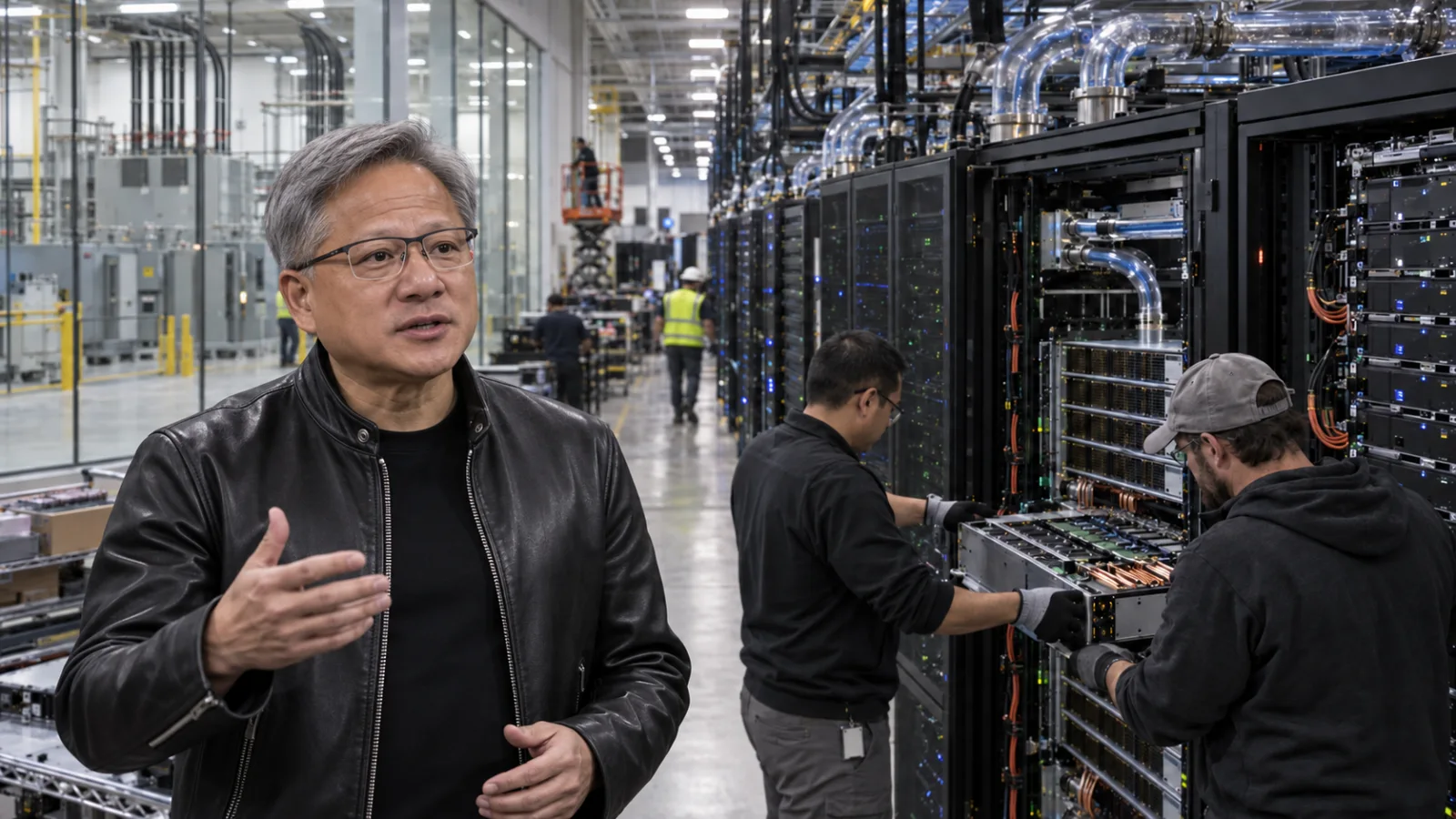
The unit of AI infrastructure demand is shifting from a single chip to racks and clusters. Connecting thousands to tens of thousands of accelerators requires HBM, advanced packaging, switches, optical interconnects, storage, liquid cooling, and even UPS systems and transformers, all at once. That is why Nvidia refers to its data centers as "AI factories."
The shift shows up in the numbers too. Nvidia said it has already begun volume shipments of Vera Rubin and has received purchase orders from every major hyperscaler, AI cloud provider and systems OEM. Revenue from its Spectrum-X Ethernet networking business grew 2.6 times year over year. Growth is broadening from standalone GPUs to entire networked systems.
The next surge may come from inference, not training
Early AI investment was a race to build ever-larger clusters for training bigger models. But the more durable demand, over the long run, comes from inference, the computation that happens every time a model actually does something. Search, code generation, ad creation, customer support, robotics, autonomous driving, financial analysis: every use triggers more compute.
Agentic AI in particular consumes far more tokens than a single query ever did. Nvidia claims Vera Rubin can deliver up to 30 times more throughput per megawatt than the prior generation and sharply cut the cost per token. That figure comes from Nvidia's own benchmark, so it should be read with some caution. But the direction of competition is clearly shifting from raw peak performance toward how much useful work can be done per watt.
The real bottleneck is power and time
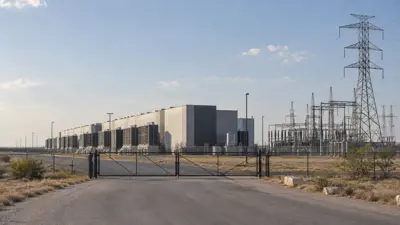
An AI data center doesn't come online just because the chips arrive. Power interconnection, substations, cooling, land and grid connections all have to be ready at the same time. The IEA projects global data-center electricity consumption will nearly double, from roughly 485 terawatt-hours in 2025 to about 950 terawatt-hours by 2030. In the United States, data centers are expected to account for roughly half of all new electricity demand growth through 2030.
The bigger issue is a mismatch in speed. Servers can be deployed within a few years, but power plants and transmission lines take far longer. The IEA warns that without progress on grid bottlenecks, about 20% of planned data-center projects risk delay. That suggests the ceiling on the AI supercycle may be shifting away from semiconductor manufacturing capacity and toward how fast power grids can be permitted and expanded.
Insight Times Editorial Desk