Forget Dollars: AI Investment Now Needs to Be Measured in Gigawatts
Reports say Microsoft's data center capacity could grow from about 12GW today to more than 38GW by 2032. The real story isn't the CAPEX total, it's that AI has become an industrial infrastructure race spanning power, chips, networking and cooling.
The number 38 gigawatts does not mean much on its own. Here is a way to picture it: a large nuclear reactor typically produces around 1GW of electrical output. So, very roughly, 38GW is comparable to the instantaneous output of 38 large nuclear reactors.
That does not mean Microsoft is building 38 nuclear plants. In reality, power would come from a mix of nuclear, gas, solar, wind, hydro and the grid. The comparison is only meant to show the physical scale behind the number 38GW.
There is a more important distinction here. A gigawatt is a measure of power, not energy. 38GW does not describe how much electricity was used over a year. It describes the maximum power a facility can draw and use at any given moment, a measure of capacity.
If you simply assumed 38GW ran at 100 percent, 24 hours a day, 365 days a year, that would work out to roughly 333 terawatt-hours annually. Actual utilization rates and operating conditions vary by facility, so this should not be treated as equivalent to real consumption. Still, even this theoretical ceiling makes clear that this is not a matter of adding a few more servers.
Until now, most AI investment has been explained through CAPEX. Once the numbers reach 100 billion dollars, 150 billion, 200 billion, the differences between them start to feel abstract. CAPEX also blends together land, buildings, GPUs, CPUs, networking gear, power equipment and leases.
Two companies can each spend 100 billion dollars and end up with very different amounts of actual computing power, because land and construction costs differ by region, and GPU prices and power infrastructure conditions vary too.
Gigawatts are far more physical. In the end, they show how much power a data center can draw and how much computing it can actually run. As the AI industry grows, power capacity is becoming a more important supplementary indicator of supply than the dollar figure.
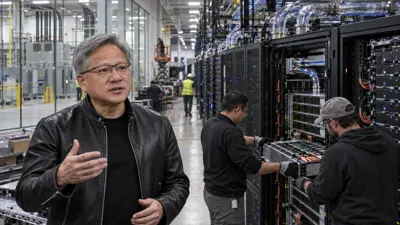
Feed in electricity, and GPUs and CPUs compute, HBM supplies data, networking gear links accelerators together, and cooling systems remove heat. The output is Copilot, ChatGPT, enterprise agents and a range of AI services.
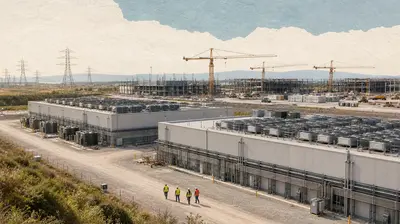
That is why AI has started to look as much like manufacturing and infrastructure as it does software. The moment a data center is built, it pulls power plants, transmission lines, substations, transformers, fiber optics and cooling systems into the same supply chain.
According to Reuters, citing a Bloomberg report, of Microsoft's roughly 12GW of current data center capacity, about 2GW is estimated to be dedicated to AI-specific chips. By 2032, roughly a third of a total 38GW is expected to be AI-focused capacity. That works out to about 12.7GW.
What stands out is that this figure is close to Microsoft's entire current data center capacity. In the long run, the power capacity dedicated solely to AI computing could roughly match everything the company uses today.
This plan, however, is not an official figure Microsoft has issued as guidance. It is a long-term roadmap that appeared in the reporting. Between now and 2032, power procurement, permitting, construction costs, chip supply and AI demand could all change, so this should not be treated as a settled future.
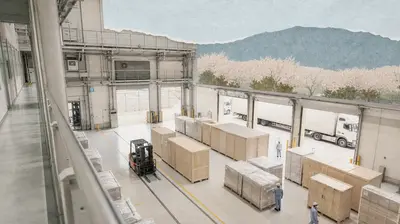
Going from 12GW to 38GW would require roughly 26GW of new data center capacity by simple arithmetic. That capacity would house accelerators from Nvidia and AMD, Microsoft's own Maia chips, HBM, switches and networking equipment, fiber optics, power conversion gear and cooling systems.
Looking only at GPU sales is like looking only at a factory's core machinery. Gigawatts are closer to the size of the entire factory, showing how much of that machinery can actually be installed and run.
The industry's bottleneck keeps shifting. GPUs were the scarcest resource at first. Then HBM, advanced packaging and high-speed networking became the constraint. Now power and grid connection themselves are becoming the competitive edge. Even with money to buy GPUs, computing cannot start without power and a data center to house them.
It works the same way as a semiconductor fab. Spending 100 trillion won to build a plant does not automatically make it a good investment. It has to run at high utilization, customers have to buy the output, and it has to generate more cash than it cost.
AI data centers are no different. What matters more than securing 38GW is how quickly Azure AI, Copilot, enterprise agents and other AI workloads fill that capacity.
If capacity keeps expanding faster than revenue, the burden of depreciation, power costs and maintenance grows heavier. If capacity growth is matched by AI revenue, cloud usage, margins and free cash flow, then today's enormous CAPEX looks more like investment ahead of demand than overinvestment.
I think a useful frame going forward is to track the gap between the growth rate of computing capacity and the growth rate of AI revenue. If capacity grows sixfold and related revenue and usage grow at a similar pace, that is a signal demand is absorbing supply. If capacity grows quickly while revenue, utilization and margins lag behind, the risk of overinvestment rises. My confidence in this framework is moderate. Gigawatts are a strong supply-side indicator, but the actual economics can shift a great deal depending on chip generation turnover, power costs, software efficiency and price declines.
Not necessarily. Even at the same 1GW, actual throughput can vary widely depending on which GPUs are used, the facility's power usage effectiveness, and the efficiency of networking and software.
The reported roadmap is said to include company-owned and long-term leased facilities, while excluding computing rented from neoclouds such as CoreWeave.
No. Based on current reporting, only about a third of the 2032 total is expected to be AI-specific chip capacity. The rest would be shared with general Azure workloads and existing cloud usage.
No. Gigawatts are simply a good physical measure of supply capability. Investment judgments still need to weigh revenue growth, utilization, margins, depreciation, free cash flow and return on invested capital together.
Going forward, when a data center headline mentions 500MW, it helps to translate that in your head as roughly half a nuclear reactor. When it says 5GW, think five reactors. The numbers become much easier to grasp.
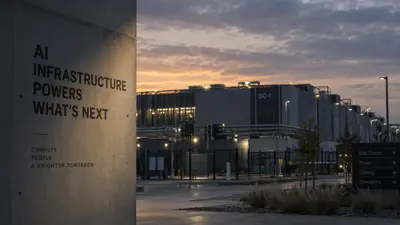
To understand the true scale of the AI industry, dollars alone are no longer enough. Gigawatts reveal the physical size that has been hiding behind the dollar figures.
But for long-term investors, the final question stays the same: what will fill that enormous computing factory.
Filling it with customer revenue is harder than filling it with GPUs. The success or failure of AI investment is likely to be decided right there.
Insight Times Editorial Desk