AI Raises Prices While It Is Being Built, and Lowers Them Only Once It Is Used
The buildout is pulling in chips, power, land and construction labor all at once, and that pushes prices up. The disinflation shows up later, if the tools actually change how work gets done.
The simplest way to think about the AI economy
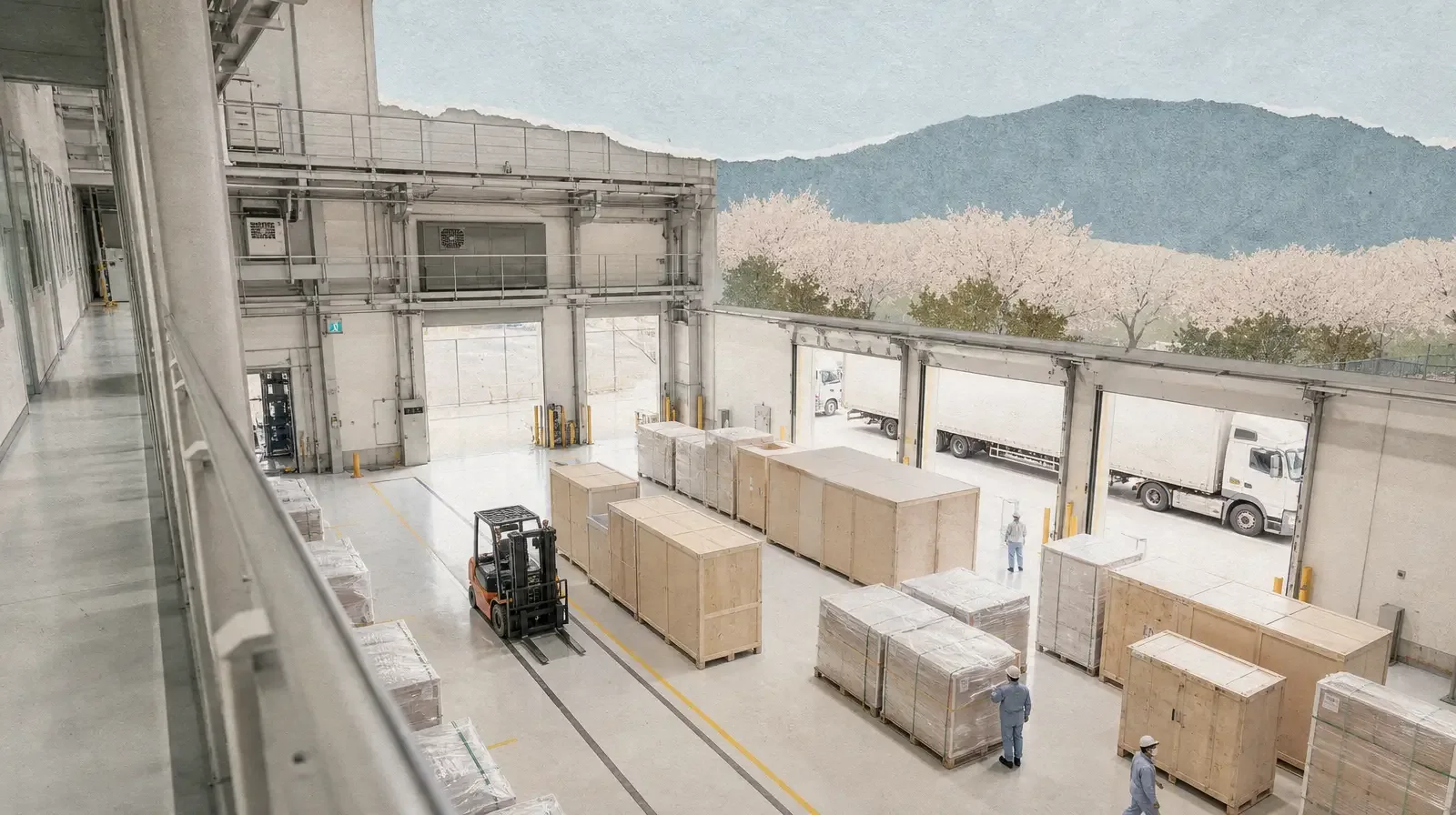
We are in the phase where the factory gets built. What the market is pricing is the phase after that, when the factory starts turning out goods cheaply.
Building a highway drives up the price of cement, steel, labor and land. The finished highway drives down shipping time and freight costs.
AI works the same way. Right now, building data centers means buying GPUs, memory, transformers, generating equipment, land and cooling. Money arrives all at once, so prices go up.
But once that infrastructure is inside actual businesses and one person does the work of two, the story flips. The same output takes less time and less money.
AI has two faces
Big tech is buying GPUs, CPUs, memory, data center sites, power, cooling, transformers and construction labor at the same time, and every one of those is supply constrained today. When demand grows faster than supply, prices rise.
When AI cuts the hours needed for coding, customer support, accounting, legal work, ad production, logistics and manufacturing, the same spending produces more output. That is a productivity gain.
The important caveat: do not state flatly that AI lowers prices. The accurate version is that if AI spreads successfully, it becomes a force that reduces upward pressure on prices.
Why productivity is connected to inflation
One of the most expensive inputs in any economy is human time.
Say an employee is paid 50,000 won an hour and produces one report in that hour. If AI lets the same person produce two reports in the same hour, the wage has not changed, but the labor cost per report falls by close to half.
That is the single most important channel through which a productivity revolution can lower inflation.
Small-scale evidence already exists. Stanford researchers studying more than 5,000 customer support workers found that those using generative AI handled roughly 15 percent more per hour on average.
That does not scale up into a claim that AI is already lowering prices across the US economy. The Fed, in its 2026 report, allowed that AI may have contributed to the recent pickup in productivity while judging the effect so far to be limited.
What the current numbers show
US nonfarm business labor productivity rose 2.2 percent year over year in the second quarter of 2026. Since the fourth quarter of 2019, the average annual productivity growth rate for the current business cycle is 2.1 percent, above the 1.5 percent of the previous cycle.
The interesting number is unit labor costs. In the second quarter of 2026, manufacturing productivity rose 2.4 percent at an annual rate from the prior quarter, and hourly compensation rose 2.1 percent. Unit labor costs fell 0.3 percent.
Wages can rise and the labor cost of making one unit can still fall, as long as productivity rises faster. That is the core mechanism of AI disinflation.
So why is inflation still high
Because productivity revolutions are slow and commodity prices are fast.
In 2026 the US is living through another bout of high inflation driven by energy and supply shocks. The Fed reported in July that PCE inflation in May ran 4.1 percent year over year.
Cutting 20 percent off the time an employee spends writing documents does not lower the price of gasoline or electricity tomorrow morning. Data centers add power demand quickly. Changing how an entire industry works can take years.
Today's inflation and the long-run AI productivity case are not in conflict. They sit on different clocks.
For investors in big tech, the thing that matters is pricing power
Inflation does not hit every company equally.
A company whose input costs rise 10 percent but can only raise prices 3 percent loses margin. A company with a service customers cannot easily leave, a strong platform, or scarce compute can raise prices or hold high margins for longer.
That is pricing power.
Do not assume it comes automatically with the label "big tech." NVIDIA holds a strong position in AI accelerator design and platforms, but it is not a foundry. Advanced chip production depends heavily on foundries such as TSMC. Cloud has real competition among Microsoft, Amazon and Google.
Pricing power is not confirmed by a company name. It is confirmed by whether customers stay after a price increase, whether competitors can easily add supply, and whether the result actually shows up in margins.
The real test of AI capex starts now
The market is putting enormous money behind a future it believes in first: that AI will raise productivity.
Meta raised its 2026 capex guidance to $125 billion to $145 billion. Microsoft pointed to roughly $175 billion in capex on a calendar 2026 basis, and spent $41 billion in the fourth quarter of fiscal 2026 alone.
The most important question for an investor is not whether AI is impressive.
It is how much of the customer's cost these hundreds of billions actually remove, and how much of that saving big tech can convert into revenue and profit.
If AI saves a customer $100 and the platform company can charge $20 of it, that is a powerful business. If data center depreciation, power and GPU costs grow faster than the economic value the customer receives, AI can be an excellent technology and still be a poor investment.
Insight Times Editorial Desk