A 2027 Playbook: Stop Watching the Business Cycle, Start Watching Where the Money Flows
A new Korean economics book, "The Reverse Flow of Money," argues that interest rates still act like gravity on every asset, but AI and chips are pulling in capital strong enough to defy it. For investors, the question is not the average growth rate but where that money goes, and where it eventually turns into cash flow.
The Word That Outlasts the Numbers: "Reverse Flow"
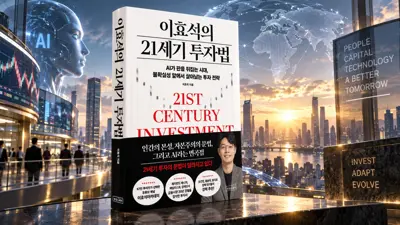
Kim Gwang-seok's economic outlook book, "The Reverse Flow of Money: 2027 Economic Outlook," was published on September 18, 2026. Books like this usually get read for their growth, rate and currency forecasts first. But what is worth carrying away from this one is not a number. It is the word "reverse flow."
In the old pattern, when the economy slowed, corporate investment slowed with it. That link has weakened. The global economy is carrying high interest rates, heavy debt, war and elevated energy costs, and yet enormous sums are still pouring into AI data centers and semiconductors. The IMF, in its July 2026 outlook, projected global growth of 3.0% for 2026 and 3.4% for 2027, noting that war-related shocks are weighing on some countries even as AI demand lifts countries plugged into the technology value chain.
In short, the economy is not moving in one direction. Within the same country, an AI economy and a non-AI economy, capital income and labor income, productivity and employment, can all move at different speeds. The book captures that split in fairly plain language.
Rates Are Gravity, AI Is a Rocket Engine
One of the book's better metaphors is that "interest rates work like gravity." When rates are high, the present value of future earnings shrinks. That is why growth stocks are rate-sensitive, and none more so than companies like Nvidia, Tesla and AI software firms, where most of the expected value sits far in the future.
Yet lately, even with gravity this strong, some AI and semiconductor stocks have kept climbing. That does not mean rates stopped mattering. It means the market's expected pace of future cash-flow growth has, for these names, outrun the pull of higher discount rates.
That reframes the question a 2027 investor should be asking. Instead of "why are stocks rising when rates are high," the sharper question is: whose earnings growth is strong enough to beat a high discount rate?
Korea's "Einstein Effect" Has Already Shown Up in the Data
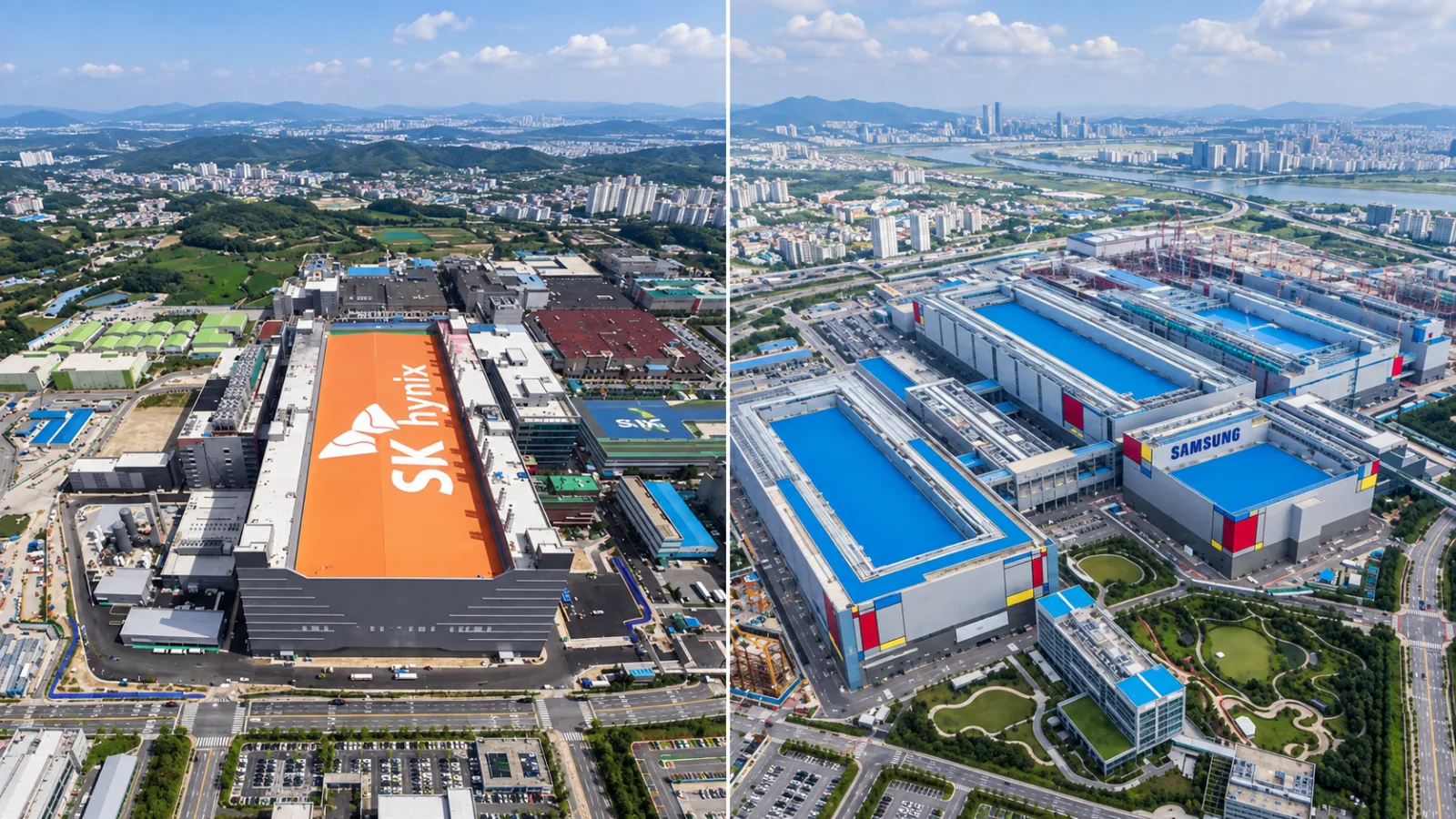
The book compares semiconductors lifting Korea's economic average to "a classroom where Einstein transfers in." The class average jumps, but not every other student's grade improves with it.
The actual numbers are tracking that metaphor. Korea's state-run KDI think tank projected 2027 growth of 1.7% in May 2026, then raised it to 2.2% in August. The Bank of Korea's August forecast came in even higher, at 2.9%. Both institutions pointed to a stronger-than-expected semiconductor and AI investment cycle as a key reason.
More telling is KDI's September assessment: not just chips, but AI-linked industries such as metal fabrication, electrical equipment and machinery are improving too, yet that improvement has not fully spread to household income and consumption. GDP and how people feel about the economy can move in different directions at the same time.
In AI Investment, CapEx Is Not the Number That Matters Most
The biggest trap in reading 2027 AI investment is assuming "more capital spending is always better." What actually matters is how fast the money that goes in comes back out.
Companies buy GPUs, build data centers, train models, and put AI agents into corporate workflows. If that lowers costs or raises revenue, the resulting cash flows back into more data centers and chip purchases. Close that loop, and the AI industry becomes a self-reinforcing capital cycle.
If the last step is weak, the trouble starts. Even excellent AI technology can hit a wall if enterprise customers' actual productivity gains or revenue growth fall short of expectations, and at some point the market starts asking, "when does this money come back?" The IMF itself has warned that a re-rating of AI profitability expectations could trigger a financial-market correction.
AI Increasingly Looks Like Heavy Industry, Not Software
Another strength of the book is that it refuses to treat AI as purely a screen-based technology. It ties together data center power demand, the electric grid, chip fabs and physical AI in a single picture.
The International Energy Agency expects global data center electricity consumption to nearly double, from roughly 485 terawatt-hours in 2025 to about 950 terawatt-hours in 2030. Power consumption at AI-focused data centers specifically is projected to roughly triple over the same period. As AI scales up, what it needs is not just better algorithms. It needs GPUs, HBM memory, optical networking, cooling, transformers, power plants, transmission lines, land and capital, all at once.
That makes "find the smartest technology" a less useful investing lens than "find the scarcest input." When GPUs are scarce, GPU makers hold pricing power. When HBM is scarce, HBM makers do. When power becomes the constraint, power infrastructure does. The clearest way to think about this is as a moving bottleneck across the AI value chain.
Why Physical AI Makes Korea an Interesting Case
Once AI starts driving cars, moving goods on factory floors and working alongside people as robots, the competitive bar changes. A chatbot that gets something wrong can just try again. A 1% error rate in a factory robot or a car is an entirely different problem. Accuracy still matters, but so do safety, latency, battery life, sensors, failure rates, manufacturing cost and the ability to produce at scale.
Korea has real strengths in this segment. In 2025, Nvidia announced a plan with the Korean government, Samsung Electronics, SK Group, Hyundai Motor Group and Naver to deploy more than 260,000 Nvidia GPUs. The point is not the GPU count alone. Korea has deep semiconductor, automotive, battery, shipbuilding and large-scale manufacturing capacity. Once AI moves off the screen and into the physical world, manufacturing capability can become a strategic asset again.
The One Sentence Worth Keeping
Numbers in economic outlook books age the fastest. A good outlook book is not one that nails the numbers, it is one that identifies which forces are actually moving the world. From "The Reverse Flow of Money," the number worth keeping is not 1.7%, not 2.2%, and not 2.9%.
Watch only the economy's main current, and the reverse flow of money slips past unnoticed. Watch only the reverse flow, and it becomes easy to forget that the gravity of interest rates and debt is still there.
For a 2027 investor, two questions are enough. Where is the money flowing right now. And where, eventually, does that money come back as cash flow.
Insight Times Editorial Desk