For 2027 Investing, You Don't Need a Prediction. You Need Alignment
A new book on 21st-century investing raises a sharper question than "what to buy": are you positioned where capital, demand and bottlenecks are actually moving?
Good investing methods are old. Good investing targets keep changing.
Read enough investing books and you run into a strange contradiction. Warren Buffett's principles have barely changed in decades: buy good businesses, don't overpay, hold for a long time, and change your mind when you're wrong.
Yet look at the market and it gets harder every year to invest with a ten-year-old map of the industry. Smartphones, the cloud, GPUs and generative AI have rewritten corporate value chains in just a few years.
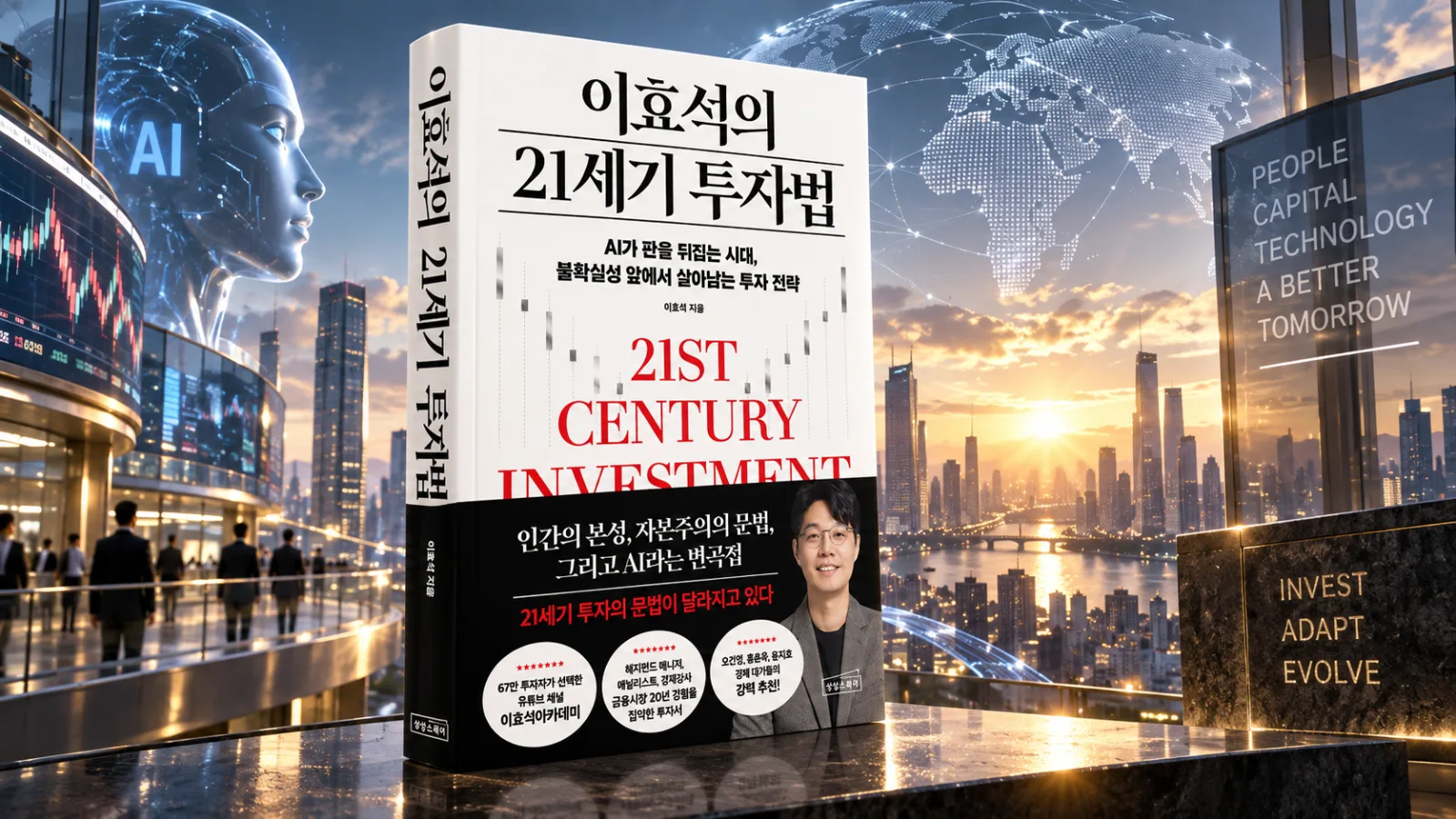
That tension is the subject of a new book on 21st-century investing making the rounds among Korean investors this year. Its answer is neither "throw out every old rule because this is a new era" nor "just stick to the old playbook." It lands closer to: control the human weaknesses that never change, while aligning fast with the direction value is moving.
The market does not know your cost basis
When a stock falls from 100 to 50, people wait to get back to even. When it rises from 100 to 200, they want to lock in the gain and sell. The result: good stocks shrink in a portfolio and bad stocks grow.
One line from the book sticks: "Your return percentage is your ego. Your dollar profit is your bank balance." If an investor won't buy more of a good company because it would raise the average cost basis and lower the displayed return, that investor is managing a story about themselves, not managing money.
In 2027, the riskiest variable still will not be AI. It will be the old human habits: break-even anchoring, ego, conviction, FOMO. Technology changes. Loss aversion does not get a software update.
A five-word process for 2027
- Alignment — See where capital, demand and productivity are moving.
- Bottleneck — Find what the whole industry is short of.
- Moat — Tell whether that shortage is temporary or structurally defensible.
- Price — Work out how much of the good future is already in today's stock price.
- Survival — Keep a position size small enough that being wrong doesn't stop the compounding clock.
This sequence fits 2027 AI investing especially well. Guessing which model is smartest matters less than tracking how fast the cost of producing intelligence is falling, and how much usage grows because of it.
The core of the AI revolution isn't "smarter." It's "cheaper intelligence"
In July 2026, OpenAI said the price per million tokens fell 97% from GPT-4 to GPT-5.4. Today, GPT-5.6 Luna's API pricing is $0.20 per million input tokens and $1.20 per million output tokens.
The token price itself isn't the point. When intelligence gets cheap, small cognitive tasks that used to be too expensive to hand to a person suddenly enter the market. Meeting notes, customer-inquiry triage, document comparison, writing test code, a first pass at contract review — these can turn into billions of AI tasks.
- -97% — the price drop per million tokens OpenAI cited from GPT-4 to GPT-5.4
- $89 billion — NVIDIA's data center revenue in fiscal Q2 2027, up 117% year over year
- 10x — NVIDIA's target for maximum inference token-cost reduction on Rubin versus Blackwell
Costs fall while infrastructure revenue grows. It looks like a contradiction, but it is the core of AI investing. If usage grows faster than prices fall, the total market gets bigger. In 2027, the question is not "tokens got cheaper." It is how much useful work the same dollar can now buy.
A bottleneck makes you money. A moat protects it.
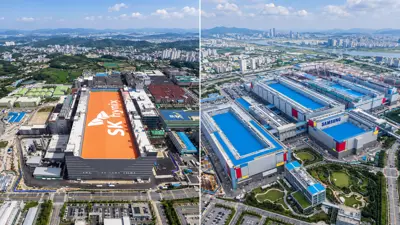
Early in the AI buildout, GPUs were the bottleneck. As GPU supply grew, HBM, networking, power, cooling, transformers and data centers each took their turn as the constraint. SK hynix said it began mass shipments of HBM4 in the second quarter of 2026 and signed long-term supply agreements with roughly ten core customers. In August, it committed roughly 54 trillion won to expand its Yongin Y2 and Cheongju M17 facilities.
Don't confuse a bottleneck with a moat, though. A supply shortage that pushes up prices is a bottleneck. Technology that rivals can't easily replicate even after they add capacity, customer lock-in, an ecosystem, software, and economies of scale are a moat.
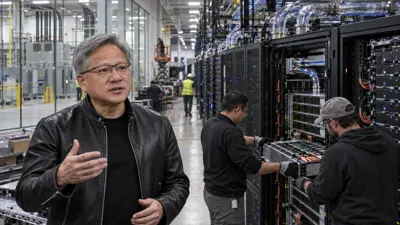
Treating NVIDIA as just a GPU maker misses this distinction. CUDA, networking, system design, developer tools and cloud partnerships are all bundled together. The unit of competition is widening too, from the chip to the rack to the data center, and ultimately to how many tokens a company can produce per megawatt of power.
Between a good company and a good stock sits "expectation"
"AI will change the world" and "AI stocks are cheap right now" are two entirely different claims. The internet revolution was real, but not every internet stock in 2000 was priced correctly.
That's why reading a P/E ratio simply as "years of earnings" isn't enough. A multiple is closer to a timetable the market has attached to a company's future. A high multiple demands long growth and a strong moat. A low multiple can mean the market doubts that growth will last.
| Question | The surface way to look at it | The question that matters more in 2027 |
|---|---|---|
| AI models | Who is smartest? | Who processes the most useful work at the same cost? |
| Chips | Who makes the fastest chip? | Who lowers the system-wide cost per token the most? |
| Memory | Is HBM in short supply? | Does that shortage turn into a moat through long-term contracts, technology and customer relationships? |
| Stock price | Is it a good company? | How much of that good future is already priced in? |
Insight Times Editorial Desk