AI Accelerators and GPUs (GPU)
A chip built to draw graphics, whose ability to run thousands of identical calculations at once made it the workhorse of AI training and inference. Today i
Alibaba's 20GW Bet Shows China's AI Race Is Now About Power, Not Just Models
Five to ten trillion parameters, a 500,000-chip cluster and 20 gigawatts of data center capacity. Alibaba is betting that owning the full stack, from models to chips to power, matters more than any single number.

For 2027 Investing, You Don't Need a Prediction. You Need Alignment
A new book on 21st-century investing raises a sharper question than "what to buy": are you positioned where capital, demand and bottlenecks are actually moving?
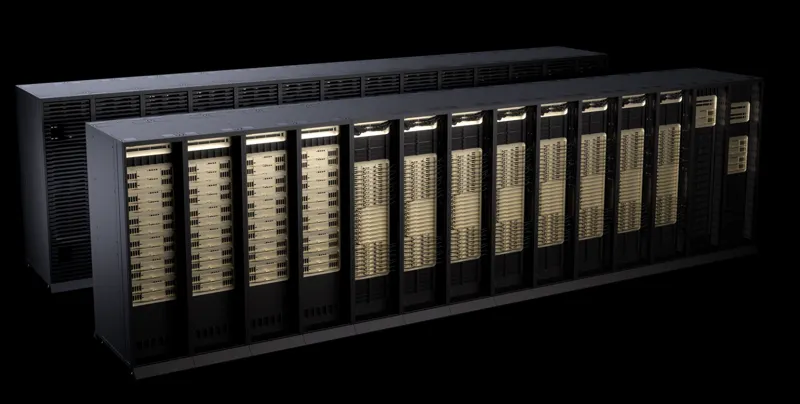
Nvidia's New GPU Is 3.7x Faster, But the Number That Matters Is 99%
Nvidia quadrupled the GPU count from 72 to 288 and throughput scaled almost fourfold with it. That number signals AI data center competition is no longer just about who builds the fastest chip.
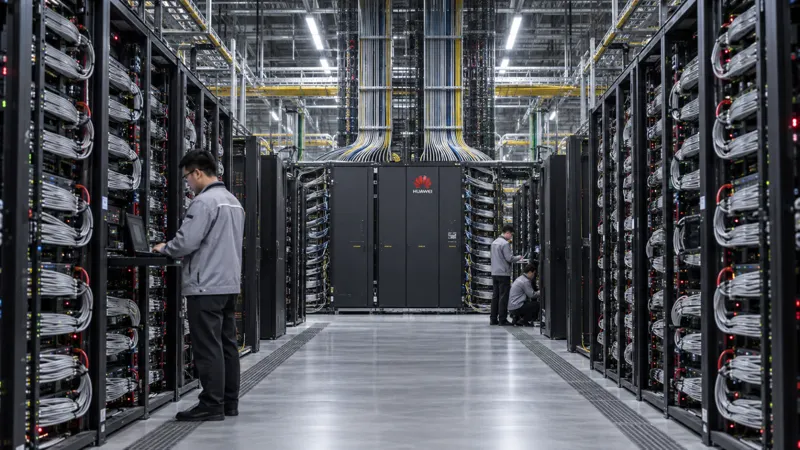
What Happens When You Link a Million Chips Slower Than Nvidia's
Huawei's answer to Nvidia is not a faster chip. It is tying together up to a million processors so they act as one machine, a bet that the real unit of competition in AI chips is shifting from the chip to the system.
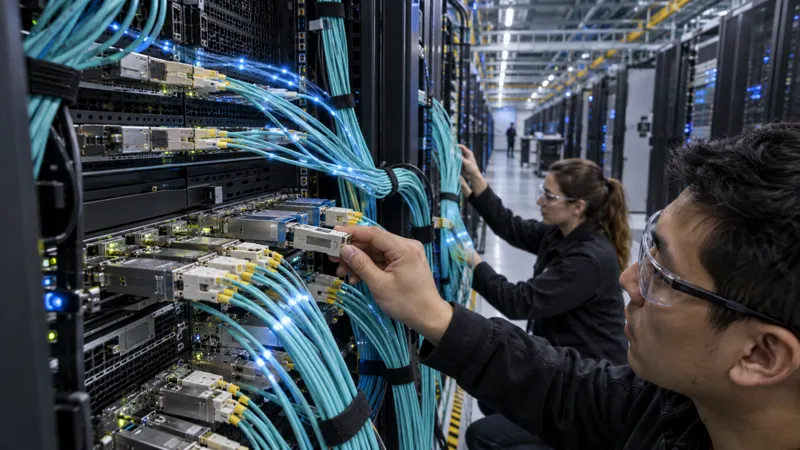
AI Data Centers' Next Bottleneck Isn't Compute. It's Moving Data
Marvell and GlobalFoundries are expanding capacity for optical semiconductors used in AI data centers. As GPU counts climb, what matters most is no longer the speed of a single chip but how fast and how cheaply data moves between tens of thousands of them.
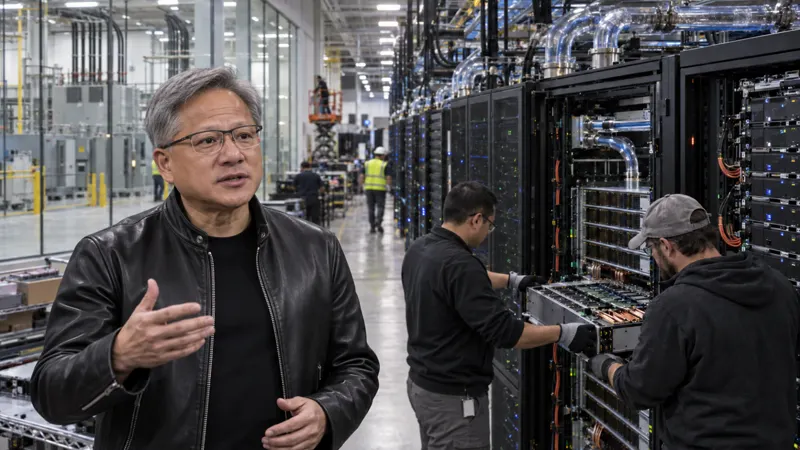
Nvidia's $1 Trillion Bet: How Far Has the AI Infrastructure Supercycle Come?
Nvidia sees Blackwell and Rubin revenue opportunity topping $1 trillion by 2027. The real story isn't chip count, it's AI becoming a physical infrastructure buildout spanning chips, memory, networking, cooling and power grids.
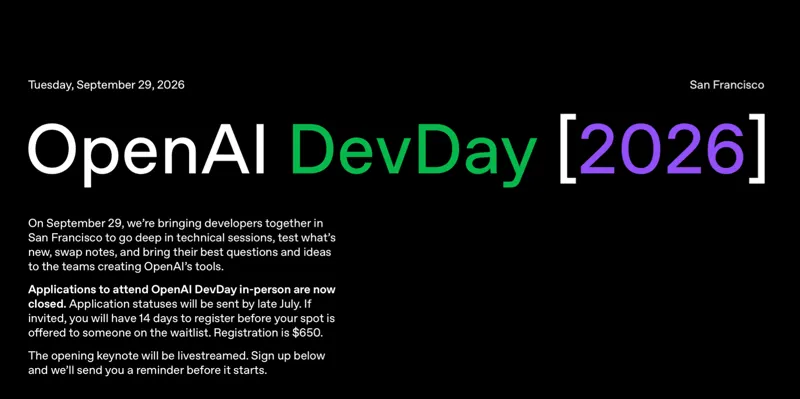
Altman Called for AI Pacing, Now Preps a Launch Blitz. The Contradiction Isn't the Point
OpenAI has teased a major release this week and a run of announcements at its September 29 DevDay, just two days after Sam Altman appeared to back the case for slowing frontier AI down. What matters for investors isn't whether his words line up. It's whether AI capital spending is shifting from massive pretraining runs toward large-scale inference and agent deployment.

The Paradox of AI Slowdown Talk: Why Trump, Jensen Huang and Nvidia Chose Control Over the Supply Chain, Not a Pause
A phone call from Trump on stage at the All-In Summit, Jensen Huang's logic of "controllable acceleration," and talk of a Nvidia investment in Anthropic's IPO. These are not three separate stories. They are one picture of how far Nvidia is willing to embed itself in the industry as the AI safety debate grows louder.
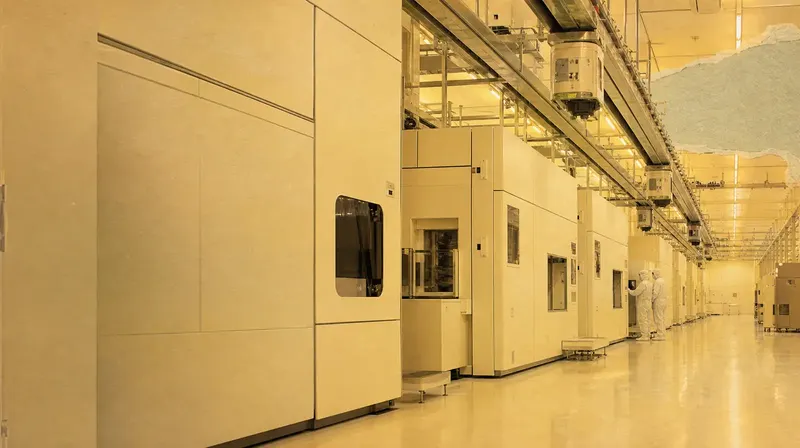
Who Hits $1 Trillion Next: Reading AMD and ASML by Different Rules
One company is chasing Nvidia's GPU empire. The other sells the machine that draws the chips for every advanced chipmaker, including Nvidia. Both get floated as 2028 trillion-dollar candidates, but the numbers investors need to watch are entirely different.

AI's Real Turning Point May Not Be AGI. It May Be Profit.
Anthropic has reportedly told investors it expects two straight quarters of positive adjusted operating income. If true, it puts the first crack in the assumption that AI model companies can never make money because of GPU costs.
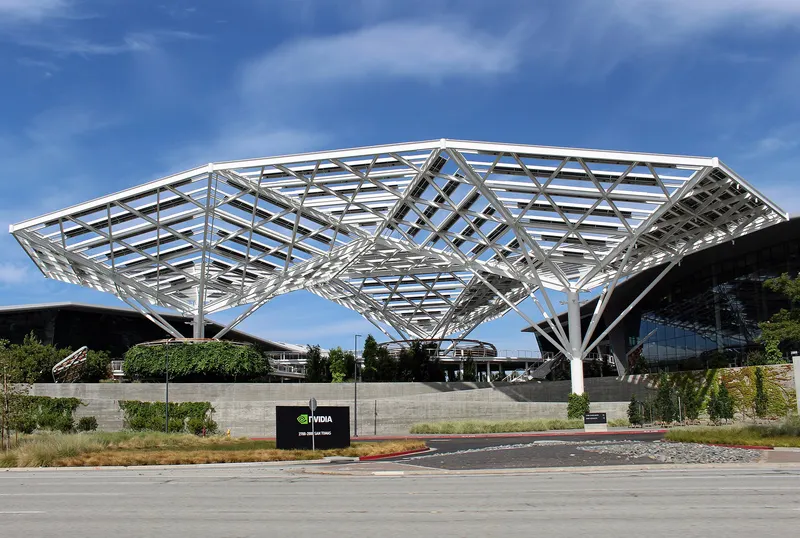
Nvidia and Palantir Put AI Inside the Supply Chain - The Real Shift Is That It's Learning Judgment
A single Vera Rubin rack holds 1.3 million parts. The real breakthrough in Nvidia and Palantir's new supply chain AI isn't automating that complexity, it's capturing the judgment calls that used to live only in planners' heads.
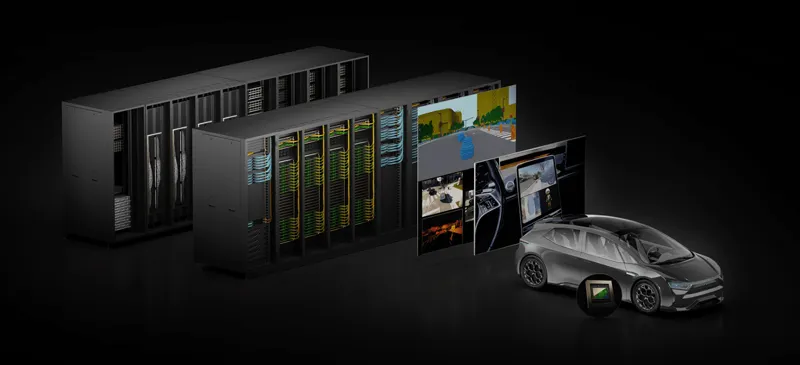
Who Becomes the Windows of the Self-Driving Era?
Hyundai just pushed back its own autonomous driving timeline and turned to Nvidia first. The real story is not the delay, it is Nvidia's bid to become a common platform across the entire auto industry, not just a chip supplier.
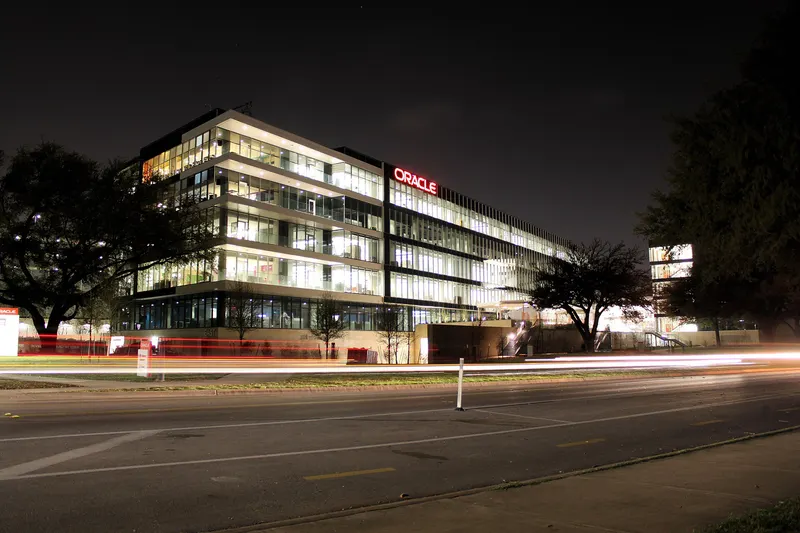
AI Demand Is Proven. Now the $70 Billion Bill Comes Due
Oracle posted $19.3 billion in quarterly revenue and spent $28.5 billion on capex. The real question for the AI buildout is no longer whether demand exists, but how fast this spending turns into cash.
AI's Bottleneck Isn't One Chip Anymore
Huawei's AI accelerator prices jumped because of HBM costs, Amazon built a deal worth up to $60 billion with Qualcomm, and OpenAI pulled financial data and workflows into ChatGPT. Three different stories point to one shift: AI investment is no longer just about buying more GPUs.
If GPUs Are the Muscle, the Network Is the Nervous System
AI data centers do not get faster just by buying more GPUs. When thousands of accelerators cannot exchange data on time, the most expensive asset in the building sits idle. That is the whole investment case for Arista.
InsightTimes
뉴스 뒤의 질문.
오늘 알아 둘 가치가 있는 것을 골라, 왜 중요한지 쉽게 씁니다.
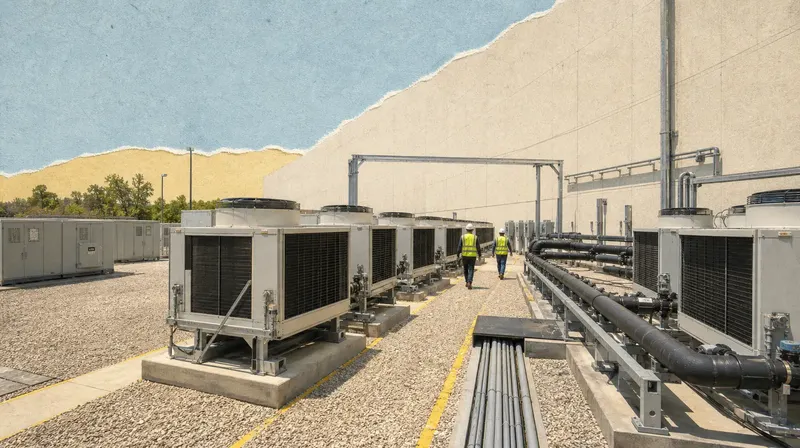
The money in AI runs two ways: one company pays for the power, the other sells it
Meta barely sells AI as a product. It recovers the value inside ad prices and time spent. Vertiv builds no models at all, and sells the power and cooling gear that keeps GPUs running. One side spends the capex. The other side books it as revenue.
The Cheaper Tokens Get, the Bigger Your AI Bill Gets
As AI shifts from training to inference, the token is becoming an industrial commodity. Falling prices are not cutting demand, because agents and automation consume tokens at a scale no human chat session ever did.
Nothing featured in this section yet.
Enter the email address where we should send the newsletter.