Who Hits $1 Trillion Next: Reading AMD and ASML by Different Rules
One company is chasing Nvidia's GPU empire. The other sells the machine that draws the chips for every advanced chipmaker, including Nvidia. Both get floated as 2028 trillion-dollar candidates, but the numbers investors need to watch are entirely different.
The trillion-dollar number is not as mysterious as it sounds
A trillion-dollar market cap does not mean a company suddenly earns a trillion dollars a year. It means the market has decided the future profits it expects to collect from that company are worth that much today.
As of September 11, AMD's market cap stood at roughly $822 billion, and ASML's at roughly $650 billion. On simple math, AMD needs about 22% more to reach $1 trillion, and ASML needs about 54% more. Prices move every day, so these numbers are just a starting point, not a forecast.
AMD: $822B market cap, about +22% to $1 trillion. Key variable: AI GPU market share and profit growth.
ASML: $650B market cap, about +54% to $1 trillion. Key variable: EUV demand and customer capex.
AMD can no longer settle for being a good No. 2
AMD's story is fairly straightforward. Right now, Nvidia is the dominant force in the AI accelerator market. For AMD to grow past $1 trillion, it is not enough for the AI market itself to expand. AMD needs to take a bigger slice of that growing market.
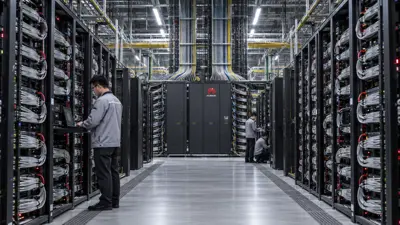
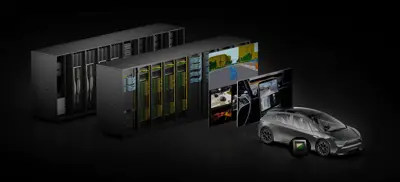
Helios is the product meant to prove that is possible. The old benchmark was the performance of a single GPU. AI data centers now care about the performance of an entire rack, dozens of GPUs, CPUs and networking gear working as one unit. Helios is close to a declaration that AMD is not just a GPU vendor, but a direct competitor to Nvidia's rack-scale systems.
The numbers are already moving. AMD's data center revenue in the second quarter of 2026 came in at $6.7 billion, up 107% from a year earlier. Data centers accounted for 58% of total company revenue. OpenAI and Meta have each signed deals to deploy AMD data center GPUs at up to 6 gigawatts of scale, and Anthropic has agreed to deploy up to 2 gigawatts of MI450-series GPUs through Helios racks.
There is a catch worth watching. Some of that 107% growth reflects an easy comparison, since last year's numbers were dragged down by inventory costs tied to US export restrictions. The stock has also already run up sharply. A good company and a good stock are not the same thing. Over the next two years, revenue growth alone will not be enough to justify today's expectations. Investors need GPU gross margins, the ROCm software ecosystem, and repeat orders from real large customers to follow through as well.
ASML looks more like the company that profits no matter who wins
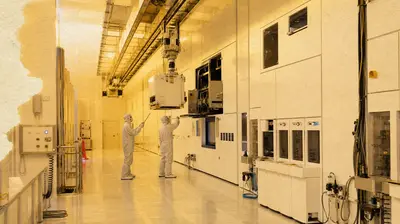
The easiest way to understand ASML is the shovel-in-a-gold-rush analogy. Whatever chip Nvidia, AMD, Apple or Google designs, TSMC, Samsung and Intel all need ASML's EUV lithography machines to shrink those chips further.
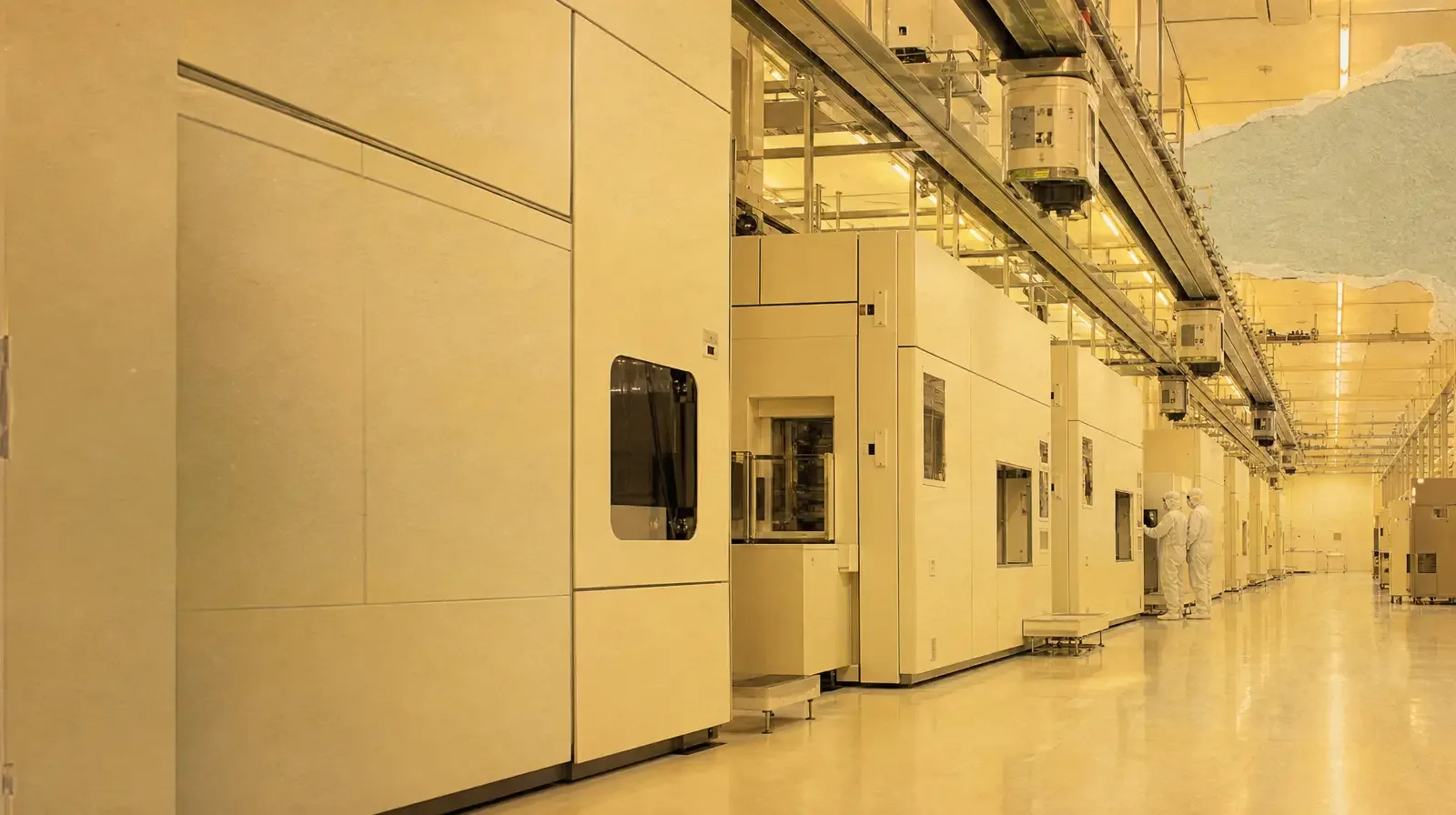
EUV machines use extremely short-wavelength light to draw circuits onto silicon wafers. The more advanced the process node, the narrower the circuit lines get, and the more this equipment matters. ASML holds a position in this market with essentially no substitute.
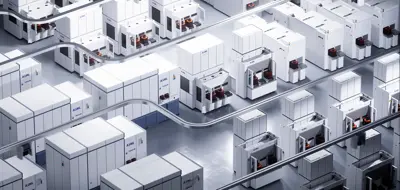
The AI boom reaches ASML through a slower but wider channel: more AI service usage leads to more demand for GPUs and HBM memory, which leads foundries like TSMC, Samsung and Intel to expand advanced-node capacity, which leads to more orders for ASML equipment.
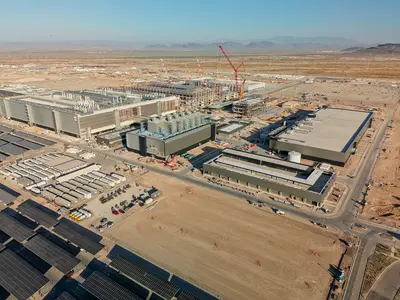
ASML plans to expand Low-NA EUV production capacity by 30% in 2027, up from about 65 units in 2026, and is considering another roughly 30% increase in 2028. The company's 2026 annual revenue guidance sits at €43 billion to €45 billion, with gross margin guidance of 54% to 56%.
The next-generation High-NA EUV is also starting to move out of the lab. Intel is already using High-NA in actual production for some of its 18A process work, with cumulative wafers processed passing 1 million. But TSMC, the largest foundry, has pointed to 2030 as the timeline for full-scale mass production adoption of High-NA. Technology working does not automatically mean revenue arrives right away.
Lumping both into "AI chip stocks" misses the point
AMD: the offense case. If AMD takes share from a market Nvidia currently dominates, profits could grow quickly. The risks are competition, the state of its software ecosystem, and pricing pressure.
ASML: the infrastructure case. Whichever AI chip designer wins, ASML likely benefits as long as advanced-node capital spending keeps flowing. The risks are sensitivity to the broader semiconductor capex cycle and China-related export restrictions.
Here's a simple way to put it. AMD is closer to "the player competing in the championship match against Nvidia." ASML is closer to "the company that supplies the stadium where that championship gets played." The player wins big if it wins, but it can also lose. The stadium is needed no matter who wins, but the market may have already priced in an expectation that a lot of championship games get played there.
Insight Times Editorial Desk