Meta +11%, ARM +17%, Nasdaq +2.26%: AI Agents Ignite a Chip Rally

Meta's consumer AI agent Muse hit No. 1 on the App Store, and the market started repricing AI demand. This time it wasn't just GPUs. CPUs, memory, networking and chip equipment all moved. But Treasury yields and oil are still too close to the line to call this a new trend after just one day.

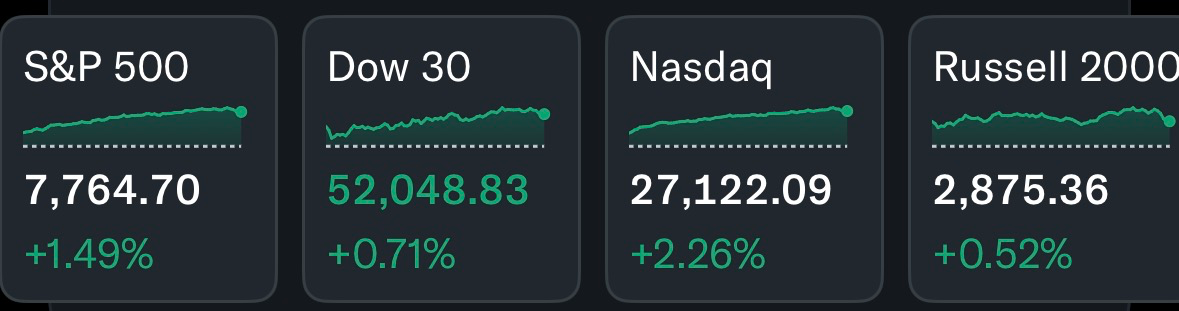
Photo Meta AI · Public domain · Wikimedia Commons

What the market repriced wasn't just "a few more GPUs"

Meta's Muse, released September 8, climbed to the No. 1 free app on the US Apple App Store. Downloads in the first five days came in at roughly 730,000. It's still too early to judge long-term retention or paid conversion, but Wall Street reacted to one possibility first: if AI agents move past search and chatbots into actually doing everyday tasks, the nature of compute demand itself could change.

A chatbot answers when you ask it something. An agent keeps going after a single request, searching, calling apps, and chaining together steps like payments or bookings. Model inference itself is still built on GPUs and AI accelerators, but around that core, CPUs, memory and networking take on a bigger role distributing work, moving data, and managing a flood of service calls.

How the chain runs:

  1. AI agent usage rises
  2. Inference and tool-calling volume rises
  3. CPU and GPU load both expand
  4. Memory and networking bottlenecks widen
  5. Data center capex gets reassessed

Why ARM and AMD outran Nvidia

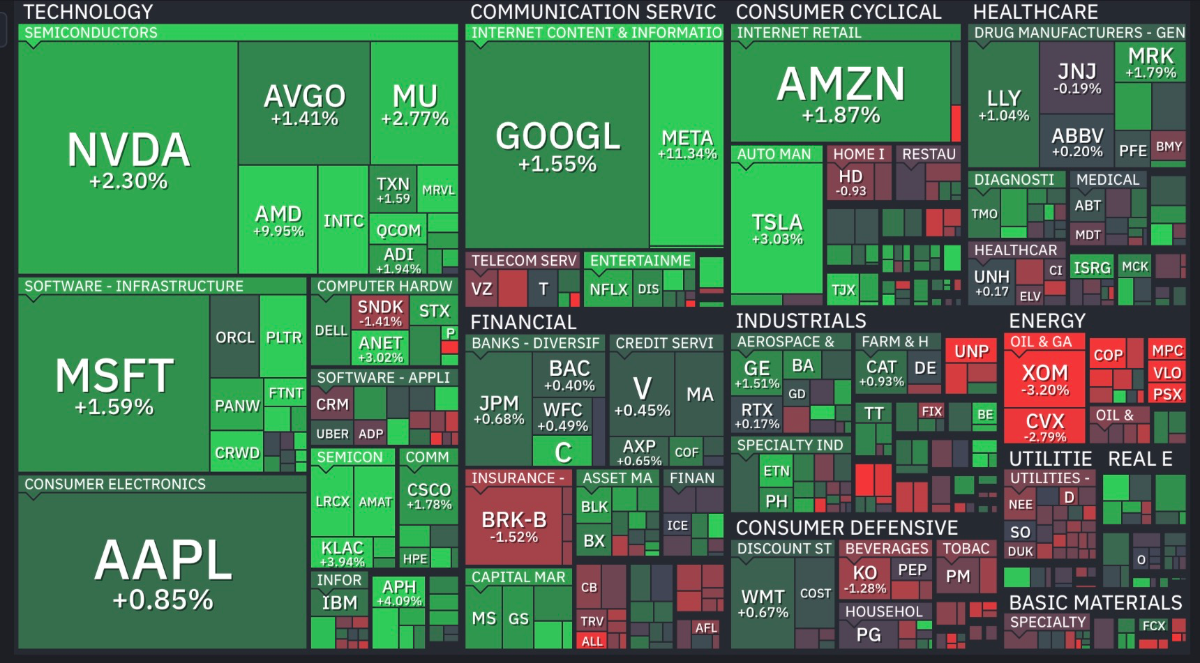
Nvidia itself rose 2.30%. But ARM jumped 17.16%, Intel gained 12.14%, and AMD climbed 9.95%. The market priced in, more aggressively than fresh GPU training demand, the possibility that AI inference and agent adoption could lift general-purpose server compute across the board.

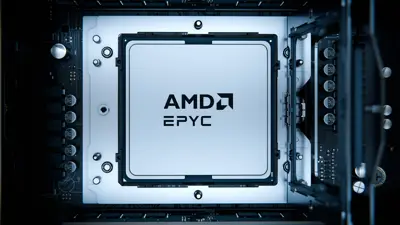
AMD crossed a $1 trillion market cap for the first time on the day. The move pushed the stock out of the frame of "an alternative GPU supplier to Nvidia" and toward a company that can supply both EPYC server CPUs and AI accelerators together. ARM got credit for its leverage in expanding data-center CPU architecture, while Intel was reassessed on server CPU supply shortages and AI-server replacement demand.

One distinction matters here. A stock rising 10 to 17 percent in a single day is a very different thing from actual revenue forecasts being raised by the same margin. Much of this move is a repricing of a future hypothesis: that agentic AI could grow CPU demand as well. The next round of earnings and guidance will need to confirm that.

Snapshot:

  • META: +11.43%, $741.25
  • ARM: +17.16%, $322.90
  • AMD: +9.95%, $615.52
  • SOXX: +4.93%, $559.34

But half the rally was still rates and oil

Explaining the day's move on AI news alone only tells half the story. The combination that had been weighing on the market last week was oil above $100 and the 10-year yield brushing against 5%. On the 21st, both eased at once.

The 10-year Treasury yield fell 3.3 basis points to close at 4.962%. Brent crude dropped 3.4% to $100.34 a barrel, on hopes of US-Iran diplomacy and a recovery in Saudi crude flows. WTI fell 4.5% to $95.78. Lower oil eased inflation-expectation pressure and pulled long-term yields down, and the lower discount rate made it easier for the market to price in Meta's and the chipmakers' long-run growth expectations.

So the day's formula is fairly clear: AI agents lifted earnings-growth expectations, and falling oil and yields allowed the market to pay a higher multiple for that growth. Had only one of the two shown up, the rally would likely have been smaller.
The index was strong, but not the whole market ran

Asset / IndexClose / LevelChangeReading
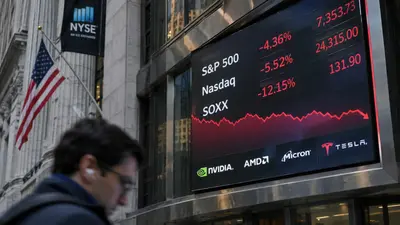
Nasdaq27,122.09+2.26%Record high, led by AI and semiconductors
S&P 5007,764.70+1.49%Led by Big Tech and communication services
Russell 20002,875.36+0.52%Preference for large-cap growth over the broad economy
SOXX$559.34+4.93%Strong outperformance for the chip ETF
10-Year Treasury4.962%-3.3bpBack below 5%, easing the discount-rate burden on growth stocks
Brent crude$100.34-3.4%Eased fears of reaccelerating inflation
VIX14.87+0.41%Spot strength and options-hedging demand rose together

What matters most is that Nasdaq and SOXX outran the Russell 2000 by a wide margin. That's less a sudden burst of optimism about the broader US economy and more money flowing back into the large platforms and compute supply chains that can actually turn the AI investment cycle into cash flow.

Insight Times Editorial Desk

More by topic

Starting with this story's topics, then what readers are following now

Investor psychology, decision-making and books on investing

NVDA

This story's topic92 storiesSee all →

Nvidia and Palantir Put AI Inside the Supply Chain - The Real Shift Is That It's Learning Judgment

A single Vera Rubin rack holds 1.3 million parts. The real breakthrough in Nvidia and Palantir's new supply chain AI isn't automating that complexity, it's capturing the judgment calls that used to live only in planners' heads.

Tech

Amazon Goes After Nvidia's Strongest Moat, and It Is Software, Not GPUs

Amazon's open-source TorchNeuron aims to let existing AI code run on its Trainium chips. The contest comes down to the total cost of AI compute and the return on Amazon's $220 billion in annual capital spending.

Tech

2027 Investing Needs Alignment, Not Prediction

A new investing book argues the hard part was never picking the next winner. It's staying aligned with where value and bottlenecks are moving while keeping old human weaknesses in check.

Investor Mind

AI's Next Bottleneck Is Money, Not Chips

Broadcom is lending Anthropic up to $42 billion, and Nvidia wants to build a $500 billion market for loans backed by GPUs. The AI race may turn on what rate buyers pay to borrow.

Tech

AMD Crossed $1 Trillion, and the Market Started Looking at CPUs Again

AMD's stock topped a $1 trillion market cap for the first time. The rally isn't just about being an Nvidia alternative. It reflects a reassessment of AMD as a full-stack AI infrastructure vendor, one that bundles CPUs, GPUs and networking, as AI shifts from chatbots to agents and reignites data center demand for CPUs.</deck> <parameter name="oneline">As AI moves from chatbots to agents, the market has started counting the CPU sitting next to the GPU again.

Tech

Two Companies Drive 34% of S&P 500 Earnings Growth as AI Pays Sellers First

Nvidia and Micron generate a third of expected earnings growth in US large caps. Apollo says the financial effect of AI is not yet visible in the S&P 493.

Investing

Why Nebius Is Keeping Some 2027 AI Capacity Off the Shelf

Nebius mixes long-term contracts, short-term premiums and auctions. Holding back capacity pays only if the servers stay busy, and it is not yet clear the pricing will last.

Tech

Semiconductors

This story's topic58 storiesSee all →

The whole business of designing, fabricating and testing chips.

The Real ASML Number Isn't the 3% Pop, It's the 30% Capacity Hike

ASML's rally isn't just an AI trade. Customers are already locking in 2027 tool slots, and ASML is raising Low-NA EUV capacity by roughly 30% to keep up.

Investing

The Next AI Chip Race Is About How Chips Connect

Applied Materials will lift its stake in Dutch equipment maker BESI from about 9% to 20%. The bet is less about control than about a new way to link chips.

Tech

Lam Research Falls 12%: The Problem Is the Timing of AI Growth, Not Its End

Revenue up 54%, an operating margin above 40% and $3.2 billion in free cash flow were not enough. The selloff likely reflects worry that revenue arrives later than hoped.

Investing

Musk's Terafab: What a $119 Billion Chip Plant Is Really For

From Tesla's robots to SpaceX's orbital data centers, Musk wants to control chip production itself. The open question is whether he can make advanced chips at high yield.

Tech

China's AI Labs Went Open Source Because They Had to, Not Because They Wanted To

A GPU shortfall pushed Chinese AI labs toward efficiency and open weights, and that constraint is now reshaping the global competition over who controls AI's basic infrastructure.

Tech

Memory Chip Supercycle: Not at Peak Yet, But 5 of 6 Warning Signs Are Flashing

Memory prices are still climbing, but the pace is slowing and PC and smartphone demand is starting to crack under the weight of higher chip costs. This looks less like a price peak and more like a profit plateau building toward the next supply cycle.

Investing

The US-China Summit Didn't Erase Taiwan Risk for Chip Stocks

Washington's Taiwan policy held, but roughly $14 billion in arms sales is still on hold. For AI chip investors, the summit reads less like risk removed and more like a fragile balance extended.

Macro

META

This story's topic37 storiesSee all →

After the Smartphone, the Contest Is Over Delegation, Not Screens

Meta Connect 2026 showed where AI glasses are heading. The question is who will handle users' tasks for them, and how much control users keep.

Tech

OpenAI's Dots Fights Back: Where the 24-Hour AI Worker War Will Be Decided

OpenAI's Dots, Meta's Muse and xAI's Grok Bot all keep working after the user leaves. Each is aiming at a different seat: the control plane of work, personal life context, or the AI org chart.

Tech

Meta's Ad Engine Is Strong. Now It Has to Prove the Return on AI

Revenue grew 26% and adjusted operating income rose, but free cash flow was negative $2.12 billion. The third-quarter story is less about AI bulls versus bears than about judging the ad business and the giant capital spending program separately.

Investing

Meta's Muse Test Isn't App Rank. It's Ad Conversion vs AI Costs

Muse's early download numbers beat ChatGPT's launch pace, but the real question is whether Meta can turn attention on Instagram, Facebook and WhatsApp into purchases, bookings and ad revenue that outpaces its rising AI bill.

Tech

In the AI era, you don't click on ads. You talk to them

OpenAI's Sponsored Agents try to stretch the unit of advertising from impressions and clicks to conversation and transaction potential. It won't topple Google search ads overnight, but it could change how advertisers capture purchase intent in the first place.

Tech

Why Is Meta Planning Up to $95 Billion in Stock Issuance?

Meta holds $82.45 billion in cash and securities, yet it has outlined an equity raise of up to $95 billion. AI data center spending is growing faster than the cash on hand.

Tech

The CPU Rally Muse Woke Up: Why Arm Really Jumped 17%

Meta's AI agent lit the fuse, but the bigger shift is elsewhere. As AI moves from answering to acting, the CPU work behind the GPU — orchestration, search, memory, networking — is growing, and Arm just moved from an IP company to a company that sells data center CPUs directly.

Tech

AI Agents

This story's topic42 storiesSee all →

AI that takes one instruction and works through the steps on its own — calling…

Google Catches Up, and Rivals Run Ahead Again

The real test for Gemini 4 Argon is not AI performance. It is whether Google can win customers and keep them.

Tech

Nvidia's Next Target After GPUs: Controlling What AI Agents Are Allowed to Do

OpenShell and Sentry are not about policing what an AI says. They are about controlling, at the server infrastructure level, which files and APIs an AI can touch, what it can execute, and who can actually pull the plug when something goes wrong.

Tech

The Number That Matters More Than How Smart AI Gets

This week's AI models got stronger and cheaper at the same time. The chart long-term investors should watch isn't the weekly benchmark leader, it's the falling cost of finishing a task successfully.

Tech

The Cheaper Tokens Get, the Bigger Your AI Bill Gets

As AI shifts from training to inference, the token is becoming an industrial commodity. Falling prices are not cutting demand, because agents and automation consume tokens at a scale no human chat session ever did.

Investing

Your Car Is Starting to Understand You: Tesla, Grok, and the Next Phase of AI

The breakthrough is not that a Tesla can answer questions. It is that AI is beginning to turn natural conversation into useful action, in a place where speed and attention matter.

Life & WorldEXPLAIN

AI Needs to Find $1 Trillion a Year From Somewhere to Pay Back Its Capex

Saying AI capex is big is no longer the point. The harder question is what end users have to pay for the buildout to pencil out, and Goldman Sachs puts that number at roughly $1 trillion a year.

Tech

Who Buys the T-Bill Behind Your $1 Stablecoin

Stablecoins aren't a crypto asset class so much as new plumbing for moving dollars online, and every new dollar that flows in gets tied to short-term Treasuries.

Macro