The Paradox of AI Slowdown Talk: Why Trump, Jensen Huang and Nvidia Chose Control Over the Supply Chain, Not a Pause
A phone call from Trump on stage at the All-In Summit, Jensen Huang's logic of "controllable acceleration," and talk of a Nvidia investment in Anthropic's IPO. These are not three separate stories. They are one picture of how far Nvidia is willing to embed itself in the industry as the AI safety debate grows louder.

The president's call rang out on stage
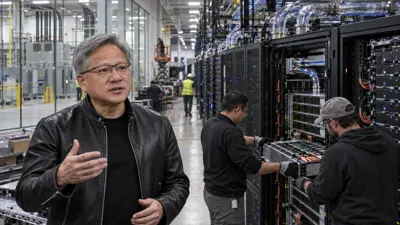
In front of thousands of attendees at the All-In Summit, Nvidia CEO Jensen Huang was deep in a conversation about AI safety and the pace of development. The hosts pressed him on Dario Amodei's recent essay, warnings from Jacob Kokson, recursive self-improvement, and the broader question of AI regulation.
Then Huang's phone rang. The caller was President Donald Trump. Huang explained he was "on stage in front of thousands of people," and the hosts eventually put the call on speakerphone. According to the transcript, the interruption came about 23 minutes into the conversation.
Trump pushed back hard on the fear and backlash surrounding AI and data centers. He argued data centers can enrich regions and will be core industrial infrastructure for decades to come. He said, in effect, that the US cannot afford to fall behind in the AI race. He also added that "we have to be careful," but his priority was clear: protect the expansion of America's AI industry over broad-based deceleration.
Huang echoed the same message, that the US needs to lead the AI race. But reducing the moment to "Trump and Jensen Huang mocked AI safety" misses half the story.
Right up until the call, Huang had been treating the safety questions seriously. His core point was not that safety doesn't matter, it was that safety, fast innovation and US leadership don't have to be framed as mutually exclusive choices.
That is why this roughly five-minute unscheduled call matters more than a stage mishap. It captured, in one moment, how the White House views AI and how the world's largest AI infrastructure company is trying to back that political direction with an engineering logic of its own.
Axis one: Trump treats AI as an industrial power contest, not a safety-regulation issue
Trump's message isn't complicated. Slow AI down too much, and the US loses too much.
To him, a data center isn't just a server building. It's industrial infrastructure that ties together power, construction, semiconductors, software, local jobs, tax revenue and manufacturing revival all at once. In Reuters' reporting, Trump was also skeptical that sweeping new AI regulation is needed, suggesting the US already has existing tools to police AI companies if problems arise.
This framing matters because it shifts the baseline of the AI regulation debate.
Earlier AI regulation debates were centered on the language of social policy: privacy, bias, copyright, platform liability. Today, frontier AI in the US is tied to the semiconductor supply chain, the power grid, data center permitting, competition with China, and national defense and cybersecurity.
In that structure, the question of "how safe should AI be" collides directly with the question of "how fast should America expand its industrial capacity."
Trump clearly puts his weight on speed and industrial expansion in that collision. That is not the same as a scientific conclusion that AI risk doesn't exist. It's closer to a political choice about where to place policy priorities.
This is the part investors should read closely. As long as the White House views AI as core infrastructure for national competitiveness and reindustrialization, broad regulation that would suppress data center, power and semiconductor investment all at once is likely to run into political resistance. On the other hand, if real incidents keep occurring, precision regulation aimed at specific high-risk capabilities and frontier labs could get stronger.
Axis two: Jensen Huang didn't refute the safety argument, he tried to turn it into an engineering problem
Huang's remarks were far more nuanced than Trump's.
He said Jacob Kokson's internal warnings about control failures deserve to be taken seriously. He acknowledged that as frontier labs shift from research organizations into massive engineering organizations, control problems can emerge.
What Huang pushed back on hard was the way unverified long-term predictions get turned directly into numbers like "probability of human extinction," and how those numbers then get used as grounds for slowing the entire AI industry.
His alternative is, surprisingly, closer to traditional engineering practice.
If an incident happens, first find the root cause. Change the process so the same problem doesn't recur. Isolate risky behavior in a sandbox. Monitor AI agent behavior with runtime monitoring. Run repeated pre-deployment evaluations and regression tests. Bring in third-party evaluators if needed. If concentrating power in a single evaluator is a concern, use multiple independent evaluators.
Huang compared this to external audits at financial firms. An independent evaluator doesn't need to know every internal technical detail the model's own creator knows, he argued, but it can ask the right questions and verify whether the control systems actually work.
This is what Huang effectively means by "controllable acceleration."
Not making AI less powerful, but building a layer of control between lab experiments and external product deployment even as models get more powerful.
His view on recursive self-improvement, or RSI, follows the same logic. AI systems already generate synthetic data, evaluate their own answers, sharpen task-specific skills through reinforcement learning, and over time help build the next model. Huang did not equate this directly with a runaway superintelligence.
His logic is simple: no matter how much AI helps build AI internally, evaluation, testing, regression checks and permission controls need to be in place before anything ships externally.
This approach cannot be declared correct with certainty. The possibility that an unexpected capability jump outpaces the evaluation framework is a counterargument safety researchers keep raising. But for investors, what matters is that Nvidia is translating the AI safety debate not into "a reason to cut compute" but into "a reason for more verification, monitoring and engineering."
Open models follow the same logic: AI shouldn't be an industry of just a few labs
Huang also gave considerable weight to open models at the summit.
In his view, winning the AI race for the US doesn't just mean a handful of frontier labs like OpenAI, Anthropic and Google posting the highest benchmark scores.
It means American companies, startups, universities, government agencies, manufacturers, automakers and biotech firms actually using AI as a real production tool.
That's why open models are strategically important to Nvidia. Closed models create demand from a small number of giant companies for massive training clusters. Open models create inference infrastructure demand across a far wider set of companies, countries and industries.
That matches exactly the kind of demand structure Nvidia wants. It's not better for Nvidia if a single lab wins. It's better if as many models, companies and countries as possible are using GPUs, networking gear and the AI software stack.
Axis three: Nvidia is becoming less a chip company and more a capital allocator for the AI industry
The most interesting part of the All-In Summit conversation came in the second half.
The hosts noted that Nvidia has essentially started acting like a "bank" for the AI industry, deploying capital across multiple layers of bottlenecks: land, power, data center buildings, networking, cloud and AI labs.
Huang didn't deny it. He explained that he looks at the entire ecosystem to find bottlenecks. In the past, the priority was growing upstream suppliers like TSMC, memory makers and optical component companies. Now, the constraints that need to be solved sit downstream too, in land, power, data centers and cloud capacity.
This point is essential to understanding how Nvidia's business model is changing.
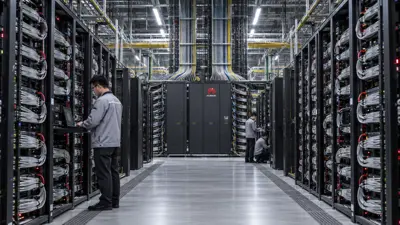
No matter how strong GPU demand is, chips can't be installed without power. Without a finished data center building, revenue recognition gets delayed. If a cloud provider can't raise capital, GPU orders shrink. If an AI lab's funding dries up, so does the compute budget for its next model.
So for Nvidia to protect its long-term revenue, making great GPUs is no longer enough.
Customers need to exist who will use the GPUs. Those customers need to be able to raise capital. Power needs to be supplied. Data centers need to be completed. Networking and memory need to be ready at the same time. And in the end, that AI needs to actually make money.
Nvidia's strategic investments are better understood as capital placed at the weakest links in this chain, aimed at raising the throughput of the entire system.
Why the talk of a $10 billion Nvidia investment in Anthropic's IPO matters
Seen against this backdrop, the reporting on Anthropic's IPO comes into sharper focus.
Reuters reported that Nvidia is in discussions to serve as an anchor investor in Anthropic's IPO, with a potential investment of up to $10 billion. Anthropic is reportedly considering raising as much as $100 billion at a valuation of roughly $2 trillion.
To be clear, this is not a finalized deal. Nvidia and Anthropic have not officially confirmed the negotiations, and the amount and terms could change.
Even so, the strategic significance is large.
Anthropic sits at the center of today's AI safety debate. Dario Amodei is one of the CEOs speaking most forcefully about the pace of frontier AI development, independent evaluation and risk management.
On the surface, Nvidia moving to put large sums of capital into that company looks like a contradiction.
From Nvidia's perspective, it isn't one at all.
Nvidia isn't betting on whether the safety camp or the acceleration camp wins. It's betting that either way, enormous compute will be needed.
More safety evaluation at Anthropic doesn't make compute unnecessary. If anything, more model evaluation, cross-model comparison, red-teaming, synthetic data generation, large-scale inference and agent testing could increase demand for other forms of compute.
That is the strength of Nvidia's strategy. Whichever grows faster, closed frontier models, open models, sovereign AI, enterprise inference, autonomous driving or robotics, Nvidia is positioning itself to supply the common denominator: compute.
But investors also need to see the weak points in this structure
Nvidia's strategy being clever doesn't automatically mean the risks disappear.
The first thing to watch is the gap between the speed at which capital manufactures demand and the speed at which end customers actually make money.
A structure where a supplier invests in an AI lab, the lab buys cloud computing, and the cloud provider buys more GPUs accelerates industry expansion.
But the bigger this chain of connections grows, the more the market eventually asks one final question.
Are businesses and consumers generating enough economic value from using that AI.
If not, everyone's revenue may rise in the early going, but at some point model companies' losses, cloud providers' depreciation burdens, low data center utilization, and GPU order cuts could all show up at once.
The second risk is power. The AI industry doesn't expand instantly just because capital flows in. It needs transmission lines, transformers, power plants, cooling, permits and skilled construction labor. This bottleneck could loosen more slowly than GPU production capacity does.
The third is customers' own custom chips. As Google's TPUs, Amazon's Trainium and Microsoft's Maia grow, total AI compute demand can keep rising while Nvidia doesn't capture all of that growth.
The fourth is the shape regulation takes. Broad regulation aimed at "slowing all of AI down" faces heavy political resistance, but precision regulation, such as reporting requirements above a certain compute threshold, independent evaluation, incident reporting, and restrictions on high-risk cyber or biological capabilities, is a realistic scenario.
So it would be too simple for Nvidia investors either to dismiss the safety debate entirely, or to assume the safety debate alone will trigger a collapse in AI capital spending.
Insight Times Editorial Desk