Alibaba's 20GW Bet Shows China's AI Race Is Now About Power, Not Just Models
Five to ten trillion parameters, a 500,000-chip cluster and 20 gigawatts of data center capacity. Alibaba is betting that owning the full stack, from models to chips to power, matters more than any single number.
The bigger shift is the system, not the model
According to Reuters, Alibaba is currently training Qwen 4 and plans to scale future versions, Qwen 4.5 and Qwen 5, up to 5 trillion to 10 trillion parameters. Its current flagship, Qwen 3.8 Max, is a mixture-of-experts model with 2.4 trillion total parameters. Per Alibaba's own disclosures, only about 95 billion parameters are actually activated in any single computation.
So it would be a mistake to read "10 trillion parameters" as "four times smarter than today's model." Parameter count is a measure of model size, not a direct guarantee of intelligence or cost efficiency. The real substance of this announcement is that Alibaba is trying to control four layers at once, the layers needed to actually run a model this large:
The stack, layer by layer:
- Model — Qwen 4 → 4.5 → 5, aimed at long-horizon tasks and self-improvement
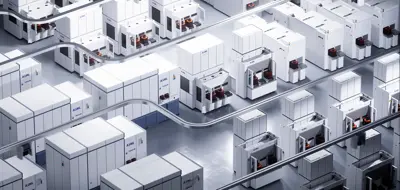
- Chip — Zhenwu V900, Alibaba's in-house AI accelerator
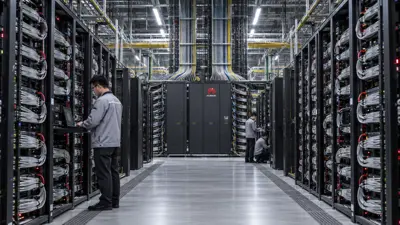
- Cluster — up to 500,000 chips, connected for massive parallel workloads
- Power — 20GW+, the company's data center target for 2032
Heavier than 500,000 chips: the number is 20GW
- 5-10 trillion — total parameter target for Qwen 4.5 and Qwen 5
- 500,000 — the maximum cluster size the V900 is said to support
- 20GW+ — Alibaba Cloud's global data center capacity target for 2032
Twenty gigawatts is a lot of power. As a rough comparison, a large nuclear reactor runs at roughly 1GW, so 20GW is in the ballpark of about 20 reactors' worth of output. That doesn't mean Alibaba plans to own 20 reactors outright. It's closer to a combined target across power grids, generation contracts and data centers spread across multiple regions.
This number matters because the bottleneck in AI competition has widened from a single type of GPU to power supply and system design. Chips are useless without power to run them. And even with power secured, connecting hundreds of thousands of chips at high utilization is what determines whether the economics actually work.
Will the V900 be a substitute for Nvidia?
Alibaba says the V900 delivers three times the performance of its previous generation, the M890, and is targeting mass production and commercialization in the first quarter of 2027. But right now, what's confirmed is only the company's own claim. Compute performance, memory bandwidth, per-chip power draw, yield, HBM sourcing, and real-world performance on large customer workloads have not yet been fully disclosed.
So the more accurate read on what this means for Nvidia isn't "immediate replacement," but "long-term pressure to build a self-sufficient ecosystem inside China." US export controls already constrain the supply of high-performance AI chips into China. Against that backdrop, if Alibaba grows its own stack from models to chips to cloud, the incentive to reduce reliance on Nvidia inside the Chinese market only grows stronger.
| Claim | What's confirmed | What still needs verification |
|---|---|---|
| Qwen at 5-10 trillion parameters | Development plan aimed at long-horizon tasks and self-improvement | Actual benchmarks, inference cost, active parameters, training efficiency |
| V900 at 3x performance | Company-stated improvement versus the M890 | Precise compute performance, power efficiency, yield, HBM configuration |
| Cluster of up to 500,000 chips | Announced as maximum supportable cluster size | Actual deployed scale, network efficiency, failure rate, effective utilization |
| 20GW+ | 2032 global data center capacity target | Power already secured, regional permitting, capital spend, utilization and ROI |
For investors, capital efficiency matters more than scale
This announcement suggests China's AI capital spending is unlikely to slow down easily. That's a favorable signal for demand in networking equipment, high-bandwidth memory, power hardware, cooling, optical communications and data center construction. On the other hand, as mega-scale investment accelerates, the risk of oversupply grows right alongside it.
Alibaba CEO Eddie Wu has said AI demand significantly exceeds available supply. If that holds, the economics of continued build-out stay favorable for now. But as Alibaba works to fill out that 20GW by 2032, a sharp drop in AI service pricing or a major jump in chip efficiency could shrink the power and floor space actually needed, below what's currently planned.
US AI investors need the same frame. The question that increasingly matters is less "who is buying the most GPUs" and more "who is running infrastructure at high utilization and recovering that capital spending through revenue and cash flow." That question gets sharper in an environment where the US 10-year Treasury yield is again pushing toward 5%, a level at which long-term growth expectations alone are harder to lean on to justify high valuations.
Insight Times Editorial Desk