Valuation
Nov 2026 5 stories
Marvell's $115 Billion Lumentum Deal: Is AI's Next Bottleneck Light, Not Chips?
Marvell's purchase of Lumentum points to a contest beyond GPU speed, in data transfer and power efficiency. Whether the price is right is not yet confirmed.
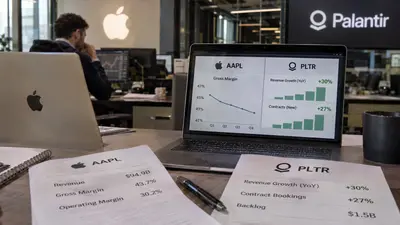
Apple and Palantir Beat Estimates, but Two Questions Remain
Apple has to show how much of its revenue turns into profit. Palantir has to show how long its explosive growth can last.

Palantir Grew 96%, but New Contract Value Rose Just 6%
Palantir's third-quarter results beat on revenue, profit and guidance. The question now is whether shorter contracts grow into larger, longer ones.
Marvell Bought AI's Highway. Wall Street Sold the Stock.
Marvell's roughly $115 billion all-stock deal for Lumentum is a bet on optical networking in AI data centers. Investors started with the price.

AI Is Changing the World. Why Can Investors Still Lose Money?
Anthropic offers a lens on AI investing. Beyond model rankings, investors need to weigh pricing power, control of the workflow and cash flow.
Oct 2026 16 stories
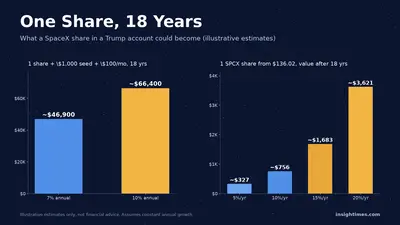
Why Musk wants to give 72 million US children a share of SpaceX
Elon Musk says he will gift one SpaceX share to every American child. The plan is not yet detailed, and the bigger driver of a child's wealth may be 18 years of steady saving.

The S&P 500 Looks Fine. So Why Do Most Stocks Hurt?
The index sits near its high, yet most of its members are down 20% to 30% or more from their own peaks. A look at the "stealth bear market" and the numbers long-term investors should watch.
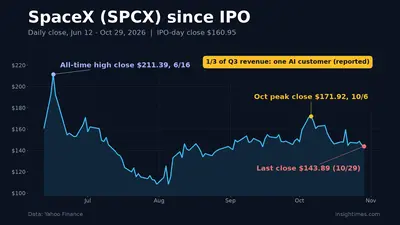
A third of SpaceX's revenue may come from Anthropic. Look at that before the AI profit
SpaceX's AI business posted its first quarterly profit, but about two-thirds of that unit's revenue came from a single customer. Contract terms and the share price matter as much as the headline number.

Is This AI Memory Supercycle Really Different? The Valuation Trap for Long-Term Investors
Memory is reshaping around AI through 2030. But a good industry and a good entry price are separate questions.

AI Companies Are Earning More. Why Are Their Stocks Falling?
Earnings are growing, but the price the market will pay has fallen. Why investors should separate AI industry growth from AI shareholder returns.
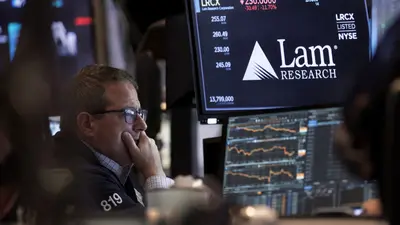
Lam Research Revenue Jumped 54%. The Stock Fell 12%. Here Is Why
Record results and a sharp sell-off at Lam Research show a paradox of growth investing. The key question is not how fast a company grows, but how much investors paid for that growth.

ARK Sets Tesla 2031 Target at $4,400, Betting on 8.1 Million Robotaxis and Optimus
ARK Invest's new model implies a $17.5 trillion market cap for Tesla by 2031. It reads less like a forecast than a scenario that assumes robotaxis and robots earn real money.

How AI Winners Are Made: Industry Growth Is Not the Same as Investor Returns
Believing in a technology's future is different from knowing which company's stock to own. Four questions can help separate industry growth from the expectations already in the price.

Anthropic Posts a Profit, but Investors Are Uneasy About the $2 Trillion Question
Reported third-quarter revenue of $16.8 billion and an adjusted profit show AI can make money. Slowing growth and $518 billion in long-term commitments are the open questions.
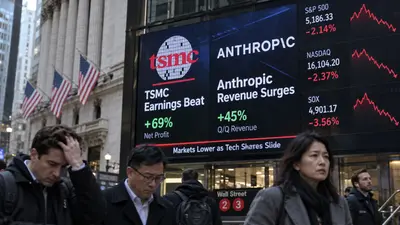
Is the AI Chip Bull Market Over? Stocks Slide as Companies Post Record Results
TSMC's net income jumped 69% and Anthropic's revenue rose 45% in a quarter. The question is whether the market is losing AI demand or the excess expectations and prices attached to it.
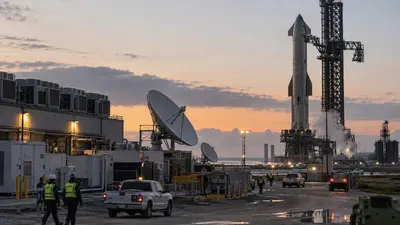
SpaceX Is Worth $2 Trillion. Three Bets Will Decide Whether It Gets Bigger
The company that dominates space now eyes ground-level wireless and AI data centers. The question is not whether the businesses can work. It is how much more value can be added to a company already above $2 trillion.

Nvidia Put $2 Billion Into Lumentum. Optics May Be the Next Bottleneck, but the Stock Has Already Run
Optical networking is emerging as the next constraint on AI data centers. Investors need to separate the industry's growth potential from the price they are already paying for it.

Year Five of the Bull Market: Why U.S. Stocks Aren't Expensive Yet, and What AI Chips and Power Must Deliver
U.S. stocks have gained about 117% since the October 2022 low. What happens next depends less on the bull market's age than on whether expected earnings, which lean heavily on AI semiconductors, turn into reality.

S&P 500 Rebounds, but Chip Stocks Stall: Valuation, Not Demand, Likely the Culprit
US stocks bounced on Oct. 9, yet AI hardware lagged. With the 10-year yield near 5.24% and Brent above $100, the question is whether earnings can hold and whether semiconductors rejoin the rally.

AI Can Lift More Than Stocks: It May Push Long-Term Yields Higher Too
The AI boom can grow the numerator of corporate earnings while also growing the denominator of the discount rate. Investors watching long-term Treasury yields now need to add "AI capital demand" to the Fed, inflation and the deficit.
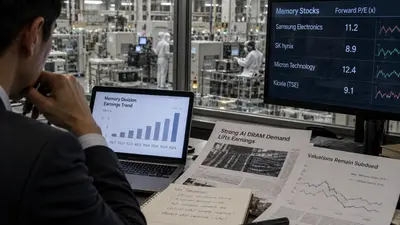
Micron's 87% Margin, 6x P/E: Memory's Re-Rating Will Be Decided in the Next Downturn
Record earnings alone will not erase the market's doubts. If memory has truly become contract-backed AI infrastructure, the proof will show up in the earnings trough of the next correction, not at the peak.
Sep 2026 14 stories

Anthropic's IPO: The Number That Matters More Than $100 Billion Is $2 Trillion
Claude-maker Anthropic is growing at a stunning pace, but the real question for investors is not how fast, only how long, and how much cash is left after GPUs and data centers.
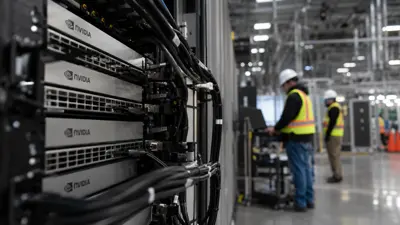
AI Needs to Find $1 Trillion a Year From Somewhere to Pay Back Its Capex
Saying AI capex is big is no longer the point. The harder question is what end users have to pay for the buildout to pencil out, and Goldman Sachs puts that number at roughly $1 trillion a year.

Dollar-Cost Averaging Is Not a Return Booster
Investing Mindset, Part 5: the thing worth automating is not just the buy button, it is what each dollar is for.

Why a Wobbly Yen Carry Trade Hits US AI Stocks First
It is not just dollar-yen at 160. Watch the US-Japan rate gap, yen direction, volatility, and US long-term rates together, because AI and high-valuation growth stocks get squeezed first when all four move at once.
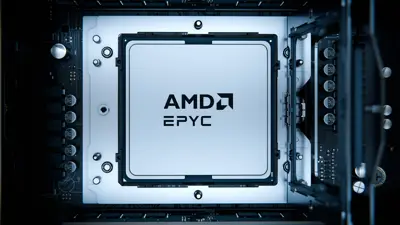
AMD Crossed $1 Trillion, and the Market Started Looking at CPUs Again
AMD's stock topped a $1 trillion market cap for the first time. The rally isn't just about being an Nvidia alternative. It reflects a reassessment of AMD as a full-stack AI infrastructure vendor, one that bundles CPUs, GPUs and networking, as AI shifts from chatbots to agents and reignites data center demand for CPUs.</deck> <parameter name="oneline">As AI moves from chatbots to agents, the market has started counting the CPU sitting next to the GPU again.

Humanoid Robots Sold Just 7,000 Units Worldwide Last Year
Videos of Tesla's Optimus, Unitree and Figure make the humanoid era look like it has already arrived. The real 2025 sales number tells a much smaller story.

2027 Investing Needs Alignment, Not Prediction
A new investing book argues the hard part was never picking the next winner. It's staying aligned with where value and bottlenecks are moving while keeping old human weaknesses in check.

You Only Need to Win 54% of the Points to Beat the Market
A good investor is not the one who calls every move correctly. It is the one who survives the days they get it wrong, long enough to keep playing a game tilted in their favor.

The Real AI Question Isn't Bubble Risk. It's Whether Profits Keep Up With Capex
Rather than take Tom Lee and Dan Ives' latest bullish calls at face value, we separated what the data actually confirms from what is still a forecast. The size of the AI buildout matters less now than how fast it turns into profit.

AI Slowdown Fears Hit Chips as the 10-Year Treasury Yield Finally Broke 5%
The S&P 500 fell just 0.48% while semiconductors collapsed 5.86%. What matters is not how much the index dropped, but what the market chose to sell first: the AI-pace debate hit chip earnings expectations, and the 10-year Treasury's push past 5% raised the discount rate applied to those expectations.

Oil at $110, 10-Year Yield at 5%: The Discount Rate on Growth Stocks Is Rising Again
Brent crude spiked to $109.97 intraday and the US 10-year Treasury yield tested the 5% threshold. What matters is not the numbers themselves but that oil-driven inflation fears are pushing bond yields higher across the globe at once.

Higher Rates Don't Break Big Tech's Business. They Reprice Its Future.
Microsoft, Alphabet, Apple and Nvidia are sitting on more cash than debt. What rates actually change is the discount rate applied to cash flows a decade out, and whether a cut is a soft landing or a recession signal.

Apple's first foldable barely moved the stock. Margin, not the $1,999 price, is why
The iPhone Duo is a real break in Apple's product strategy. For investors, the question is not how many it sells, but whether the price increase survives memory and foldable component costs and reaches EPS.
A 3x P/E is not a discount. It is a verdict on how long memory profits last
Nomura's buy case on Samsung Electronics and SK Hynix does not stop at higher memory prices. It argues that if AI has turned memory from a cyclical component into strategic infrastructure, the formula the market uses to value both companies has to change too.
Nothing featured in this section yet.
Not more news. Ideas that stay with you.
Instead of the daily flood of headlines, we send the knowledge and perspective you need to think long-term about U.S. stocks and AI investing, in one email each morning.
We only ask for your email. Every issue has a one-tap unsubscribe link.