Apple's first foldable barely moved the stock. Margin, not the $1,999 price, is why
The iPhone Duo is a real break in Apple's product strategy. For investors, the question is not how many it sells, but whether the price increase survives memory and foldable component costs and reaches EPS.

The product was new. The investment case was not
On September 9, Apple unveiled the iPhone Duo at new chief executive John Ternus's first major keynote. It measures 5.4 inches folded and 7.6 inches open. It runs the A20 Pro, and Apple led with multitasking that puts two apps on screen at once and camera features built around the dual displays. Pre-orders open October 16, sales begin October 23.
Judged as a product, this is a rare change of form factor in Apple's iPhone strategy. The stock closed at $315.34, down 0.28%. It fell as low as $309.90 intraday before recovering most of the loss. The market already knew a foldable iPhone was coming, and had priced most of that in.
None of this needs to be read as a product failure. It is more accurate to say the bar has moved. Apple is a roughly $4 trillion company. What moves the shares is not the arrival of a new form factor but how much that product lifts consensus revenue and EPS.
The Duo story is about ASP, not units
The Duo is far more expensive than any existing iPhone. That means it can change Apple's revenue mix without pulling in large numbers of new customers. If some share of Pro Max buyers trade up to the Duo, total iPhone shipments barely move while the average selling price rises.
That matters more than foldable market share. Outside forecasts range from around 10 million units in the first year to considerably higher. But a headline unit number tells you little on its own. What matters is how much of it is existing Pro Max demand shifting sideways, and how much is genuinely incremental: Android premium buyers switching, and long-cycle holders finally upgrading.
Apple has also raised the price of the iPhone 18 Pro and Pro Max by $100 each. The baseline iPhone 18 is absent from this autumn's lineup. Taken together, the FY2027 iPhone growth strategy looks less like selling many more units and more like selling expensive units at a higher share of the mix.
Which makes gross margin the number to watch
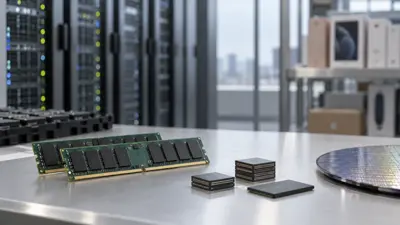
This is where the bulls and the cautious part ways. On price and mix alone, the Duo is clearly good for revenue. But foldable OLED, the hinge, dual batteries and high-density packaging all carry heavier costs than a conventional iPhone. On top of that sits the run-up in memory prices set off by AI data centre spending.
Morningstar raised its FY2027 revenue estimate for Apple by 4.5% to reflect the price increases, and cut its gross margin estimate for the same year by 100 basis points. That pair of numbers is the clearest picture of the current Apple case. Revenue goes up. There is no guarantee profitability goes up with it.
Pricing the Duo at $1,999 carries the same double edge. Staying under the psychological $2,000 line helps early demand. But if Apple has not passed the full component cost increase through to the price, Apple absorbs part of it. A good price for the consumer is not automatically the best price for the shareholder.
Does the late-entry playbook still work?
Apple did not create the foldable market. Samsung and Huawei spent years running into hinges, creases, aspect ratios and durability. Apple arrived after that trial and error had accumulated. It is the same sequence as the iPad, the Apple Watch and AirPods.
Generalising this into "Apple always enters late and wins" is risky. The Vision Pro is a reminder that a well-executed product and a dominant one are separate questions. Foldables also remain a small slice of the total smartphone market.
For the Duo to work, folding better than the incumbents is not enough. The 7.6-inch open display has to generate real additional work and content consumption, and give users a reason to accept a higher monthly instalment. Hardware innovation has to connect through to time spent, services revenue and replacement demand.
What to watch
Lead times are the fastest read on early demand. But if supply is tight, a long wait alone should not be mistaken for demand strength.
The revenue effect depends on whether sales are existing high-end iPhone buyers moving across or genuinely incremental demand from new and deferred upgraders.
Watch whether the Duo and the Pro price increases actually show up as mix improvement. If revenue approaches double-digit growth while units stay flat, the case gets stronger.
How much price and mix offset the memory and foldable BOM burden is the crux for EPS. That metric may matter more to the stock than a strong revenue print.
Watch whether the larger screen stays a hardware feature or turns into more app time and more services revenue.
Insight Times Editorial Desk