A 3x P/E is not a discount. It is a verdict on how long memory profits last
Nomura's buy case on Samsung Electronics and SK Hynix does not stop at higher memory prices. It argues that if AI has turned memory from a cyclical component into strategic infrastructure, the formula the market uses to value both companies has to change too.
A 3x P/E is not a price tag. It is a statement of disbelief
Nomura kept its buy rating on Samsung Electronics and SK Hynix on September 4, setting target prices of 670,000 won and 4.7 million won. The reasoning: both stocks are down roughly 37% from their highs, and on 2027 earnings estimates they trade at an average of about three times earnings.
Read that 3x as simply "cheap" and you have seen half the picture. The market has never granted memory makers full credit for boom-time profits. Even while prices climb and margins widen, investors assume that supply will eventually overshoot, that inventory correction will follow, and that the good numbers are borrowed. So peak earnings get a low multiple. That is not an oversight. It is the discount doing exactly what it was designed to do.
Nomura's re-rating argument goes straight at that mechanism. If AI infrastructure spending stretches the duration of memory profits beyond anything the past cycle offered, then it is not only the earnings estimates that move. The cycle discount itself can shrink.
AI does not just use more memory. It demands more expensive memory
Memory demand used to swing on PC and smartphone shipments. When sales slowed, customers cut inventory first, and the shock ran through DRAM and NAND prices into manufacturer earnings within a quarter or two.
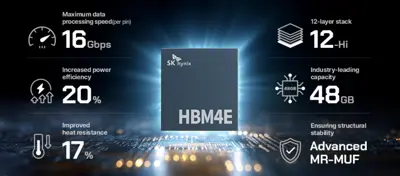
AI data centres behave differently. HBM eases the bandwidth bottleneck around GPUs and AI accelerators. High-capacity server DRAM enlarges the memory pool that inference and data processing require. Enterprise SSDs matter more as large-scale data retrieval, storage and live AI services grow. Samsung Electronics has made HBM4, high-capacity DDR5 and expanded AI server SSDs an official strategy for 2026. SK Hynix began mass-production shipments of HBM4 in the second quarter.
Memory capacity per server, bandwidth and power efficiency now matter more than the number of servers sold.
As HBM, server DRAM and eSSD take a larger share of the mix, average selling prices and margin structures change with them.
Customer qualification, yield, and stacking and packaging capability start to matter as much as raw wafer capacity.
That is why AI memory demand is more structural than "servers sell well, so memory sells well." The product mix is shifting toward high-value territory, and the performance and quality thresholds customers demand keep rising. The same bit of memory is producing a different amount of economic value than it did three years ago.
The supply problem is not unwillingness to build. It is the inability to build fast
Nomura estimates that meeting current demand would require global memory capacity to reach roughly 7.2 million wafers a month within four years and 11 million within six, with shortage conditions potentially running to 2028. That is Nomura's estimate, not a settled industry forecast, and should be read as such.
Still, the direction of travel is credible. Supply here is inelastic for reasons that do not yield to capital spending alone. HBM is not finished once leading-edge DRAM process capacity is secured. TSV, stacking, bonding, test, packaging, customer qualification and yield stabilisation all have to clear together. The gap between an expansion decision and the first shipment of sellable product is long.
The more interesting wrinkle is that ramping HBM does not automatically make commodity DRAM plentiful. When production resources and wafers migrate toward high-value HBM, the supply growth of general-purpose DRAM can actually be constrained. SK Hynix described that same structure in its 2026 market outlook, noting that HBM-centred investment could improve the supply and demand balance in commodity DRAM.
What the TSMC comparison actually means
None of this means Samsung Electronics and SK Hynix should be handed TSMC's multiple tomorrow. TSMC has spent years proving leading-edge process leadership, a broad customer base, high barriers to entry, manufacturing reliability and long-term demand visibility. In its own 2025 annual report, TSMC called AI demand structural and named technology differentiation and customer trust as its core competitive strengths.
But similar attributes are accumulating in HBM. Customer qualification takes time. Yield and packaging know-how are decisive. Memory suppliers now collaborate with customers from the design stage of next-generation AI accelerators. If long-term contracts and prepayments keep expanding, revenue visibility improves relative to a memory business once ruled by spot prices.
So the TSMC comparison is not a calculator that tells you which multiple to apply. It is a frame for a harder question: how much of the extreme cyclical discount attached to memory companies can structurally disappear, and how much of it is still deserved.
Same AI memory theme, two different paths to a re-rating
SK Hynix carries more direct leverage to the AI memory cycle. Samsung Electronics has already started HBM4 mass production, but the market's question has moved from "can it be made" to "at what yield and with which customers can it be made profitably." For Samsung's re-rating to be large, HBM alone will not do it. Foundry economics and shareholder returns have to improve alongside.
| Samsung Electronics | SK Hynix | |
|---|---|---|
| Core thesis | Expanding HBM4 supply and recovering memory profitability, narrowing a compound discount that also covers foundry and packaging | HBM leadership and high earnings sensitivity to AI memory |
| Re-rating catalysts | HBM4 yield and customer expansion, server DRAM and SSD mix, foundry profit improvement, shareholder returns | HBM4 and HBM4E supply expansion, ASP, customer diversification, high-value product mix |
| Strengths | Large-scale production base and integrated memory, foundry and advanced packaging capability | Front-runner experience in HBM and high AI memory exposure |
| Key risks | Durability of HBM profitability and yield, foundry losses, conglomerate discount | HBM concentration, competitors catching up, dependence on customer and AI accelerator cycles |
What to Watch
Customer count, yield and ASP matter more than shipment volume. The test is whether competitiveness in high-value memory actually converts into revenue and margin.
If HBM stays strong while commodity memory collapses, the re-rating case weakens. Watch for price strength spreading into server DRAM and eSSD.
If capital spending growth slows at Microsoft, Amazon, Alphabet and Meta, the long-term visibility of memory demand falls with it.
If new capacity from Samsung Electronics, SK Hynix and Micron arrives faster than expected, the supply-constraint premium shrinks.
The final exam is the next downturn. If operating margins and free cash flow hold up better than in past corrections, the re-rating was real.
Sources
- Seoul Economic Daily — Nomura Says Samsung, SK hynix Deeply Undervalued
- Samsung Global Newsroom — HBM4 commercial shipments
- Samsung Electronics IR — 2026 memory strategy disclosure
- SK hynix — 2Q26 Financial Results
- SK hynix — 2026 Market Outlook
- TSMC — 2025 Annual Report
Insight Times Editorial Desk