AI Is Starting to Grow Hands
Claude no longer just reads papers and writes code. Anthropic has built a real wet lab where AI directs robots to run experiments, a shift that could reshape not just drug discovery but the production function of science itself.
No matter how smart the software is, biology's final answer comes from reality
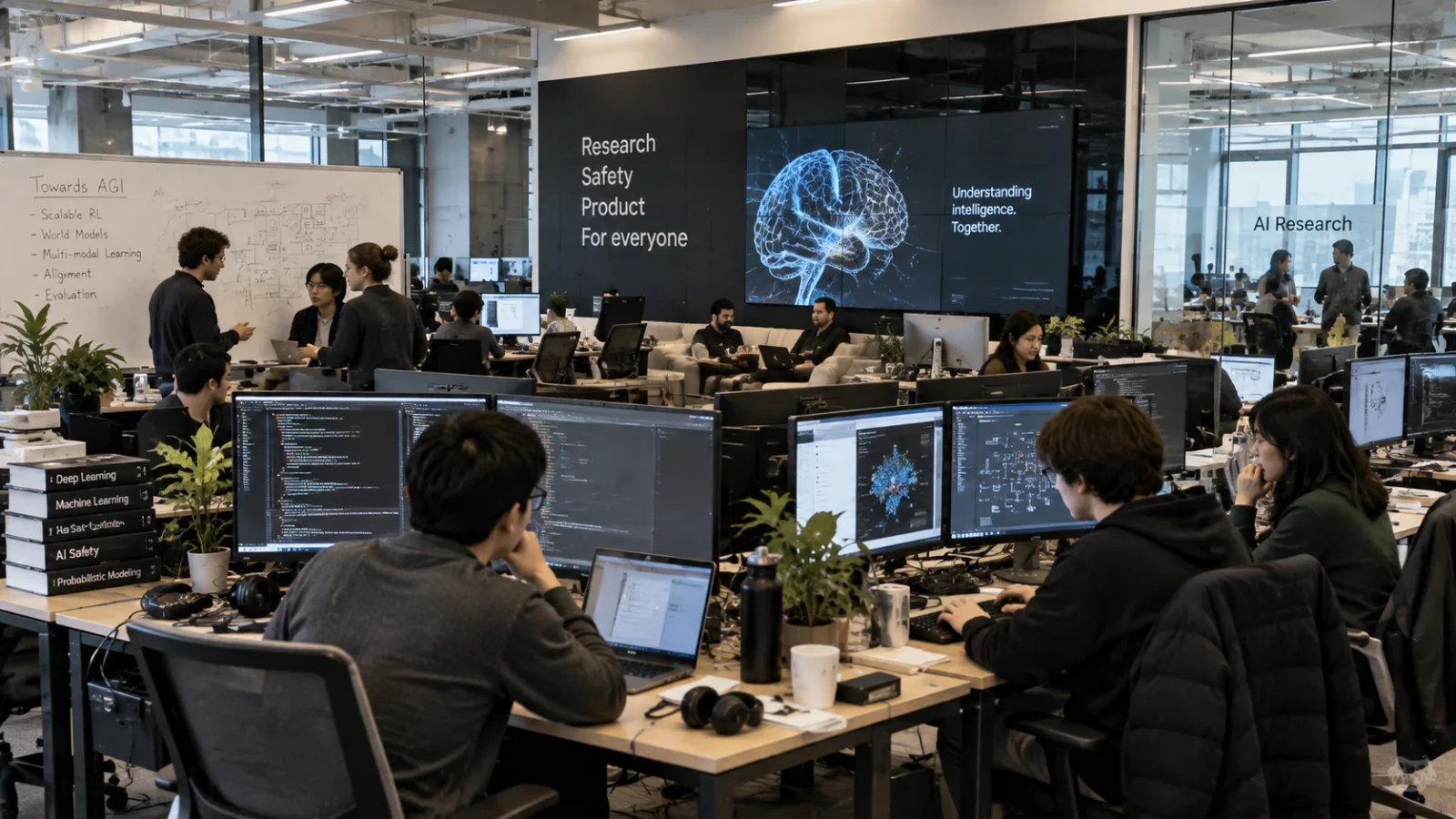
Until now, conversations about AI and drug discovery have mostly stayed inside the computer. Reading papers, predicting protein structures, generating candidate molecules, designing compounds, running simulations. At this stage, AI has already cut researchers' thinking costs significantly.
But biology has a last step it cannot skip. You have to actually try it. Whether a cell responds, a protein binds, or a compound produces the intended effect gets confirmed by a real experiment. If AI can generate 100,000 hypotheses a day but a lab can only test 100, the overall pace of research is capped at 100.
That is what makes Anthropic's wet lab interesting. Reuters reported on September 18 that Anthropic has built a wet lab for physical biology experiments in the San Francisco Bay Area. Eric Kauderer-Abrams, the company's head of life sciences, confirmed the report. Anthropic is testing whether Claude can direct a robotic unit to run experiments with limited human intervention. At the same time, the company was careful to note this is still "very early stage" and that human oversight and intervention remain essential for safety.
There is an important factual boundary here too. Anthropic told Reuters that the wet lab is not a dedicated drug-discovery facility. The company is expanding preclinical drug programs and life-science automation, but calling the entire wet lab a "factory where Claude makes drugs" would be an overstatement.
Science's bottleneck is shifting from thinking to doing
The closed loop of AI-native science:
- Generate hypothesis
- Design experiment
- Run robot
- Measure and analyze
- Next hypothesis
The key is not how automated each step is, but how quickly the result of one experiment feeds into the next. The shorter this closed loop gets, the more experiments a single researcher may be able to oversee.
Anthropic is already turning this link into products and standards. In June, the company released Claude Science, letting researchers handle databases, code and computing environments in one place. In August, it published a research preview of the Model Hardware Standard, or MHS, which connects AI agents to physical equipment like microscopes, liquid handlers and robotic arms so they can be operated safely.
In one MHS proof-of-concept, Claude coordinated a liquid handler, robotic arm and reader to run a specific dose-response experiment roughly three times faster. In a separate case, Claude set up equipment integration and an orchestration layer in about eight hours, work Anthropic says could take weeks with a conventional vendor approach. These numbers cannot be generalized into a speedup for all of science. But they show something important is already working: a structure where AI does not just write the experiment plan but reads equipment status, issues commands, receives results and decides the next action.
Connecting yesterday's 26% to today's wet lab changes the picture
- 26%: Share of Anthropic's internal AI R&D work that Claude performed at a "lead" level, as of August 2026
- About 30,000: Number of AI agents simultaneously running research and engineering tasks on Anthropic's main internal platform
- About 3x: Speedup of a specific dose-response experiment workflow in the MHS proof-of-concept
- 8 hours: Time it took to build an orchestration layer across multiple lab instruments with Claude in one MHS case
The 26% and 30,000-agent figures measure internal AI R&D automation at Anthropic, while the 3x and 8-hour figures come from a limited lab proof-of-concept. These are not drawn from the same population and should not be compared directly.
Even so, both pieces of news point the same direction. AI first becomes the operating agent of digital research, then starts taking on part of physical experimentation through robots and equipment. If AI can write better code, generate better hypotheses, test those hypotheses faster in the real world, and feed the results back into itself, the research cycle shortens.
It would be premature to assume the human researcher's role disappears anytime soon. The nearer-term change looks more like an increase in how many experiments one person can oversee, and how much of that can run in parallel. A scientist's value may shift away from time spent moving a pipette by hand and toward judgment: what to ask, which results to trust, which experiments to stop.
This is a bigger story than drug discovery
If AI can reliably operate physical equipment, there is no reason the same structure stays confined to biology. Chemical synthesis, new materials discovery, battery testing, semiconductor processes, manufacturing quality inspection: any industry that repeats the loop of hypothesize, execute, measure, revise has a similar closed loop waiting to be automated.
This also changes the frame for measuring AI's economic reach. Generative AI's market has so far been counted in users, software seats and API tokens. Going forward, equipment, processes and experiment workflows may enter that calculation too. As AI connects to robots, sensors and lab instruments, its total addressable market could widen from automating digital labor to orchestrating physical production and research.
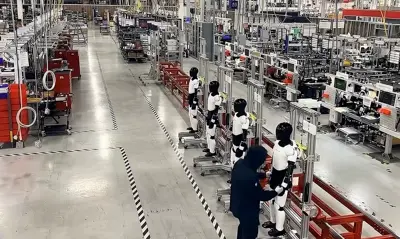
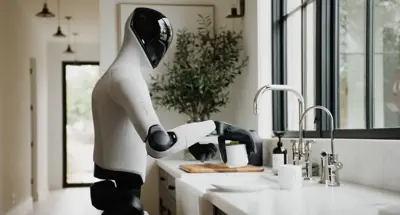
If Tesla is trying to give AI a body to work in a factory through Optimus, Anthropic's direction looks more like attaching lab hands to AI. The industries differ, but the pattern is the same. The next round of AI competition will not be decided by better answers alone. It is widening into how safely and repeatably an AI can act in the real world.
The hardest problem still unsolved
| Bottleneck | Why it's hard | Signal that would strengthen the thesis |
|---|---|---|
| Physical throughput | Reagents, incubation time and equipment capacity cannot be parallelized infinitely like software. | Steady improvement in 24-hour autonomous runs, equipment utilization, and throughput per experiment. |
| Reproducibility | A successful experiment must be repeated across different equipment and labs to have scientific value. | Success rates and variance for the same protocol improve across multiple institutions. |
| Safety and control | Unlike a software bug, a wrong action in a physical experiment can lead to sample loss, equipment damage or biosafety incidents. | Transparent disclosure of human-intervention rates and blocked risky actions, with scale achieved without incidents. |
| Clinical translation | Even strong preclinical results can still take years to clear clinical safety and efficacy hurdles. | AI-generated candidates repeatedly advance to IND filings, enter clinical trials, and improve real success rates. |
Anthropic itself acknowledges this boundary. The company has said it will not run clinical trials directly for now, and is focusing on preclinical work and areas existing pharmaceutical companies do not adequately cover for economic reasons. As Reuters noted, no drug program's success is guaranteed. Most candidates still fail to clear the much higher bar of clinical safety and efficacy.
Insight Times Editorial Desk