DeepSeek's $15 Billion Raise: Model Makers May Feel It Before Nvidia Does
China's DeepSeek is closing a round about twice its original target. For US investors, the question is less the size of the check than where the money goes and whose profits it could erode.
1. DeepSeek is shifting from a low-cost AI lab to a capital-intensive company
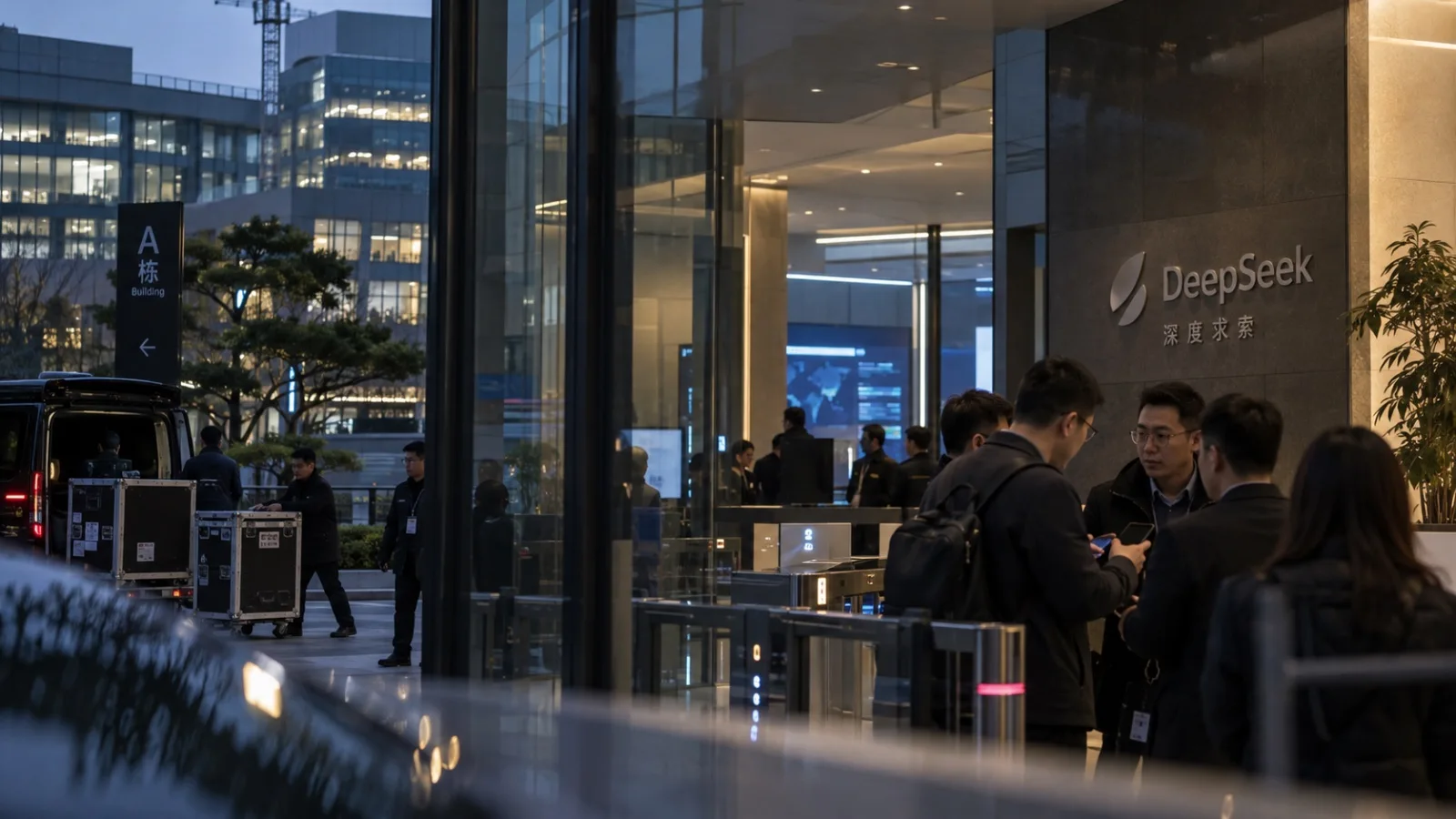
According to Reuters and Bloomberg reports on Oct. 22, DeepSeek is closing a deal to raise about 100 billion yuan, or $14.98 billion.
The original target was 50 billion yuan. It rose to 80 billion yuan, then to 100 billion. Tencent and CATL are named as investors, along with Meituan, Geely Auto, Midea and GigaDevice. More than 15 participants are involved.
Adding the 100 billion yuan of new money to a pre-money valuation of 500 billion yuan gives a post-money value of about 600 billion yuan, or roughly $89.9 billion. Final equity terms have not been set, so that figure is a reference calculation only.
What matters is that DeepSeek is tying itself to China's technology supply chain. It builds models, runs them on Chinese-made chips and distributes them through local platforms.
DeepSeek is also reported to be preparing a listing on Shanghai's STAR Market. But a funding round and IPO preparation do not guarantee profitability or returns for investors.
| Item | Figure | Note |
|---|---|---|
| New funding | $15 billion | About 100 billion yuan |
| Pre-money valuation | 500 billion yuan | About $74.9 billion |
Amounts reflect reported deal terms. Final completion and company announcements remain to be confirmed.
2. A plan for 160,000 Huawei accelerators matters more to Nvidia
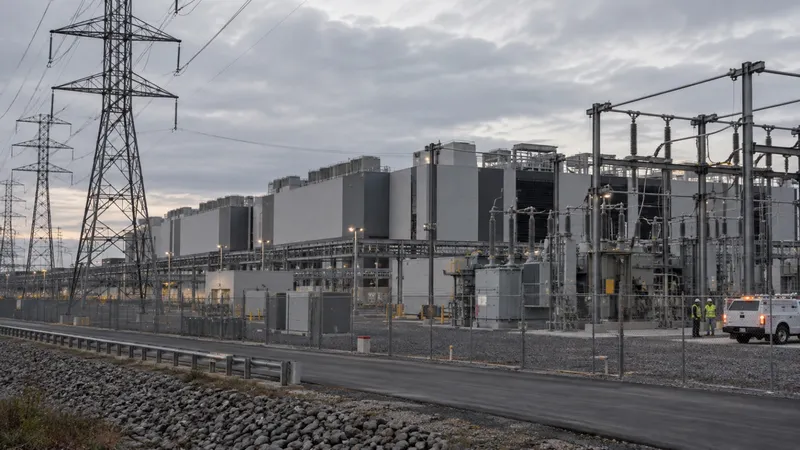
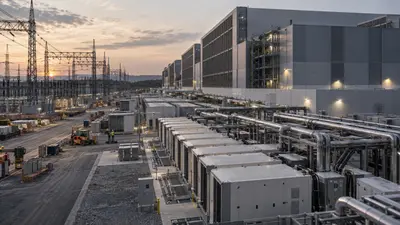
Bloomberg reported that DeepSeek plans to deploy at least 160,000 Huawei Ascend 950DT accelerators at a data center in Inner Mongolia.
One distinction matters. The chips are planned mainly for inference, the work of running trained AI models in live services. That does not mean Nvidia has been fully replaced, including in core model training. The scale and timing of the installation also depend on Huawei's production capacity.
This is a structural change worth watching for Nvidia investors.
Even as global demand for AI compute grows, some incremental demand inside China could shift to Huawei's ecosystem. It would be premature, though, to conclude that Nvidia's global dominance is weakening at the same pace.
Nvidia's strength is not only GPU performance. It also rests on the CUDA software stack, networking and the operating efficiency of large systems. Huawei's actual supply and cost competitiveness need to be confirmed before the pace of substitution can be judged.
3. If AI gets cheaper, who captures more of the profit?
DeepSeek's added capital raises the odds of a longer price war among AI models.
As models become more efficient, the compute needed per task can fall. But if use of AI agents, coding, search and workflow automation grows faster, total compute demand could rise instead.
| Industry | Growth opportunity | Profitability risk |
|---|---|---|
| AI models | More users and API calls | API price competition |
| Cloud | Wider enterprise AI adoption | Capex, depreciation |
| GPUs | Inference demand, system expansion | Chinese chips, in-house chips |
| AI software | Lower model costs | Weaker feature differentiation |
| Power and cooling | Data center buildout | Delayed or canceled investment |
Still, rising compute demand and rising corporate profit are separate matters.
The more AI models become commodity-like and cheap, the more likely it is that companies controlling customer workflows, data and distribution gain a relative edge.
That could be an opportunity for Microsoft, Amazon, Alphabet and Meta. It could be a burden for companies trying to sustain high margins on premium model fees alone.
4. For Big Tech, monetization matters more than AI spending
Microsoft and Amazon can offer a range of models in their clouds. Alphabet can apply model efficiency gains to search and advertising, and Meta to ad recommendations and its own services.
But a cheaper model does not automatically mean higher profit.
If all the savings in model costs are passed on to customers as lower prices, margins may not improve. If a company can hold revenue from existing services while cutting inference costs, operating income and cash flow benefit.
Investors therefore need to track gross margin, capex, depreciation and free cash flow alongside AI usage.
The same goes for software companies. How deeply a product is embedded in customer data and business processes, more than the AI features themselves, is likely to shape long-term pricing power.
5. AI growth in China is not the same as a win for US chip companies
Even if data center spending in China rises, there is no guarantee it turns into orders for Micron, US networking vendors or power equipment makers.
In particular, the full $15 billion should not be counted as chip orders. Money is also needed for hiring, research and development, model training and service operations.
Memory investors should look for HBM supply contracts and per-product selling prices. Power and cooling investors should look for actual orders and deliveries. Custom chip investors should look for customers' adoption into volume production.
Another constraint is US security policy. On Oct. 19, the Department of Homeland Security ordered DeepSeek-related products and services removed from federal civilian agency systems. Technological competitiveness and the ability to sell in the US market are separate questions.
The real question
The most important question DeepSeek raises is not whether AI's future is bright. It is whose profits that future actually becomes.
Believing in the growth of the AI industry and holding every AI stock on the same logic are different investment decisions.
Insight Times Editorial Desk