A 36% Crash by 2027? The Real AI Risk Is Whether the Money Comes Back
Believing AI will change the world is not the same as believing AI stocks will keep rising. The 2027 crash call turns on one question: can investors recover what they are spending?
Believing that AI will change the world is one thing. Believing that AI stocks will keep rising is another. The debate now under way on Wall Street starts by separating the two.
Joachim Klement of Panmure Liberum, a British investment bank, warned that the S&P 500 could fall to 5,000 by the end of 2027. Against the index level of 7,722.72 when his Oct. 5 report came out, that is a drop of about 35.3%. In an interview with Bloomberg, he said the AI bubble could burst in 2027 or 2028.
The warning carries a paradox. Even if AI technology succeeds, AI investors could still take large losses. Why that might be, where risk is building, and what individual investors should check are the questions below.
1. Smarter AI still has to make money
Think of the AI industry as a giant shopping mall business. Microsoft, Amazon, Google and Meta are building enormous malls now, expecting customers to arrive later.
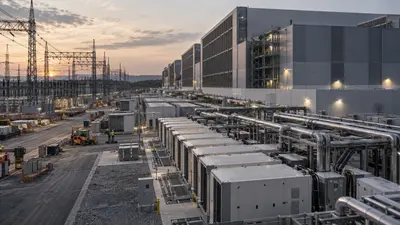
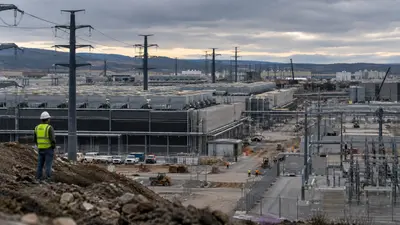
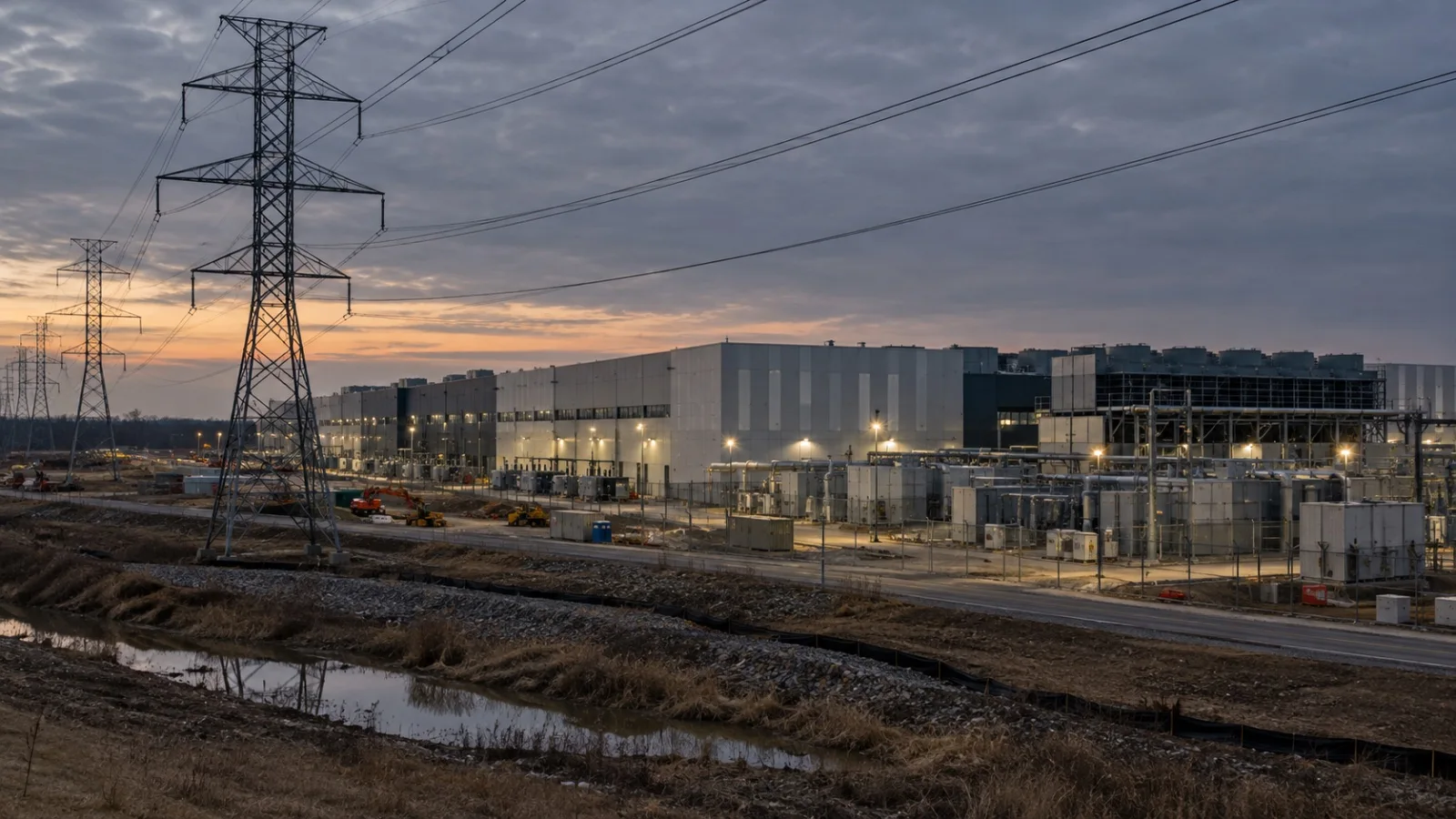
A mall needs land, construction, and cooling and power systems. In AI, those are data centers, GPUs, memory chips and power infrastructure.
The problem is that finished buildings do not guarantee a crowd.
According to a Bloomberg tally on April 30, 2026, the four big US tech companies plan annual capital spending of up to $725 billion in 2026.
Combined 2026 capex plans of the four US Big Tech companies: up to $725B. This is total capital spending planned around AI data centers. It should be distinguished from actual spending and from AI-only investment.
Rising capex is not a problem in itself. It is needed when demand is growing.
The real trouble comes when the next round of spending is due before the last round has paid back. Companies then have to cut cash or add debt. High interest rates make the burden heavier. What worries Klement is not the intelligence of AI but this flow of money.
2. Money is circulating, but who is earning it?
In the AI industry, companies invest in one another and buy one another's products.
Suppose an AI chip company invests in an AI startup, the startup uses the money to buy cloud services, and the cloud company buys the chip company's GPUs.
AI chip company → (investment) → AI startup → (cloud purchases) → cloud company → (GPU purchases) → back to the chip company. This is a hypothetical structure used to illustrate concern about circular financing. It does not mean all deals among specific companies work this way.
In this loop, every company books revenue and investment results. But if the starting point is money from inside the ecosystem, an important question remains: are the end users of AI paying as much?
If companies cut costs and grow sales thanks to AI and so pay real usage fees, the market is healthy. If a startup must raise new money each time it burns through the last round, sustainability is weaker.
Not every strategic investment or long-term cloud contract is a bubble, though. Prepaid contracts can be a way to secure stable revenue. The line to draw is between revenue that depends on investor money and revenue that independent customers pay repeatedly.
3. Why can't Google and Meta stop spending?
This is Big Tech's dilemma. Suppose Google cut its AI spending. In the short run, costs would fall and cash flow could improve.
But what if rivals Microsoft and Meta use AI to take its customers? By saving money, Google could lose competitiveness in search, advertising and cloud.
So as long as competitors keep investing, each company finds it hard to pull back. Each decision is rational on its own. If everyone invests at once, the industry as a whole can end up with excess capacity.
Big Tech also cannot be equated with the profitless internet companies of the 2000 dot-com bubble. Today's large technology companies generate substantial cash from existing businesses. There is a risk of investing too much in AI, but also a risk of investing too little. Both have to be weighed together.
4. Warning signs showing up in the market
The clearest feature of the US market now is concentration in the gains.
A Reuters analysis on Oct. 12 found that the S&P 500 is up about 14% in 2026, yet more than 40% of its constituents have fallen. The median stock return is only about 4%.
- S&P 500, year to date: +14%. Strong gains in a handful of large stocks.
- Constituents that have fallen: more than 40%. Returns that feel different from the index.
This is not proof that AI stocks are mispriced. Money can concentrate in companies whose earnings are growing fast.
Still, when few companies drive the market, expectations for those companies weakening could shake the whole index.
The other side has solid evidence too. Reuters reported on Oct. 9 that S&P 500 earnings for 2026 were expected to grow more than 35% for the year. That suggests the AI investment boom is in fact supporting corporate profits.
The market holds excessive expectations and real earnings growth at the same time. That is why the single word "bubble" does not describe it well.
5. The AI industry can survive a bubble
The internet era helps here. Around 2000, many internet stocks collapsed. The internet itself did not disappear.
Networks built through overinvestment later became the base on which online shopping, search and video services grew. AI could follow a similar path.
At first, GPUs and data centers are scarce, so everyone pays high prices to secure equipment. Over time, supply grows and technology improves, and the cost of using AI could fall.
Companies supplying infrastructure may then face price competition, while software and service companies that use cheaper AI may find new openings.
Economist Carlota Perez's theory of technological revolutions also describes how capital overheats while a new technology's infrastructure is built, and how real use then spreads across the economy.
Not every technological revolution has to pass through a bubble collapse, however. Historical parallels are a useful framework, not a formula that supplies the date 2027.
6. Who is at risk, and who gains?
Whether the AI market grows and whether AI spending keeps rising are separate questions. When the pace of spending growth slows, outcomes can differ sharply by company.
- Nvidia, AMD: Growth in new GPU orders could slow. Profitability and next-generation product competitiveness are the defenses.
- Micron, SK hynix: The key is whether HBM (high-bandwidth memory) demand keeps growing and how much capacity is added. Changes in conventional memory prices also matter.
- TSMC: The key is how durable demand for advanced process nodes is, and fab utilization.
- Microsoft, Google, Amazon: The key is how much of their investment cloud revenue recovers.
- Meta: Better ad profitability and user engagement from AI will decide whether the spending is justified.
- AI software companies: Lower inference costs are an opportunity, provided they win real paying customers.
The point is to avoid a simple split in which chip companies are hurt first and software companies automatically gain.
If Big Tech buys fewer GPUs, for example, that could weigh on Nvidia. But if usage of existing GPUs rises and software revenue expands, part of the shock could be offset.
Likewise, even if AI demand keeps growing, memory prices can fall if memory supply grows faster.
For investors, what matters more than the market's direction is under what conditions a company they own earns more, and under what conditions its profits shrink.
The bottom line
The core of this debate is not that AI's future is dark.
AI may become smarter and cheaper. But there is no guarantee that every company that spent heavily on infrastructure today will recover its investment.
Rather than asserting a 2027 crash, it is more useful to watch how quickly the enormous capital spending turns into real customer spending and corporate cash flow.
The companies that gain the most from the AI revolution are not necessarily the ones that spend the most on it. That is the difference individual investors should keep in mind.
Insight Times Editorial Desk