AI Infrastructure Spending Is Holding Up 3% Global Growth, the IMF Says
AI is acting as a real-economy investment engine, offsetting an energy supply shock. The next test is whether that spending comes back as profit.
Global growth of 3%. The number looks ordinary. AI sits behind it.
How much would the world economy have grown without AI?
On Oct. 12, at the IMF-World Bank annual meetings in Bangkok, IMF Managing Director Kristalina Georgieva said AI infrastructure investment is offsetting an energy supply shock and helping hold up global growth of about 3%.
The IMF's July forecast puts global growth at 3.0% in 2026 and 3.4% in 2027. The Fund did not publish a separate growth rate for a world without AI investment. Georgieva described AI's contribution to growth. That is not a guarantee that AI delivers 3% growth.
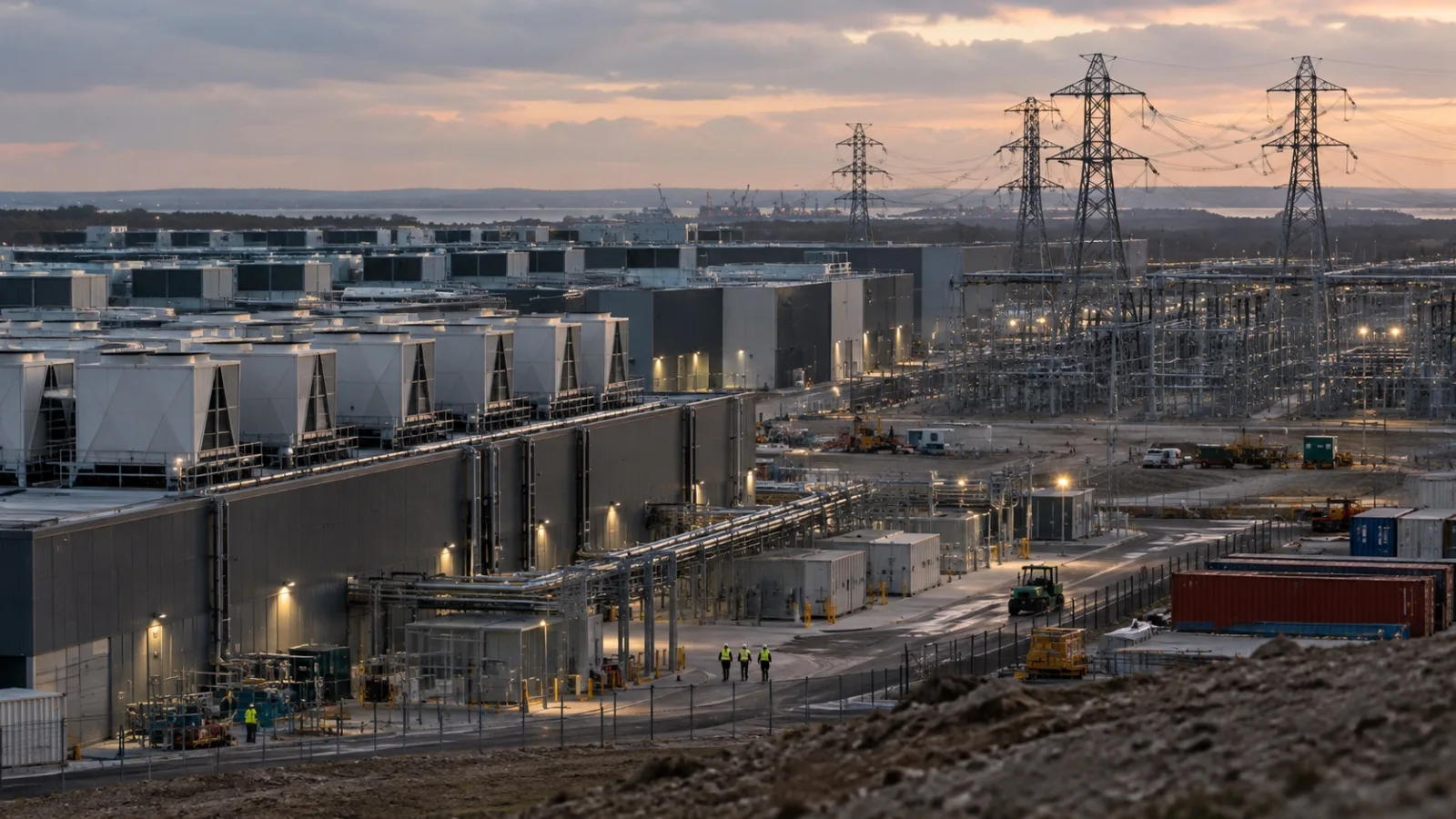
The important shift is that AI has moved beyond being a promising theme in the stock market and has begun to work as an investment engine in the real economy.
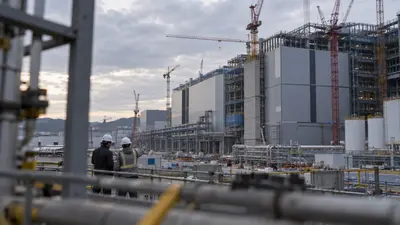
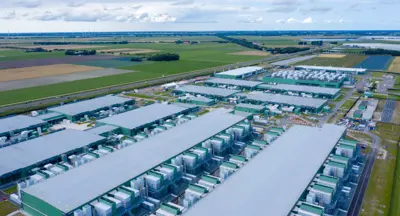
GPU orders feed into chip factory output. Data center construction spurs spending on power equipment, cooling systems and telecom networks. Big Tech capital spending flows into sales, jobs and exports across many industries.
But there is a timing gap. What supports the economy now is the investment that builds AI. What will have to justify that investment is the productivity gained from using it.
Why Asia stands to benefit more
The U.S. leads in AI models and cloud platforms, but much of the core hardware that makes them work is supplied from Asia.
As Nvidia's GPU volumes grow, so do opportunities for TSMC in advanced chip manufacturing and packaging, for SK hynix and Samsung Electronics in high-bandwidth memory (HBM), for Taiwanese server makers, and for Japanese chip equipment and materials companies.
In a long-term scenario, the IMF estimates AI adoption could lift annual economic growth by 0.5 to 1.0 percentage point in advanced Asia and by 0.2 to 0.8 percentage point in emerging Asia. These are not realized growth rates. They are potential effects that depend on how fast the technology is adopted and how much productivity improves.
| Potential boost to annual growth from AI adoption | Low end | High end |
|---|---|---|
| Advanced Asia | +0.5 pt | +1.0 pt |
| Emerging Asia | +0.2 pt | +0.8 pt |
Long-term scenario from IMF 2026 research. Figures are increases in annual growth rates, not cumulative GDP growth.
Not every Asian company will gain equally. Segments where supply is short and customers sign long-term contracts may keep high profitability. Segments where rivals add capacity quickly may see margins fall even as sales rise.
Growth in the AI industry as a whole is not the same as a rising share price for any one company.
The paradox: the economy grows while entry-level jobs shrink
The IMF estimates AI could affect about 40% of jobs worldwide and up to 60% in advanced economies. That does not mean that share of jobs disappears. The figure covers task automation, productivity gains and job restructuring.
The sharpest concern is early-career work. Junior staff used to build experience through research, entry-level coding and data cleanup. AI can now do much of that.
For companies, that is a chance to cut costs. For young workers, it can mean fewer openings. Singapore President Tharman Shanmugaratnam also warned at the IMF meetings about shrinking job opportunities for new college graduates.
If the problem persists, it could weigh on consumer spending power and the tax base. No new tax on AI or robot tax has been settled, however.
Four numbers for investors to check
| Indicator | Positive change | Warning sign |
|---|---|---|
| Big Tech capex and free cash flow | Spending rises and cash generation improves | Spending rises while free cash flow worsens |
| Chip orders and margins | Demand expands and profitability holds | Prices and margins fall after capacity additions |
| Corporate return on AI spending | Adopters see better sales and productivity | AI spending outruns the payoff |
| Employment and consumption | Productivity gains and higher real incomes | Weaker hiring and slower consumer spending |
AI is emerging as a new investment engine for the global economy. But building infrastructure is not the end of the story. The market is likely to ask for less talk of more GPUs and more proof of profit earned by using them.
Investors who spot that transition first may read the next phase of AI growth more accurately.
Insight Times Editorial Desk