$300 Billion in AI Investment Is Moving Off the Balance Sheet
As AI data centers grow too large for any one company to own outright, Big Tech is turning to separate entities that borrow the money and buy the assets, backed by long-term usage contracts and residual-value guarantees. The risk hasn't disappeared. It has just moved.
Whose Debt Is a Data Center's Debt?
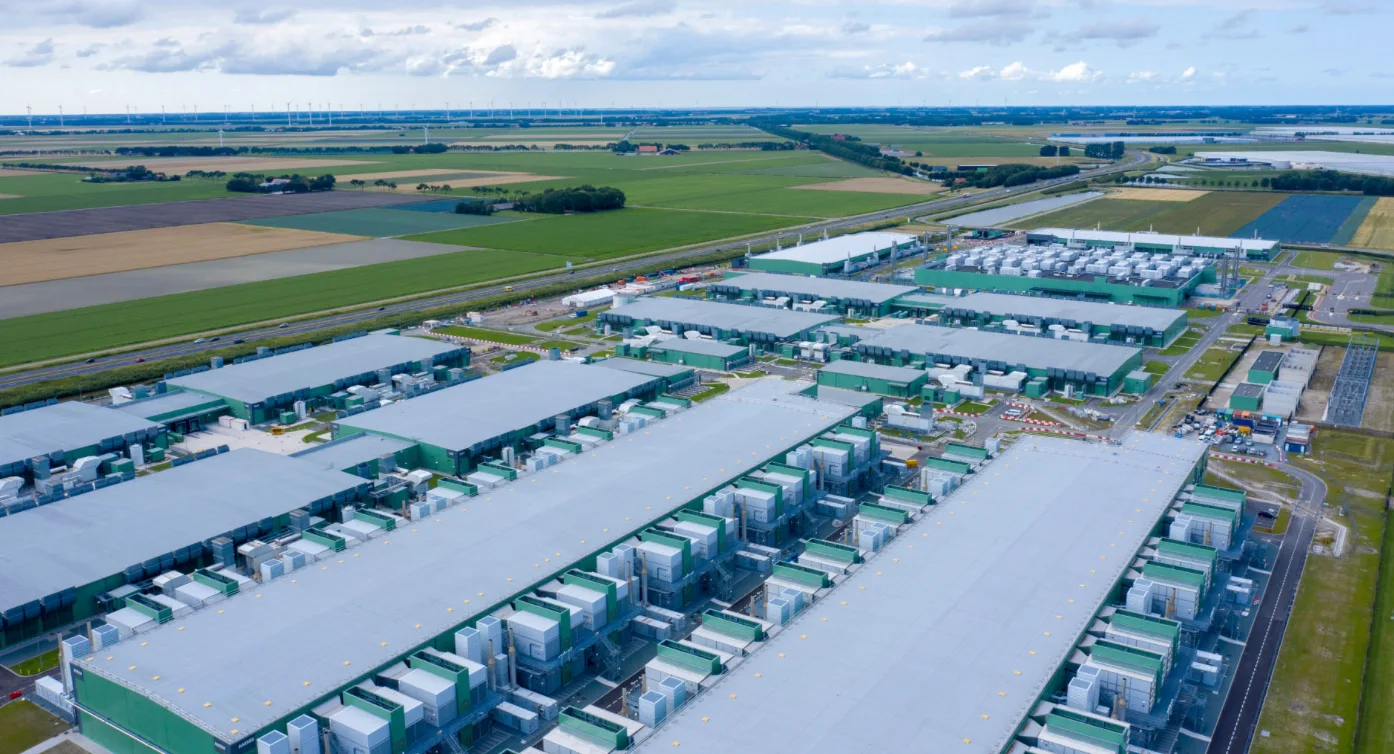
In the early days of the AI boom, the money flow was simple. Big Tech built data centers and bought GPUs, capex rose, and cash went out the door. Now that a single project can run into the tens of billions of dollars, the financing structure itself is changing.
01 Big Tech — signs long-term usage contracts, provides partial guarantees 02 SPV — a separate entity holds the asset 03 Debt Investor — supplies capital through bonds, loans, and private credit 04 Data Center / GPU — the actual compute assets get built and operated
An SPV, or special purpose vehicle, is a separate legal entity created for a specific project. The SPV builds the data center and takes on the debt. Big Tech leases the facility or signs a long-term contract to use it. Often attached is a residual value guarantee, a promise to cover part of the loss if the asset's future value falls below a certain level.
This is not some exotic new financial trick. It's a structure long used in real estate, aircraft leasing, power plants, and telecom infrastructure. It lets a company secure the service it needs without owning the asset outright, while spreading risk and capital across multiple investors.
The $300 Billion Is Not "Hidden Debt"
The first thing to be clear about: the roughly $300 billion figure the Financial Times tallied is not $300 billion in confirmed debt that Big Tech is secretly hiding. It's closer to a sum of guarantees and potential support exposure across multiple AI projects. A guarantee only turns into an actual cash outflow if specific conditions are met.
$300B — The potential guarantee exposure tied to AI projects, as tallied by the FT.
$28B — The maximum cap on the residual value guarantee disclosed in connection with Meta's Hyperion project. The cap shrinks over time.
$1.3T+ — S&P Global Ratings' forecast for combined AI infrastructure capex among major hyperscalers by 2027.
Meta's Hyperion project in Louisiana is a useful example. Meta and Blue Owl set up a joint structure for a roughly $27 billion development, with Meta leasing the facility once it's complete. According to Meta's disclosures, the total cap on the residual value guarantee is about $28 billion, and that cap declines over time. But payment only kicks in if several conditions line up together, such as the lease ending or not being renewed and the asset's value falling. Meta currently judges the likelihood of payment to be low and has not recognized a corresponding liability.
That doesn't mean the economic risk is zero. The way credit rating agencies treat these structures makes that clear. S&P Global Ratings adjusts for long-term leases, guarantees, and other contractual obligations as debt-like obligations in its credit analysis whenever they create the possibility of a cash outflow.
Capex Isn't Shrinking. The Way It's Funded Is Changing.
This is the core of the story. If the growth rate of Big Tech's reported capex slows at some point, reading that alone as a sign that AI infrastructure investment is cooling could be a mistake. Instead of buying the asset directly, a company can let an SPV buy it, and secure the compute it needs through a lease and a guarantee.
| What you're looking at | Old interpretation | What you also need to check now |
|---|---|---|
| Capex | The headline measure of AI investment | Assets and project spending held instead by an SPV |
| Corporate Debt | A company's direct borrowing burden | Project loans, private credit, bonds, and linked guarantee structures |
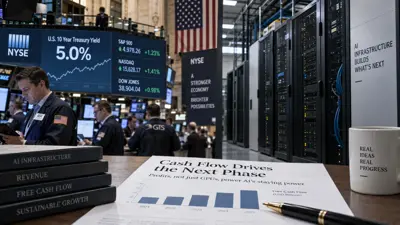
| Free Cash Flow | Capacity to invest and return capital to shareholders | Long-term lease payments, minimum purchase commitments, guarantee trigger risk |
| Valuation | Centered on P/E, EV/EBITDA | Cost of capital that also factors in credit spreads and residual asset value |
S&P already expects the AI investment burden at large hyperscalers to pressure cash flow in 2026 and 2027, with debt, leases, guarantees, and various structured finance tools growing in importance. In other words, the AI industry has entered a stage where analyzing it as a group of tech stocks alone is no longer enough. A data center is increasingly a technology asset, a piece of real estate, a power infrastructure project, and a credit instrument all at once.
The Real Risk Isn't Weaker Demand. It's Residual Values Falling Together.
While this structure works well, everyone benefits. Big Tech improves its capital efficiency, financial firms gain long-lived infrastructure assets, and developers get to pursue large-scale projects.
The problem shows up under stress. Imagine AI demand growing more slowly than expected, GPU generations turning over faster and pulling down resale value, a regional oversupply of data centers, and delays in getting power hookups. Under that combination, a project's cash flow and collateral value weaken at the same time. Refinancing costs for the SPV rise, and the economic value of the guarantee grows.
It would still be a stretch to draw a direct line to the 2008 financial crisis. Today's large AI data centers have real hyperscaler demand and long-term contracts behind them, and the cash-generating power of companies like Microsoft, Alphabet, Amazon, and Meta isn't comparable to a subprime borrower back then. Moody's also views simple vacancy risk as limited, since a large share of new 2026 data center supply is already pre-leased to hyperscalers. Instead, the new risk is concentration: exposure piling up around a handful of large customers.
Insight Times Editorial Desk