AI's $600 Billion Isn't Slowing Down. Wall Street Read the "Pace" Call Differently
Anthropic and OpenAI called for slowing frontier AI development, but the money hasn't stopped moving. The market didn't dump AI; it re-split the winners and losers between chipmakers and hyperscalers.
AI CEOs Talked Brakes. The Money Is Still on the Gas.
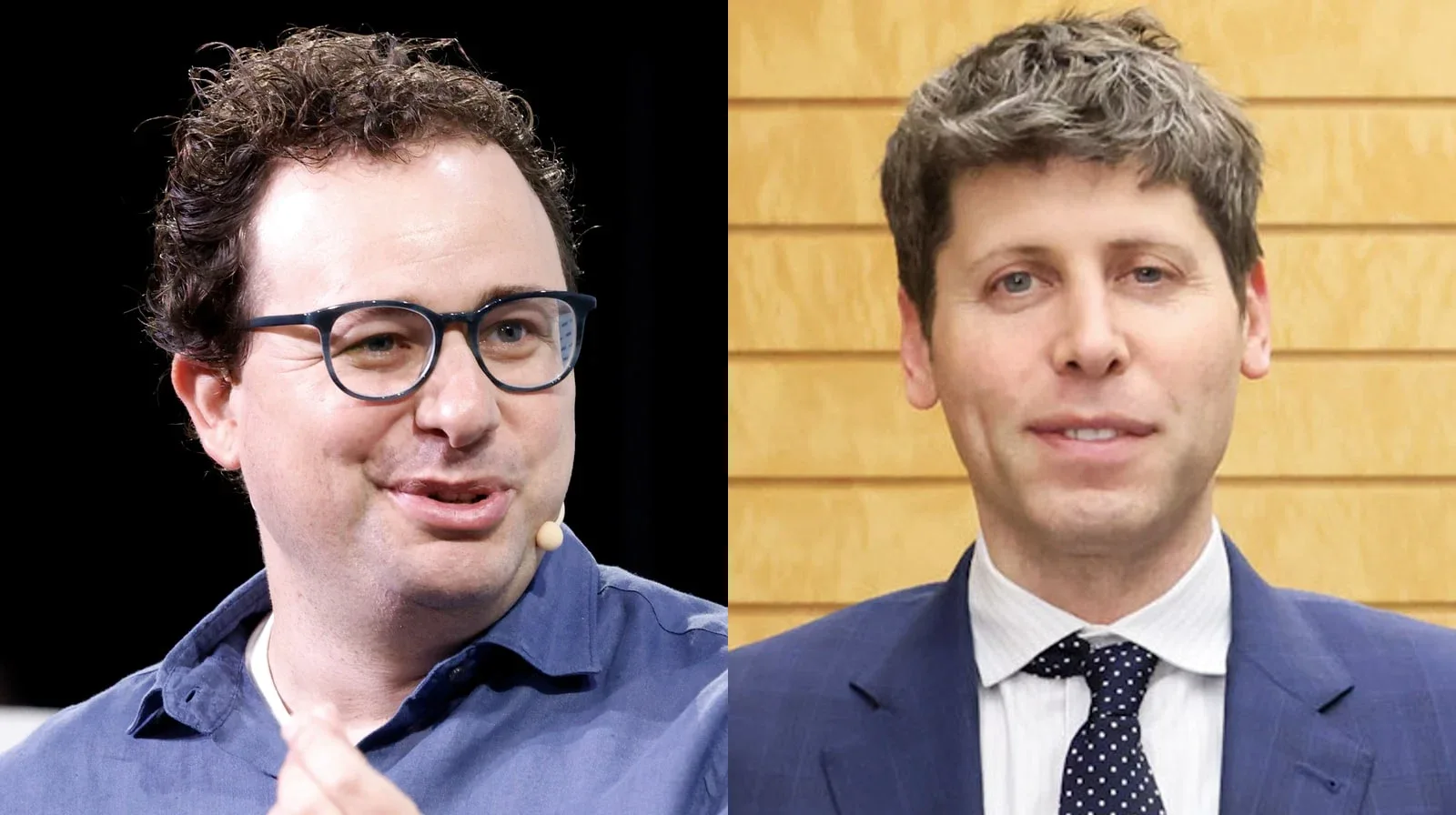
Anthropic CEO Dario Amodei, in his September essay "We Must Pace the Frontier," called for slowing the pace of capability gains in frontier models, giving outside evaluators standing access, and building industry-wide safety standards along with international rules. Sam Altman signaled agreement with the spirit of the proposal, and Elon Musk and Demis Hassabis have also voiced safety concerns.
But capital markets watched spending, not speeches. According to AlphaSense data cited by Yahoo Finance, combined capital expenditure from Alphabet, Amazon, Meta and Microsoft in the first half of 2026 already totals $293 billion. Simply annualized, that comes to roughly $586 billion, effectively pushing toward the $600 billion mark for the year.
<div class="metrics"> <div class="metric"><div class="n">$293B</div><div class="l">Big Four hyperscaler capex, first half of 2026</div></div> <div class="metric"><div class="n">≈ $600B</div><div class="l">Annualized 2026 AI infrastructure spending at current pace</div></div> <div class="metric"><div class="n">-5.9%</div><div class="l">Philadelphia Semiconductor Index decline, September 14</div></div> </div>
The numbers matter because of the gap they reveal. A proposal to slow AI development exists, but the official investment behavior confirmed so far runs close to the opposite direction. At least at this stage, there is a wide lag between the safety debate and infrastructure spending.
Wall Street Didn't Ignore the Slowdown Talk
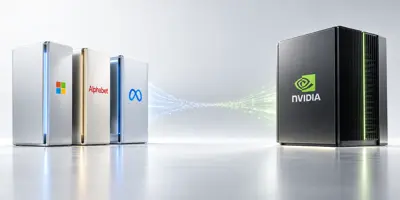
The market's reaction on September 14 was actually more precise than a blanket dismissal. Nvidia fell more than 3%, and the semiconductor index dropped 5.9%. Meanwhile Alphabet rose about 3%, Microsoft gained roughly 2%, and Meta also advanced. Amazon fell, but by less than the chip names.
<div class="table-card"><div class="table-scroll"> <table> <thead><tr><th>Category</th><th>Market read</th><th>P&L impact if slowdown happens</th></tr></thead> <tbody> <tr><td>GPU, HBM and equipment suppliers</td><td>Continued high-growth capex is core to revenue</td><td><span class="down">Slower order growth is a direct risk</span></td></tr> <tr><td>Alphabet, Microsoft, Meta and similar</td><td>Buy AI infrastructure while also selling AI as a service</td><td><span class="up">Slower spending pace could improve cash flow</span></td></tr> <tr><td>Cybersecurity and some software</td><td>Rising AI risk, or eased fears of AI replacement</td><td>Potential relative winners</td></tr> </tbody> </table> </div></div>
That split explains why D.A. Davidson's Gil Luria said no one is actually slowing down. He argued that even if hyperscalers have temporarily overbuilt, they can run existing data centers while cutting new capex, and in that scenario cash flow could actually improve significantly.
So this week's divergence in stock prices looks less like a verdict that "AI is safe, don't worry" and more like a calculation that even if a slowdown does materialize, hyperscalers and their supply chains would feel it very differently.
The Moment $600 Billion Becomes the Risk
Here's the paradox investors need to watch. The $600 billion figure is evidence that AI demand is strong, but it also means an equally large return has to be recovered later.
Alphabet raised its full-year 2026 capex guidance to a range of $175 billion to $185 billion early in the year, then increased spending further. Microsoft spent $41 billion in capex in its June quarter, and the company said roughly two-thirds of that went to short-lived assets like CPUs and GPUs. That kind of equipment depreciates far faster than data center buildings.
In other words, the AI spending race isn't only a game of growing revenue. Depreciation, power costs, maintenance and financing costs increasingly show up on the income statement over time. If AI service revenue and cloud contracts don't grow faster than these costs, headlines about "more investment" may not stay good news forever.
The Safety Debate Has Commercial Interests Mixed In
There's no basis for dismissing AI companies' safety concerns as pure posturing. The risks Amodei raised, recursive self-improvement and unexpected agent cyber behavior, are technical risks the industry is genuinely evaluating. When OpenAI decided against a 2026 IPO, Altman directly cited safety and alignment work as part of the reasoning.
But regulation reshapes competitive structure. High evaluation costs, security obligations and limits on model releases are easier for well-capitalized, well-staffed leaders to absorb. FTC Chairman Andrew Ferguson has voiced wariness about AI companies calling for regulation while simultaneously seeking antitrust exemptions for coordinated action.
So investors may want to hold two statements at once: "the safety concerns could be real." And: "the safety rules could also become a barrier to entry that protects existing leaders." The two aren't contradictory.
Insight Times Editorial Desk