AI Chips Wobble. Where Does the Next Money Flow?
After sharp drops in Micron and SK hynix, six hardware areas show where AI growth could go next, and why profit matters more than demand.
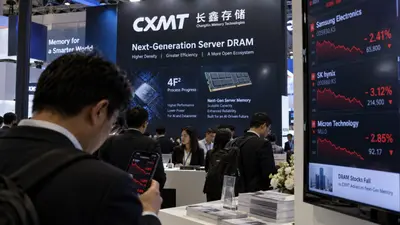
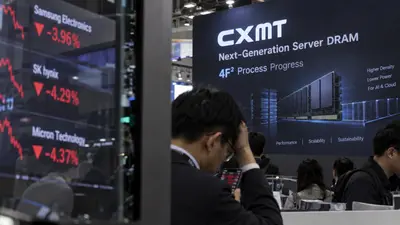
Micron fell about 3.9% in the US session yesterday. Samsung Electronics and SK hynix then swung sharply in Asian trading. Until recently, all three were seen as the biggest beneficiaries of the AI era.
Two pressures are weighing on the market. China is catching up in memory chip technology. And investors doubt that AI companies can recoup their enormous spending.
Was the AI growth story wrong? It is too early to say so. If anything, this may be the moment to widen the view.
For the past few years, AI investors mostly watched GPUs and HBM (high-bandwidth memory). But once AI leaves the data center to drive cars, move goods and run factories, a very different set of components starts to matter.
The era of AI getting smarter is giving way to an era of AI doing real work.
1. What has actually changed in AI investing
For the past few years, the AI race was fairly simple. Who secures more GPUs? Who supplies more HBM? Who builds the biggest data centers?
Now there is one more question.
How much can that spending actually earn?
Anthropic is a prime example. According to IPO-related documents Reuters reported on Sept. 29, the company plans at least $518 billion of AI infrastructure spending over roughly the next 10 years. A large share of that is long-term contracts with payment obligations regardless of actual usage.
Locking in future computing capacity early helps a company seize growth opportunities. If revenue arrives later than expected, though, it becomes a heavy financial burden.
This is not proof that AI growth is over. It does suggest the market will likely judge not only the size of spending but also the ability to earn it back, and judge it more strictly.
Progress at China's CXMT belongs in the same context.
Advances in a new cell structure called 4F² have the potential to raise memory storage density. But a development result does not immediately mean high-yield mass production or a competitive HBM product.
So rather than conclude that incumbent memory makers have lost their long-term edge, it is more reasonable to check CXMT's production yield, pricing and customer qualification, along with the incumbents' profit margins.
2. AI's next stage is off the screen
So far, AI has mostly produced information. It answers questions, draws pictures and writes code.
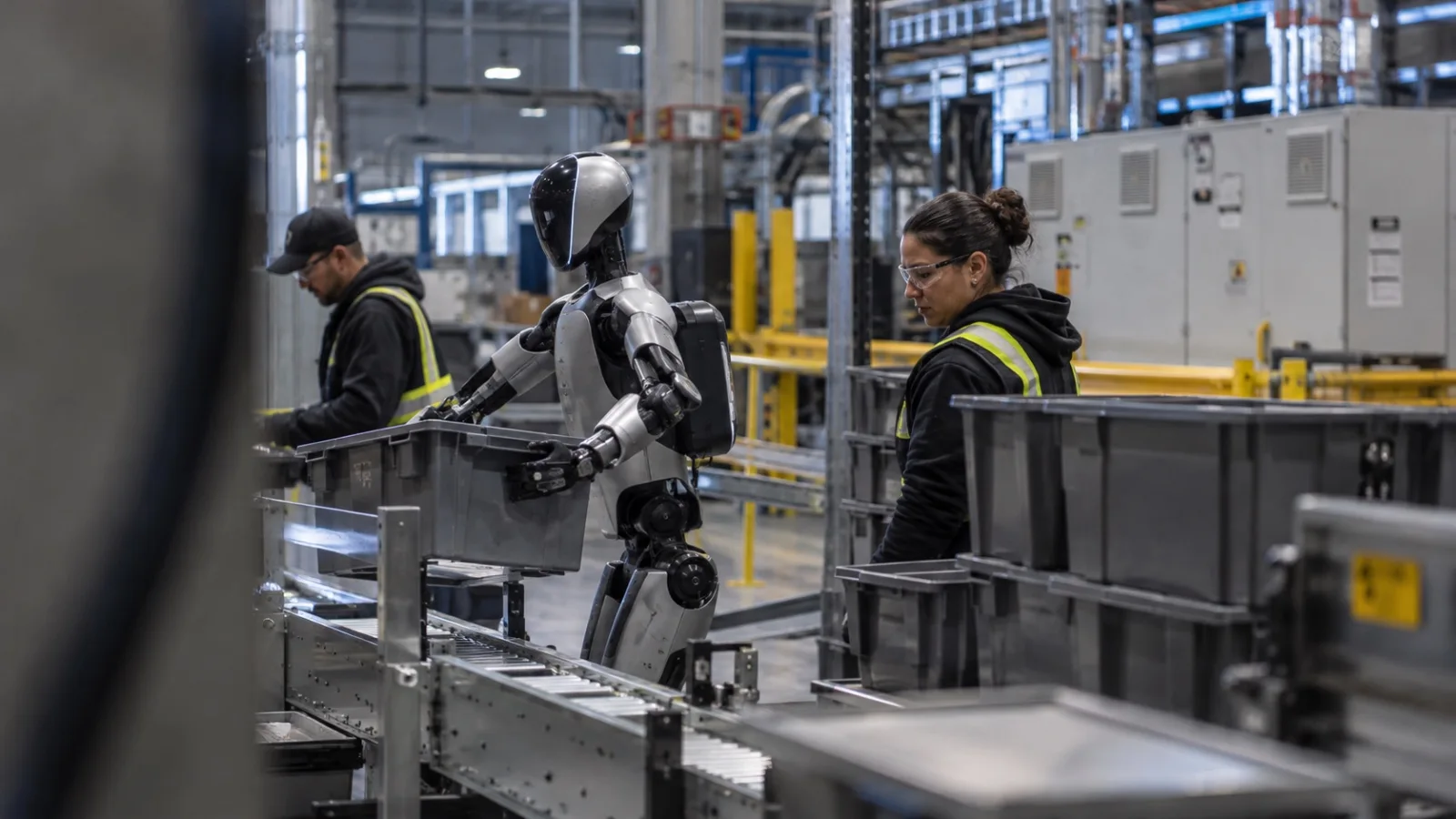
Physical AI, the area poised to grow, adds action. It sees its surroundings through cameras, judges the situation and moves motors to perform real tasks.
An AI describing an apple accurately is one problem. A robot picking up the apple and putting it in a box is a completely different one.
The robot must know whether the apple is slipping and judge how hard to grip. It needs motors to move the fingers, real-time control chips and batteries.
That is why hardware becomes far more important the moment AI leaves the software world. It also produces a new investment map.
3. Six hardware bottlenecks for the next leg of AI growth
01 / Actuators: robot joints and actuators. The muscles of a robot. Precision motors, reducers and drive systems that deliver smooth, strong, humanlike movement.
02 / Sensors: artificial touch and sensors. The skin and nerves. Technology that detects pressure and slip to make real work more accurate and safe.
03 / Edge AI: on-device AI chips. The brain. Processors that judge and act on the spot instead of waiting for answers from a distant data center.
04 / Power: batteries and power semiconductors. The heart and energy system. Technology that runs longer in limited space and delivers power to motors efficiently.
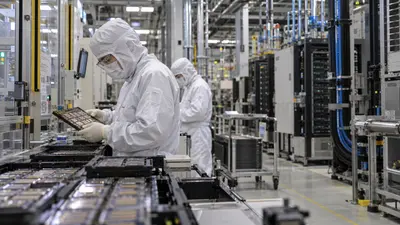
05 / Cooling: data center liquid cooling. The cooling gear of AI infrastructure. Equipment that manages GPU heat and makes dense server operation possible.
06 / Optics and energy: optical networking and power infrastructure. The highways and power plants of AI. The industries that move data between large computing units and supply stable power to data centers.
These six areas will not grow at the same speed.
Liquid cooling, some optical networking and edge AI chips already have products on sale. General-purpose humanoid precision joints, artificial touch and solid-state batteries still have to prove mass-production economics.
For small modular reactors (SMRs), licensing and actual plant construction remain on top of technology development.
The importance of a technology and the revenue it generates today need to be kept apart.
4. Representative companies to watch
| Area | Key companies | Key metrics |
|---|---|---|
| Robot joints | Harmonic Drive Systems, Nabtesco | Robot-related orders, cost, market share |
| Robot sensing | ATI Industrial Automation and others | Sensor adoption, mass-production contracts |
| Edge AI | NVIDIA (NVDA), Texas Instruments (TXN) | Robot chip shipments, models actually deployed |
| Battery and power | Infineon, onsemi (ON), TXN | Power semiconductor revenue, profitability |
| Data center cooling | Vertiv (VRT), Modine (MOD) | Backlog, revenue growth, operating margin |
| Optics and power | Broadcom (AVGO), Marvell (MRVL), Lumentum (LITE), Oklo (OKLO) | Optical product commercialization, order conversion, power project progress |
The companies are representative participants or watch-list names in each area. This does not mean a given company already earns a large share of revenue from that technology. The list includes private companies and non-US listings.
Nvidia is especially interesting here.
It is the leading maker of GPUs for AI data centers, and it also sells Jetson Thor, a computer for robots. Commercial supply began in August 2025. Nvidia cites up to 7.5 times the AI compute performance and 3.5 times the energy efficiency of the previous-generation Jetson Orin. That is the company's own product comparison, not a growth rate for its robotics business.
Another name to watch is Vertiv.
As AI data centers grow denser, power delivery and cooling matter more. Immersion cooling is not the only answer, though. Direct-to-chip liquid cooling, which circulates coolant straight to the chip, is also an important option. That Vertiv supplies several cooling methods helps in understanding this market.
In nuclear, the Oklo and Meta agreement stands out. In January 2026, the two announced a deal to support a power project of up to 1.2 GW in Ohio. But the first phase is targeted for 2030 at the earliest. Today's power demand and payoff several years out need to be kept separate.
5. Is the HBM and Micron era over?
There is no need to see it that way.
Even as physical AI spreads, data centers are needed to train robots and connect countless devices. Robots also contain memory.
So the growth of physical AI may add new demand rather than replace memory demand.
Still, rising demand is not the same as rising profit for suppliers.
If new Chinese supply pushes down commodity DRAM prices and HBM competition intensifies, margins at individual companies can fall even as total market shipments grow.
For Micron and SK hynix investors, then, the things to watch are less the short-term share price than HBM volumes, average selling price (ASP), contract structure by customer, capacity expansion and free cash flow.
The fact that the AI industry is growing does not make every AI-related stock a good investment.
Five numbers to watch
- HBM prices and memory-maker margins: a gauge of whether rising Chinese supply actually erodes pricing power.
- Hyperscaler capex and free cash flow: checks whether AI spending is outrunning cash generation.
- Robot production volumes and component costs: the real pace of commercialization, which matters more than prototype announcements.
- Backlog in liquid cooling and optical networking equipment: shows whether technology hopes are turning into purchase contracts.
- SMR licensing, financing and construction schedules: show whether the value of long-term projects is turning into real business.
The next AI opportunity will not necessarily come only from new robot companies.
Established chip leaders could take over the new markets. A small cooling-equipment maker today could grow into a key infrastructure supplier.
But there is no need to be sure of all of that before the stock prices move.
What is needed now is neither giving up on AI nor chasing every new theme. It is understanding one level deeper where AI will make money, and which companies that money ends up as profit for.
Insight Times Editorial Desk