Micron Is Down 18% From Its June High. Is the AI Memory Supercycle Over?
Micron posted $54.2 billion in quarterly revenue, yet the stock sits about 18% below its June peak. Memory stocks have often weakened first when earnings were best. The question is whether long-term contracts and AI demand change that pattern.

Earnings exploded, but the stock doubts the future
Micron's fiscal fourth-quarter 2026 revenue was $54.23 billion, and non-GAAP earnings per share were $33.42. Guidance for next quarter's revenue is $61.5 billion. Judging by the results alone, there is little evidence that growth has slowed.
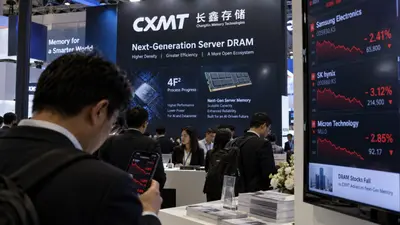
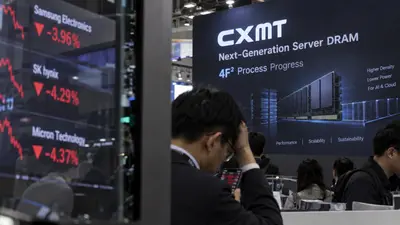
Yet the stock is down about 18% from its June high. The reason is an old feature of the memory industry.
When memory prices rise, companies expand production. Once added output outruns demand, prices and profits fall together. That is why a memory stock can weaken even as the company reports its best results ever.
This time, some investors expect AI to change that formula. But strong AI demand and the disappearance of the memory cycle are two very different things.
Two assumptions hidden in a $3,000 price target
Gil Luria of D.A. Davidson raised his Micron price target to $3,000 from $2,100.
The target applies a 19x price-to-earnings multiple to expected fiscal 2027 EPS of about $158. What matters is not only the earnings forecast. The target also assumes the market will pay a higher multiple for those earnings.
| P/E depends on which EPS you use | Calculation | Result |
|---|---|---|
| Fiscal 2026 actual adjusted EPS | $1,030 share price ÷ $75.52 EPS | 13.6x |
| Fiscal 2027 expected EPS | $1,030 share price ÷ about $158 EPS | 6.5x |
The 2027 EPS figure is a forecast that has not yet been realized.
The argument that Micron is cheap at around 6x earnings rests on the premise that profits will rise sharply from here.
The $3,000 scenario works only if memory prices stay high, long-term contracts protect profits, and the market grants a higher multiple than it has in the past.
The reasons the stock looks cheap and the risk of being too optimistic about future earnings have to be weighed together.
A bigger structural change than HBM: long-term contracts
Micron has signed 26 strategic customer agreements (SCAs). According to earnings coverage summarizing the company's description, the agreements are estimated to cover more than 35% of expected revenue through 2030. About 75% of contracted revenue is subject to a pricing framework that includes price floors and ceilings.
In the past, shifts in supply and demand swung memory prices and company profits sharply. When major customers negotiate volume and price terms over long periods, a company's revenue visibility can improve.
A contract does not eliminate downturns, of course. Investors still need to check how much of manufacturing cost the price floors actually protect, and how firm the contracted volumes are.
What matters more than the number of contracts is the size of the profit those contracts protect.
AI memory is more than HBM
HBM: the workbench next to the GPU. High-bandwidth memory supports ultra-fast computation and directly affects AI accelerator performance.
Server DRAM: the larger workroom. The infrastructure behind data processing and system memory capacity in AI servers.
Data center SSD: the warehouse for fast retrieval. High-performance storage whose demand now extends to AI data and part of KV cache storage.
Micron announced customer shipments of high-capacity DDR5, server LPDDR SOCAMM, and high-performance SSDs aimed at KV cache use.
Fourth-quarter data center SSD revenue was about $10 billion, more than two-thirds of total NAND revenue. That is evidence AI spending is lifting demand across memory and storage, not just HBM.
Still, rising demand does not always guarantee high margins. The pace at which AI infrastructure usage grows has to be watched alongside the pace at which memory supply capacity grows.
An 87% margin: how long can it last?
Micron's fourth-quarter non-GAAP gross margin was 87%. The cloud memory unit posted 83%, core data center 90%, and mobile and client 90%.
That shows high profitability was not limited to HBM. Price increases across the market, including commodity DRAM and NAND, likely played a large part.
Profits earned through product competitiveness are relatively more likely to last. Excess profits caused by supply shortages may shrink once capacity is added.
Micron also plans to begin wafer production at its new Idaho fab in mid-2027. First output is not the same as volume supply with sufficient yields, but the current shortage should not be assumed to be permanent.
Cash quality matters more than earnings
In fiscal 2026, Micron's operating cash flow was $89.68 billion and adjusted free cash flow was $62.31 billion.
Adjusted free cash flow, however, is calculated after subtracting net capital expenditure, which reflects items such as government incentives. Deposits received under customer contracts are classified separately in financing activities. They should not be confused with operating income or free cash flow already earned.
The real test of cash generation is whether operating cash flow holds up as investment grows, and whether the company can carry that investment burden without government support.
What to watch
| Indicator | Conditions that strengthen the bull case | Warning signs |
|---|---|---|
| Long-term contracts | Wider price protection | More contracts, but unclear profit protection |
| HBM | Adoption of next-generation products, margins held | Higher sales, falling margins |
| DRAM and NAND | Shipments and ASPs stable together | ASPs fall as supply grows |
| Capital spending | High FCF even after expansion | Heavier investment burden, falling cash |
| Valuation | EPS forecasts hold, earnings stability improves | EPS cuts and a lower P/E at the same time |
FAQ
Is the 18% drop a buying opportunity?
- The drop from the peak alone is not enough to call the stock undervalued.
- The likelihood that expected EPS is realized, and the timing of the next supply increase, should be reviewed together.
Do long-term contracts end memory downturns?
- Contracts ease uncertainty over price and volume.
- Revenue outside contracts, rising costs and price renegotiation remain risks.
Is a $3,000 price target realistic?
- It is one analyst's bull case.
- It requires high expected EPS and a higher multiple at the same time, and it is not a confirmed future price.
What would be the first sign the AI memory boom is ending?
- Falling average selling prices for DRAM and NAND even as shipments rise.
- Caution would grow if rising customer inventory, higher output from new fabs and lower earnings guidance came together.
Micron's next leg higher will not be decided by this quarter's striking results alone.
Evidence has to build that Micron can earn more than it did in the past even on a day when memory prices fall again. The true value of this supercycle will be confirmed not at the height of the boom but at the bottom of the downturn.
Insight Times Editorial Desk