Memory Is Making Record Profits. So Why Are the Stocks Falling?
Samsung Electronics and SK hynix are caught in a fight over how long the earnings last. Cash flow is strong, but the market is already discounting the next downcycle.
Shares are weak, but the business is still strong
On Oct. 7, Samsung Electronics closed at 268,500 won and SK hynix at 1,723,000 won. Samsung is about 25% below its June high. SK hynix is about 42% below its 52-week high of 2,987,000 won. Meanwhile, the Nasdaq is holding near record highs, and money is flowing back into AI software and platform companies.
Weak earnings do not explain the gap. The consensus for Samsung's third-quarter operating profit, as compiled by Reuters, is about 106.1 trillion won. Micron reported fiscal fourth-quarter revenue of $54.23 billion, GAAP operating income of $43.75 billion and an operating margin of 80.7%. Its guidance for next-quarter revenue is around $61.5 billion.
Key figures
- Samsung Electronics: 106.1 trillion won, the market estimate for third-quarter 2026 operating profit
- Micron FQ4: 80.7% GAAP operating margin
- Micron remaining performance obligations: $150 billion, tied to long-term contracts
What is different about this cycle
The biggest change is contract length. Micron's customer commitments tied to strategic customer agreements rose from $22 billion in June to $32 billion. Remaining performance obligations grew from $100 billion to $150 billion. Some contracts run through 2031. That suggests memory makers have longer revenue visibility than in the past, when they were exposed mainly to quarterly spot prices.
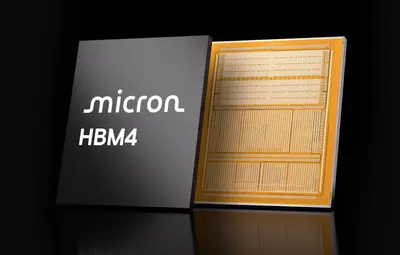
The supply bottleneck is also structural. HBM uses roughly three times the wafer area of standard DRAM. Samsung expects HBM to rise from about 20% of total DRAM wafer capacity now to about 30% in 2027. The more HBM gets built, the less standard DRAM is supplied, and that wafer cannibalization continues.
TrendForce says DRAM supply is likely to stay tight in 2027, and that new fabs may not contribute meaningfully until 2028. That makes it hard to argue the current profits rest on a price spike lasting one or two quarters.
So why are Korean memory stocks lagging?
1. The market buys next year's price
Cyclical stocks react more to the direction of future earnings than to current profit. As earnings surge, the price-to-earnings ratio can actually fall, because investors treat the figure as peak earnings before normalization. That is why memory stocks often set their highs and lows months ahead of earnings reports.
2. AI money is shifting from components to platforms
AI infrastructure spending by big US tech companies remains enormous in 2026. Reuters reported that major hyperscalers, including Amazon and Alphabet, are on track to spend more than $730 billion this year. But the stock market has moved from asking who spends the most to asking who recovers that spending as service revenue and cash flow. In that process, platform companies may keep higher multiples than memory makers.
3. SK hynix's ADR improved access, but it is not the sole cause of weakness
SK hynix listed ADRs on the Nasdaq on July 10. US investors do have easier access. But there is little basis to say the ADR premium or trading convenience directly pressured the home-market shares. A more reasonable reading is that rising long-term yields, foreign flows, worries that memory has peaked and valuation normalization all worked at once.
A low P/E is not enough
The most dangerous sentence in a memory upcycle is "the P/E is 4, so it's cheap." At peak profit, EPS, the denominator, is abnormally large. The moment the P/E looks lowest may not be the safest moment for the stock.
Book value per share, price-to-book, ROE and free cash flow should be read together. If excess profit actually builds up as cash and equity this cycle, and capex does not balloon as it has in the past, the floor for price-to-book could keep rising. That is the question that separates the start of a familiar downcycle from a mid-cycle re-rating.
Insight Times Editorial Desk