With the 10-Year Near 5.3%, AI Memory Stocks Hinge on Earnings Speed
High rates raise the discount rate on every growth stock. For SK hynix and Samsung, the question is whether HBM and server memory profits grow faster than that hurdle.
Two forces are working on the market at once
On Sept. 29, the US 10-year Treasury yield rose as high as 5.278% intraday. Higher yields cut the present value of future earnings and raise the cost of capital. That hurts technology stocks most, especially those whose distant growth is already priced in.
But AI memory companies are easy to misread if you treat them only as long-duration growth stocks. This is a phase in which earnings estimates themselves are rising quickly.
A stock price is roughly a function of future earnings divided by the discount rate. High rates enlarge the denominator. If prices and shipments of HBM and server memory rise together, the numerator can grow faster, and shares can hold up despite high yields.
So the key to AI chip investing is less the absolute level of rates than the speed of earnings growth and how long it lasts.
A more useful distinction than $40 trillion in debt
US national debt has passed $40 trillion, which weighs on long-term yields. More Treasury issuance, and a market demanding higher yields, push up the discount rate on risk assets.
Still, lumping government finances together with the finances of the US private sector distorts the picture. According to the Federal Reserve, net worth of US households and nonprofits rose to $195.9 trillion in the second quarter of 2026. The government carries heavy debt, but households and cash-rich Big Tech have not run dry at the same time.
That difference matters in the race to build AI data centers. High rates can be punishing for companies that depend on borrowing. For large platform companies that fund spending from huge operating cash flow, the barrier to entry may actually rise.
High rates are therefore less likely to kill AI spending across the board than to widen the gap between companies that generate their own cash and those that need outside funding.
Why this memory cycle differs from past ones
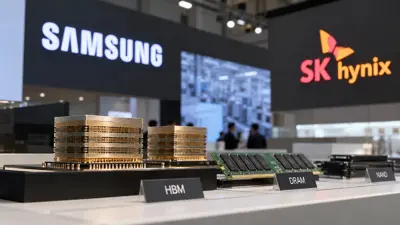
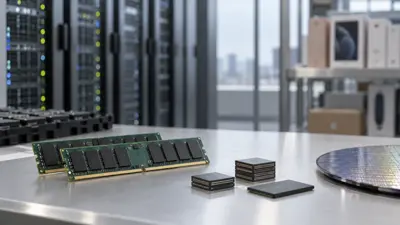
An AI data center does not just buy GPUs. If the GPU is the compute engine, HBM (high-bandwidth memory) is the memory beside it that feeds it data at very high speed. As AI servers multiply, they also need server DRAM, enterprise SSDs, advanced packaging, networking and power equipment.
One change stands out in this cycle: HBM shares production capacity with commodity DRAM. Samsung Electronics expects HBM to account for nearly 30% of global DRAM wafer capacity in 2027, up from about 20% now.
That figure means more than HBM growth alone. Assigning wafers and cleanroom space to HBM can limit the growth in commodity DRAM supply. AI may not only lift HBM prices. It could also tighten the supply structure of memory as a whole, including server DRAM.
This is the most important structural difference in the current "AI memory supercycle."
SK hynix and Samsung: same chips, different investment logic
SK hynix is the company most directly exposed to AI memory demand. The more it defends its HBM lead and expands supply of next-generation HBM4, the more likely its product mix and margins are to improve. UBS estimates SK hynix could win about 70% of HBM4 for Nvidia's Rubin platform in 2026. That is a brokerage estimate, not a confirmed order disclosed by the company.
SK hynix's risks are also clear. Expectations are so high that good results alone may not be enough. What matters more is whether HBM pricing, customer concentration, the pace of supply expansion and free cash flow keep beating the market's expectations.
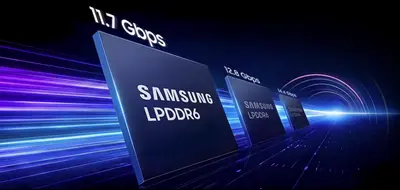
Samsung needs a different frame. It formally announced HBM4 mass production and commercial shipments in February 2026, and in May began shipping HBM4E samples to major customers. The question is no longer whether it can make HBM4. It is how much it sells and what margin it earns.
Samsung expects HBM sales in 2026 to be more than triple those of 2025. Add commodity DRAM and NAND conditions and narrowing foundry losses, and earnings leverage could grow. If rising HBM sales do not translate into better profitability in the memory business, the pace of any re-rating may be limited.
Why the recent selloff is not necessarily the end of AI
On Sept. 28, Samsung fell 5.43% and SK hynix fell 5.05%. Higher US long-term yields, oil price worries and profit-taking hit at once.
The move looks less like proof that AI demand has vanished than a demonstration of how hard a discount-rate shock can hit a market with high valuations and high expectations. Korea's semiconductor exports in September rose 259.4% from a year earlier over the first 20 days, and economists surveyed by Reuters pointed to AI hyperscaler spending as a main driver.
The market's question is no longer whether AI uses a lot of memory. It is whether AI will use more, and for longer, than already high expectations assume.
Conclusion
Investing in AI chips is less a bet on the direction of rates than on the rate of change in earnings.
The US national debt and long-term yields above 5% are a clear burden. But if AI data center spending lifts HBM and server memory shipments, prices and margins faster, strong memory companies can offset a high discount rate with results.
Investors need only three questions. Is Big Tech's AI spending continuing? Is that spending turning into actual orders for HBM and server memory? And are those orders raising the operating margins and free cash flow of Samsung and SK hynix?
If all three answers stay close to yes, a pullback may be not the end of the supercycle but high expectations being tested by results. If two or more start to turn, trust the numbers before the "AI" label.
Insight Times Editorial Desk