Samsung, SK Hynix Q3 Profit Forecast Nears 190 Trillion Won. The Real Story Isn't HBM Alone
Analyst estimates put combined Samsung Electronics and SK hynix Q3 operating profit near 189.9 trillion won. The bigger shift is that AI demand is now tightening supply and lifting prices across server DRAM and NAND, not just HBM.
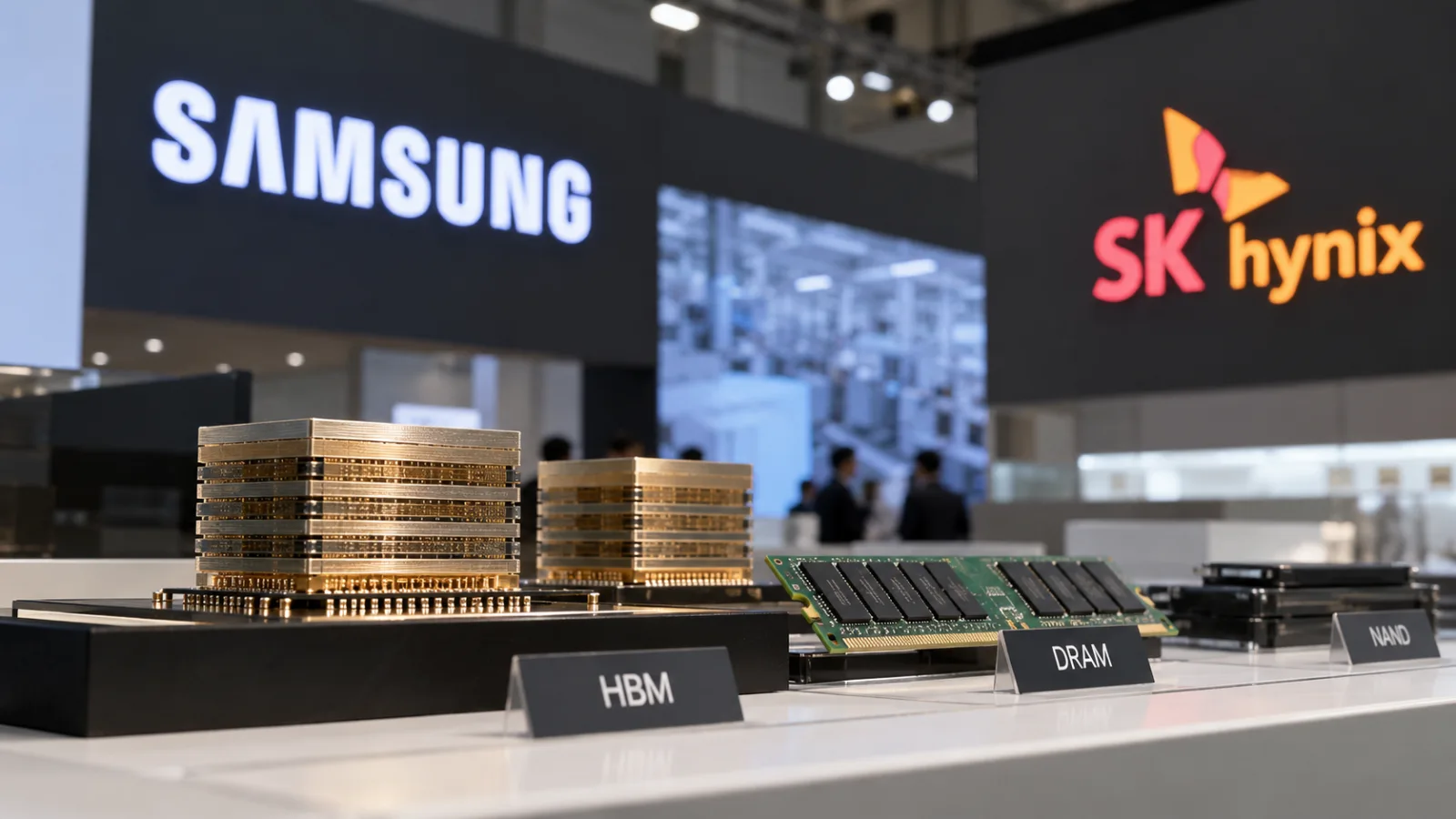
First, what that 189.9 trillion won figure actually means
As of September 21, financial data provider FnGuide's consensus put Samsung Electronics' third-quarter operating profit at 111.7 trillion won and SK hynix's at 78.1 trillion won. Combined, that is 189.9 trillion won.
This is a forecast, not a reported result. The estimate has actually come down from just days earlier, with a stronger won cited as the main reason. In other words, the memory boom underneath these numbers is genuinely strong, but what stock prices are pricing in isn't "current profit." It's how long this elevated level of profit can be sustained.
This supercycle started with HBM, then spread to ordinary memory
HBM stacks multiple DRAM dies vertically to deliver very high bandwidth to GPUs and AI accelerators. The catch is that HBM consumes more wafer capacity and equipment time per chip, and its back-end packaging is more complex. When manufacturers prioritize capacity for high-margin HBM and server products, supply of general-purpose DRAM for PCs and smartphones naturally tightens.
TrendForce projected third-quarter server DRAM contract prices would rise 13% to 18% from the prior quarter, with overall NAND flash contract prices up 10% to 15%. Global DRAM industry revenue jumped 59.5% quarter over quarter in the second quarter. AI demand is simultaneously expanding revenue from high-value products and squeezing supply of everything else.
A more recent fourth-quarter outlook from TrendForce, dated September 24, shows the trend hasn't reversed. TrendForce expects cloud service providers' AI demand to keep supporting both DRAM and NAND prices, with growing demand for KV cache in AI inference pushing enterprise SSD contract prices up 23% to 28% and overall NAND up 15% to 20%. Based on the data available now, it's too early to call the third quarter the peak of this memory profit cycle.
Same boom, different playbooks for Samsung and SK hynix
SK hynix remains the top player in HBM. According to Counterpoint Research, in the second quarter of 2026, HBM revenue share stood at SK hynix 50%, Samsung Electronics 33%, and Micron 18%. What matters is that Samsung's share jumped from 21% just one quarter earlier to 33%.
The picture looks different across all of DRAM. In TrendForce's tally, Samsung led second-quarter DRAM revenue with $60.98 billion, a 39.4% share, while SK hynix posted $38.59 billion and 24.9%. Samsung is benefiting from both expanding HBM4 shipments and rising general-purpose DRAM prices at the same time. SK hynix, with a higher share of revenue coming from HBM, is more sensitive to swings in the AI memory cycle.
| Samsung Electronics | SK hynix | |
|---|---|---|
| Core leverage | Massive general-purpose DRAM/NAND production base + recovering HBM4 share | Leading position in HBM + supply track record with AI accelerator customers |
| Recent signal | 33% HBM revenue share in Q2 2026, 39.4% overall DRAM revenue share | 50% HBM revenue share in Q2 2026, still the industry leader |
| Favorable scenario | HBM4 expansion and strong general-purpose memory pricing continue together | HBM shipments and high-value product mix keep expanding |
| Key risk | HBM yield/customer qualification issues, foundry losses, general-purpose memory prices peaking | HBM share erosion, high earnings sensitivity if AI capex slows |
CXMT is less a threat to HBM than a ceiling on ordinary memory
China's CXMT isn't shaking up the top ranks of HBM right now. Its more immediate impact is on general-purpose DRAM. CXMT announced on September 20 that it has moved into mass production of a fifth-generation DRAM platform, disclosing process geometry around 11.95 nanometers and an expanded lineup of LPDDR5X products.
This matters because the more Samsung and SK hynix shift capacity toward HBM, the more of a supply gap opens up in general-purpose DRAM, and Chinese suppliers can fill part of that gap. So a long memory supercycle doesn't mean every product category keeps the same pricing power. HBM has high barriers to entry, while Chinese supply could cap how far general-purpose DRAM prices can rise.
The first brake is already visible: currency
Memory makers generate most of their revenue in dollars. When the Korean won strengthens, the same dollar revenue translates into smaller reported profit in won terms. In a September 17 tally, Samsung Electronics' and SK hynix's third-quarter operating profit consensus had already fallen 7.5% and 6.5%, respectively, from a month earlier.
Nomura estimated that a 10% appreciation in the won could cut domestic memory makers' operating profit by roughly 12%. SK hynix's own half-year report disclosed a sensitivity showing that, all else equal, a 10% decline in the won-dollar exchange rate would reduce pre-tax income by about 4.75 trillion won. Even if memory prices keep climbing, a currency move in the opposite direction can flatten the slope of won-denominated profit growth.
Insight Times Editorial Desk