As HBM Runs Short, Memory Fabs Start Moving to the US
SK hynix and Intel are discussing memory production cooperation in the United States. No contract has been signed and no product has been chosen yet. But the early talks matter for a bigger reason: AI is starting to rewrite the chip industry's old rule of "build where it's cheapest" into "build where supply won't break."
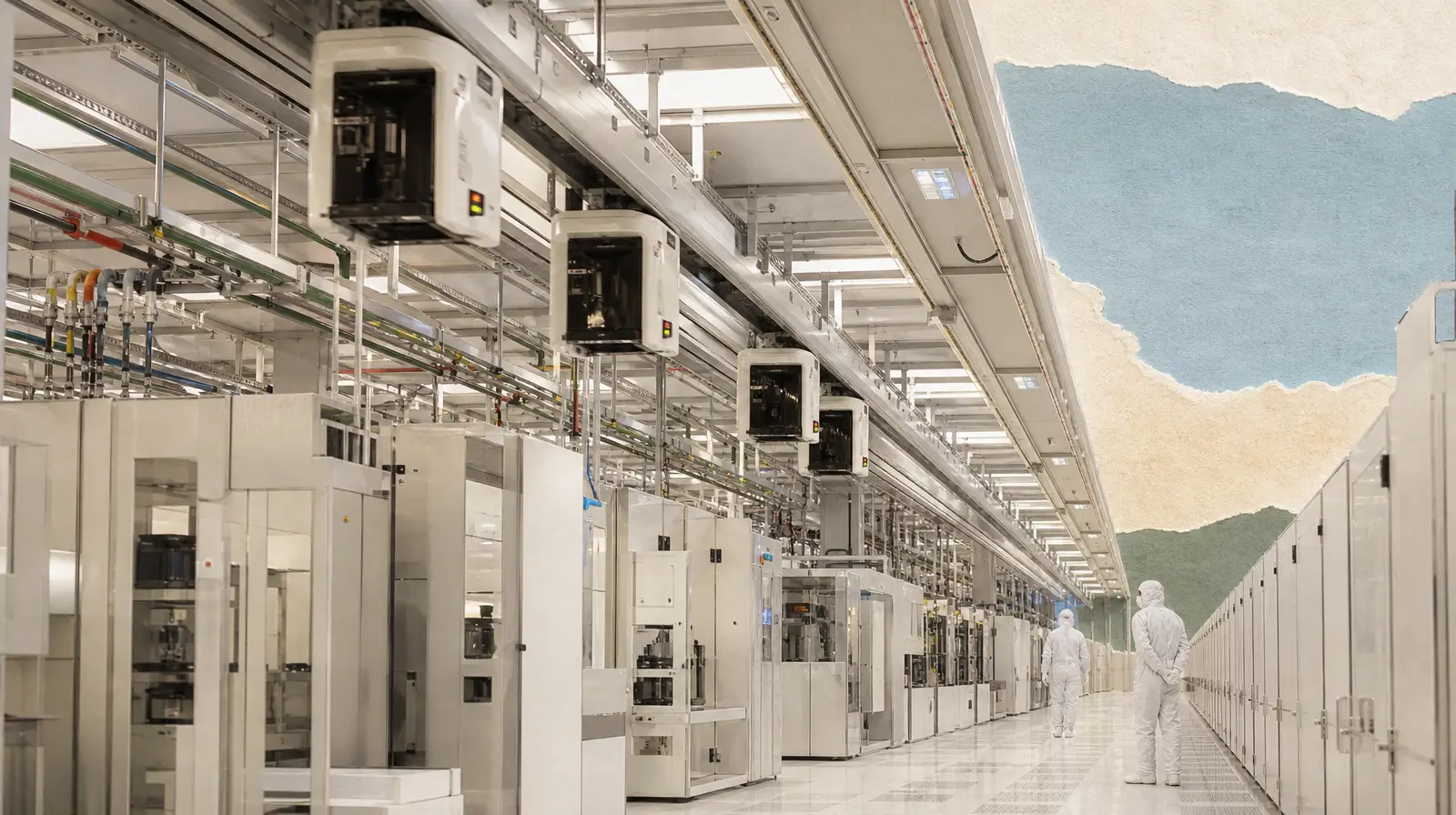
The 30-year formula that made chipmaking efficient is starting to crack
For decades, the semiconductor industry was globalization's star pupil. Design stayed in the United States. Equipment came from the US, Europe and Japan. Advanced manufacturing went to South Korea and Taiwan. Assembly and testing were spread across several countries in Asia. The logic was simple: put each step wherever it could be done best and cheapest.
AI is adding a new line item to that math. Companies now have to weigh not just production cost but supply chain resilience, national security, export controls, distance from customers, and the opportunity cost of a supply disruption.
<div class="flow"> <div>Old formula: lowest production cost -> maximum efficiency</div> <div class="arrow">-></div> <div>AI era: production cost + supply resilience + regulatory risk + customer access -> total supply value</div> </div>
This shift is not a story about US production becoming cheaper. If anything, the opposite is more likely. Reuters has noted that production costs in the US could run higher. The real question is the moment at which the cost of a supply disruption outweighs that extra expense.
The first distinction this news requires
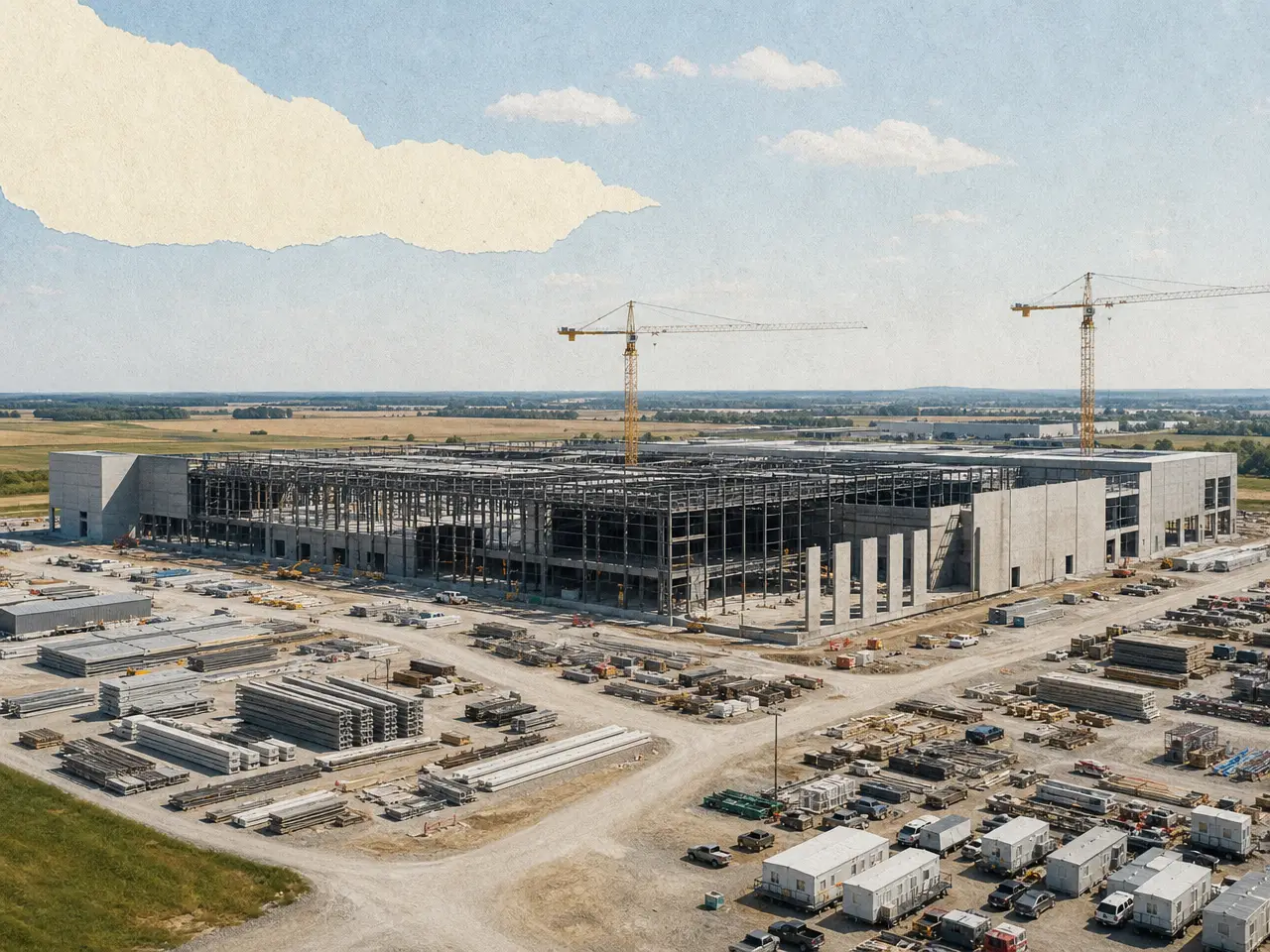
Reuters reported on September 16, citing multiple people familiar with the matter, that SK hynix and Intel are discussing ways to produce memory chips in the United States. The option getting the most attention is leasing part of Intel's Ohio facility, with a joint structure also under discussion that could bring in Intel, SK hynix and a large cloud customer seeking stable memory supply.
But the talks are at an early stage. SK hynix says it is reviewing several production-site options to strengthen its competitiveness, but nothing has been decided. More importantly, which memory product would be made there has not been determined either. Whether it turns out to be HBM, commodity DRAM or NAND would change the meaning of the investment and the equipment requirements considerably.
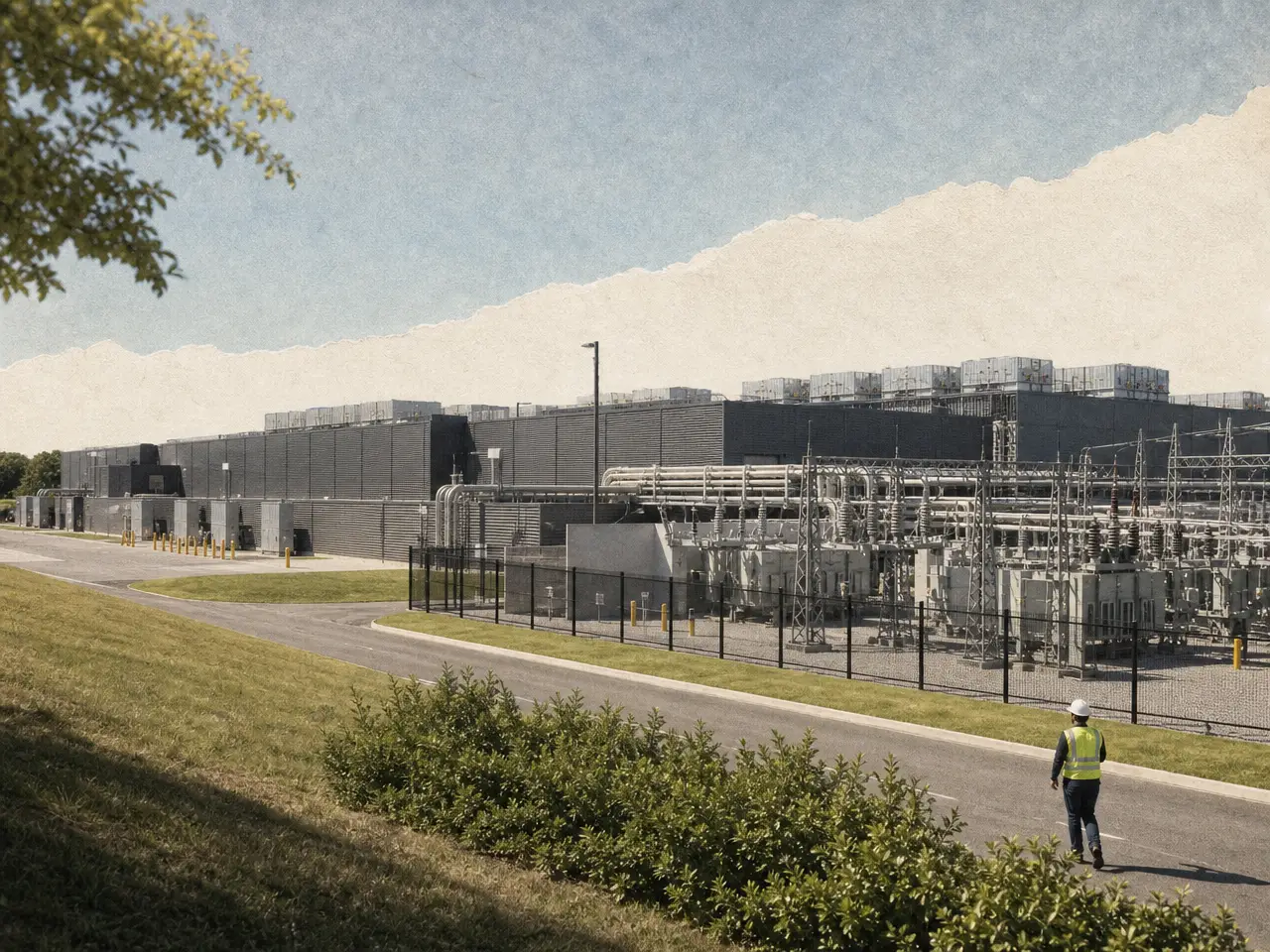
<div class="signal"> <div class="label">FACT BOUNDARY</div> <p>What SK hynix denied in July was an "acquisition of Intel's Ohio site and fab." The new report on September 16 is about "production cooperation discussions, including a lease or a joint venture." Those are not the same transaction.</p>
</div>
The 6-K SK hynix filed with the US SEC on July 22 makes that difference clear. At the time, the company said it was "not pursuing or has not decided to pursue" an acquisition, in response to reports that it planned to buy Intel's Ohio land and manufacturing facility. Reading that filing as a denial of today's lease or joint-venture possibility stretches its scope further than the company actually said.
This is also different from the HBM site SK hynix is already building in the US
SK hynix is already building an HBM site in West Lafayette, Indiana, with an investment of more than $4 billion. The company held a groundbreaking ceremony in August 2026 and has described the site as its US production base for next-generation HBM.
But the center of that project is advanced packaging. HBM stacks multiple DRAM dies vertically so they can be paired efficiently with a GPU, which makes packaging the core process for that product. That is a different role from a front-end fab that produces DRAM wafers from scratch.
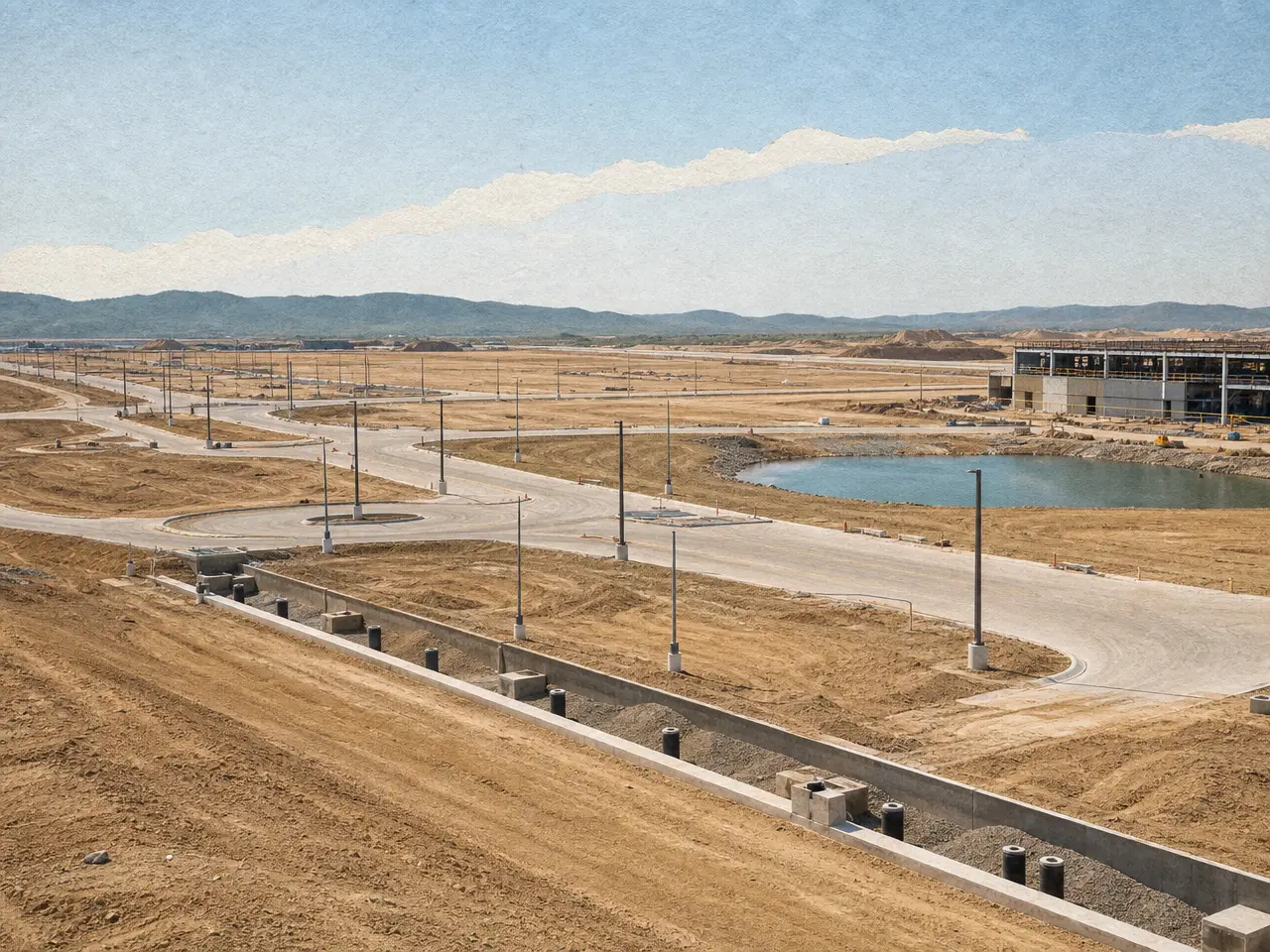
That is why the Ohio discussions would carry more weight if they turn into actual front-end memory production. It could mark a step beyond "packaging HBM in the US" toward "making the memory die itself in the US," a deeper reshaping of the supply chain. For now, neither the product nor the process has been confirmed.
Why HBM commands a bigger resilience premium than ordinary memory
HBM is becoming a different kind of product from traditional commodity memory. It is no longer a case of a memory maker producing chips and releasing them into the market. HBM has to be matched to a specific AI accelerator's performance, power and thermal characteristics, tied into advanced packaging processes, and qualified by the customer, all of which takes time.
That is why HBM's economics are hard to reduce to the price of a single chip. If an HBM shortage delays shipment of a GPU worth tens of thousands of dollars, or holds up installation of an AI server rack worth millions, the bigger cost to the customer is not the price of the memory. It is the time the server sits idle.
<div class="metric-grid"> <div class="metric"><div class="num">$4B+</div><div class="cap">SK hynix's investment in its Indiana HBM advanced-packaging site</div></div> <div class="metric"><div class="num">$28B+</div><div class="cap">Intel's proposed investment for the first two fabs at Ohio One's phase one</div></div> <div class="metric"><div class="num">2030-31</div><div class="cap">Intel's current target window for Ohio One Mod 1 to start production</div></div> </div>
This is where the idea of a "resilience premium" comes in. It is not a line item on an official price sheet so much as an economic concept: customers may accept extra cost to secure supply stability. It can show up as long-term purchase agreements, upfront payments, co-investment, or minimum purchase guarantees.
The more interesting scenario is a cloud company putting money into a fab
The biggest structural signal in this report is the possibility that a large cloud company could join the joint venture. No participant or investment structure has been finalized, but if it happens, vertical integration in the AI supply chain would go a step deeper.
Hyperscalers already buy GPUs in bulk, build their own data centers, sign long-term power contracts, and put capital into nuclear and other power generation projects. If they also put capital into memory manufacturing capacity, companies like Microsoft, Amazon, Google and Meta become harder to describe simply as "software and cloud server operators." They start to look more like industrial infrastructure operators securing power and chip manufacturing capacity to keep AI supply stable.
Grouping OpenAI or Anthropic into the same category and suggesting they might make direct fab investments goes beyond what has been confirmed so far. The Reuters report describes the possible involvement of "major cloud firms" or memory customers, nothing more specific yet.
For Intel, this is more complicated than "using up spare capacity"
Intel is building two advanced fabs at Ohio One, with more than $28 billion committed for phase one. But in February 2025, the company pushed back the timeline, citing capital efficiency and demand. Under the current official schedule, Mod 1 is set to be completed in 2030 and start production in 2030-2031, while Mod 2 is set to be completed in 2031 and start production in 2032.
If an outside partner such as SK hynix comes in, it could improve the economics of Intel's massive site and infrastructure and broaden its customer base. But that should not be read as immediate proof of an "Intel turnaround." It is still not known which facility would be owned by whom, who would buy the equipment, which process would be used, or whether Intel would collect rent or manufacturing-service revenue.
What investors should watch instead is whether the Ohio assets actually turn into a platform that draws in outside customers' capital and production demand. That is the point at which the investment case for improved Intel asset utilization starts to get tested against real numbers.
Who gains, and who bears the burden
<div class="table-wrap"> <table> <thead><tr><th>Party</th><th>Possible upside</th><th>What to watch alongside it</th></tr></thead> <tbody> <tr><td><strong>SK hynix</strong></td><td>Shorter distance to US customers, supply chain diversification, possible long-term demand</td><td>Higher US production costs, added capex, questions over moving core DRAM technology overseas</td></tr> <tr><td><strong>Intel</strong></td><td>Better utilization of Ohio assets, new outside customers, shared capital burden</td><td>If the deal is just a simple lease, it says little about actual manufacturing competitiveness</td></tr> <tr><td><strong>Hyperscalers</strong></td><td>More stable HBM/DRAM supply, reduced geopolitical risk</td><td>Higher capital intensity from fab investment, longer-term dependence on a specific supplier</td></tr> <tr><td><strong>South Korea</strong></td><td>Stronger access to US customers for Korean companies</td><td>Industrial-policy concerns over dispersing core memory technology and manufacturing capacity abroad</td></tr> </tbody> </table> </div> </markdown>
Insight Times Editorial Desk