If AI Slows Down, Does Nvidia Slow Down Too? Reading the "Pacing" Debate
The heads of Anthropic, OpenAI, xAI and Google DeepMind rallied around a rare shared message on AI development pacing. The question for investors is not whether AI stops, but whether training schedules, hyperscaler capex, GPU lead times and HBM orders actually bend.
"Slow the pace" is not the same as "cut AI spending"
Something unusual happened in the AI industry last weekend. Anthropic's Dario Amodei proposed pacing the development of frontier AI more carefully, and rivals quickly echoed the sentiment: OpenAI's Sam Altman, xAI's Elon Musk, and Google DeepMind's Demis Hassabis all voiced support for the general direction.
The first distinction investors need to make is between "pace" and "pause." Amodei was explicit in his post that this is not a call to halt model training or technical progress. The core idea is narrower: when a model's capabilities approach a certain risk threshold, alignment, security and evaluation work should catch up before the next step is taken.
As a first step, Anthropic said it would give outside evaluators a level of ongoing access similar to what its internal risk team has, allowing external review of training pipelines, safety measures and incident reporting. This looks more like an operating procedure than a declaration. In safety-critical industries like aviation or finance, oversight and certification add cost and time. A similar layer could be added to frontier AI.
Here is the chain investors should actually watch
AI chip investors may be tempted to translate this discussion directly into "GPU demand is falling." But there are several links in between.
Tighter safety verification → More steps added to model development and deployment → Adjustments to large training schedules or launch timing → Changes in when cloud providers and AI labs expand infrastructure → Revised expectations for GPU, networking and HBM demand
What is confirmed right now is only the front end of that chain. Independent evaluation, common safety standards and international coordination are being discussed. There is not yet evidence that this episode has caused GPU order cancellations, HBM contract cuts, or the cancellation of major data center projects.
So this news looks less like proof of damaged fundamentals and more like a new discount factor added to valuations. Stocks where the market has already priced in years of hyper-growth tend to see larger price swings from even the possibility of slightly slower growth.
Why Nvidia and HBM are especially sensitive here
Nvidia is the most direct infrastructure beneficiary of the frontier model race. Bigger models, more agents and more inference all require more accelerators, networking and memory. So a signal that model competition could slow down can pressure the multiple before any actual drop in revenue is confirmed.
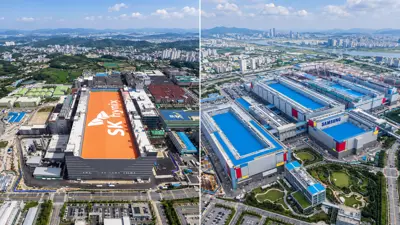
The same applies to HBM. Suppliers like SK hynix and Micron have benefited from rising memory content per AI accelerator and a richer product mix. But HBM is one link in the AI server supply chain, not a finished product. If GPU shipment schedules slip, memory orders and price expectations can move just as sensitively.
| Signal | Near-term stock impact | Fundamental read |
|---|---|---|
| AI safety pacing comments | Could be negative | Does not by itself mean fewer orders |
| Frontier model launch delays | Negative | Training/inference infrastructure buildout timing may slip |
| Hyperscaler capex guided lower | Strongly negative | Real weakening in GPU, networking and power infrastructure demand |
| GPU lead times shortening, inventory rising | Strongly negative | Direct signal that supply-demand tightness is easing |
| HBM contracts shrinking, prices falling | Very negative | Could undermine the thesis that memory is at a cyclical peak |
| Safety-vetted commercial AI spreading | Mixed | Could actually create new demand for inference, security and monitoring compute |
Some compute demand could actually grow
It is also too simple to assume more safety regulation automatically means less compute demand. Running more evaluations before a model launches, red-teaming, and stronger sandboxing and monitoring all create new compute demand. As companies deploy AI agents into real workflows, they also need access control, log analysis, anomaly detection and security-focused inference.
AI demand does not end with pretraining a frontier model either. As search, coding, advertising, customer support, video generation, enterprise agents and robotics become commercialized, the center of gravity shifts from training toward inference. That is one reason it is hard to assume that a modest pacing adjustment in frontier training translates into an equal, proportional drop in total AI infrastructure demand.
Insight Times Editorial Desk