Micron's Real Number Is $32 Billion in Customer Commitments, Not Revenue
Customers have put up cash to reserve memory supply, while HBM eats into DRAM wafer capacity. That changes how investors should read the AI memory supercycle.
| Metric | Change |
|---|---|
| Long-term supply agreement financial commitments | $22B to $32B, +45% |
| Remaining performance obligations (RPO) | $100B to $150B, +50% |
| FY2027 Q1 revenue guidance | $61.5B, about 7.9% above LSEG estimates |
The number that matters more than earnings: $32 billion
Micron's fiscal fourth-quarter 2026 revenue was $54.229 billion. That is about 4.8 times the $11.315 billion a year earlier. Guidance for the next quarter is $61.5 billion, plus or minus $1.5 billion, well above the market estimate of $57.02 billion. On those figures alone, the memory market is strong.
But another number from this report matters more. Customers' financial commitments to secure long-term supply rose from $22 billion in June to $32 billion. That is $10 billion added in three months. According to Micron, most of it is cash deposits.
The difference is large. This is not a stated intention to "buy a lot next year." Customers are tying up real money to reserve supply. It suggests they now treat memory less as a commodity part ordered on price and more as a strategic asset, since without it they cannot ship AI systems at all.
What $150 billion in future revenue shows
Remaining performance obligations (RPO) on long-term contracts also rose, from about $100 billion to $150 billion. That is roughly 50% in three months. RPO does not mean all of that revenue is locked in, and contract terms and timing still need to be checked. Even so, it shows how much more visible future demand has become compared with current quarterly revenue.
Micron said it has already contracted most of its 2027 HBM output and will raise 2027 capital spending above its earlier plan. Management also expects memory supply and demand in 2027 and 2028 to be tighter than in 2026.
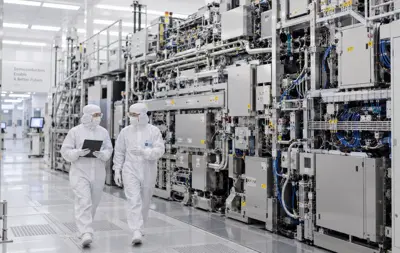
Supply cannot catch up quickly. The company said that even if the first silicon wafers from new fabs arrive in mid-2027, it will take several more quarters to supply meaningful volume. Demand moves fast. A fab's supply curve has to pass through land, construction, equipment, process qualification, yield and customer approval.
Add the supply side, and the picture changes
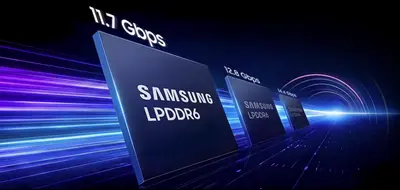
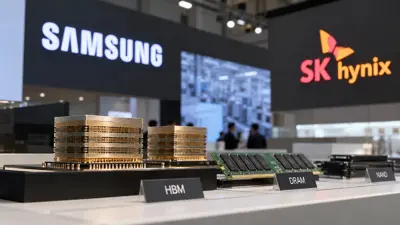
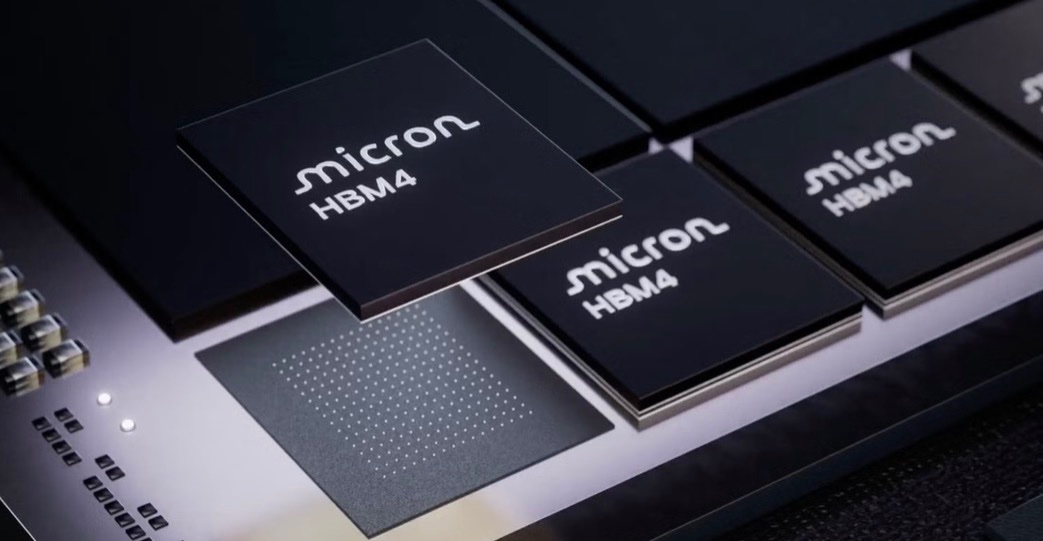
Two days earlier, Samsung Electronics said HBM's share of total DRAM wafer capacity could rise from about 20% now to about 30% in 2027. HBM and conventional DRAM compete for the same wafer capacity.
So the more HBM is made, the less room may be left for DRAM in standard servers, PCs and phones. AI demand does not only make HBM expensive. It can also tighten supply of general-purpose DRAM.
Put Micron's $32 billion in commitments and $150 billion in RPO next to that, and the character of this cycle comes into view. On the supply side, HBM is quickly absorbing wafers. On the demand side, customers are putting up cash to lock in long-term volume. Supply tightness and demand lock-in are happening at once.
One million GPUs, but HBM for only 800,000
Micron COO Manish Bhatia named memory as AI's biggest constraint today, stronger than logic or data center power. The company has its own interests here, so the claim should not be taken at face value.
Still, a supply chain's output is set by its scarcest part. If a buyer secures one million GPUs but has HBM for only 800,000, the number of AI systems it can finish stops at that level. What matters this time is that real numbers, long-term contracts, cash deposits and RPO, are beginning to back the claim.
The figures matter for Nvidia investors too. A memory shortage is indirect evidence that AI server demand is strong in the near term. But if HBM supply cannot keep up, it could become a bottleneck that limits GPU shipments. Strong memory is not simply good news for GPUs.
Supply and demand are locking up together
- HBM share of DRAM wafer capacity: about 20% to about 30%
- Micron long-term customer financial commitments: $22B to $32B
- Micron RPO: $100B to $150B
Insight Times Editorial Desk